Adln.io
Transform your customer support and business communications with Adln.io, a unified platform designed to boost efficiency and elevate user engagement. Adl...
Transform your customer support and business communications with Adln.io, a unified platform designed to boost efficiency and elevate user engagement. Adl...
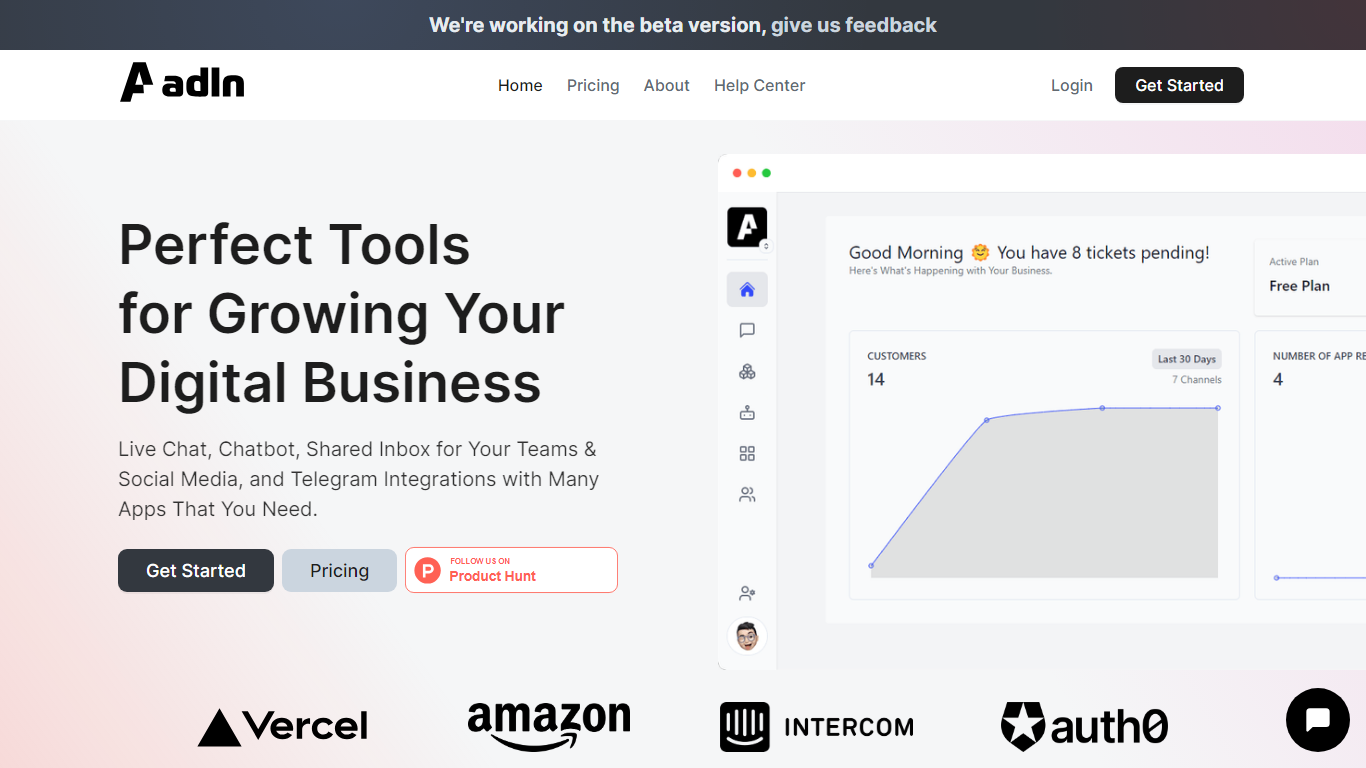
Unified inbox
Consolidates messages from multiple communication channels into one place
Team collaboration
Allows team members to share conversations and work together on customer issues
Message organisation
Tools to sort, tag, and search through conversations
Integration support
Connects with common business apps and communication platforms
Multi-channel support
Handles customer inquiries across different communication methods
Customer context
Maintains conversation history and customer information in one view
Small teams managing customer support across email and messaging platforms
Businesses receiving inquiries through multiple channels and needing a centralised view
Companies looking to improve first response time by having all messages in one place
Support teams that need to collaborate on complex customer issues
Growing businesses transitioning from informal communication to organised support systems