
AI Mailer
Generate personalized, high-quality emails in seconds using GPT and NLP, crafting perfect messages effortlessly.
- Freemium
- Web
- Other
- Free plan available
- No credit card
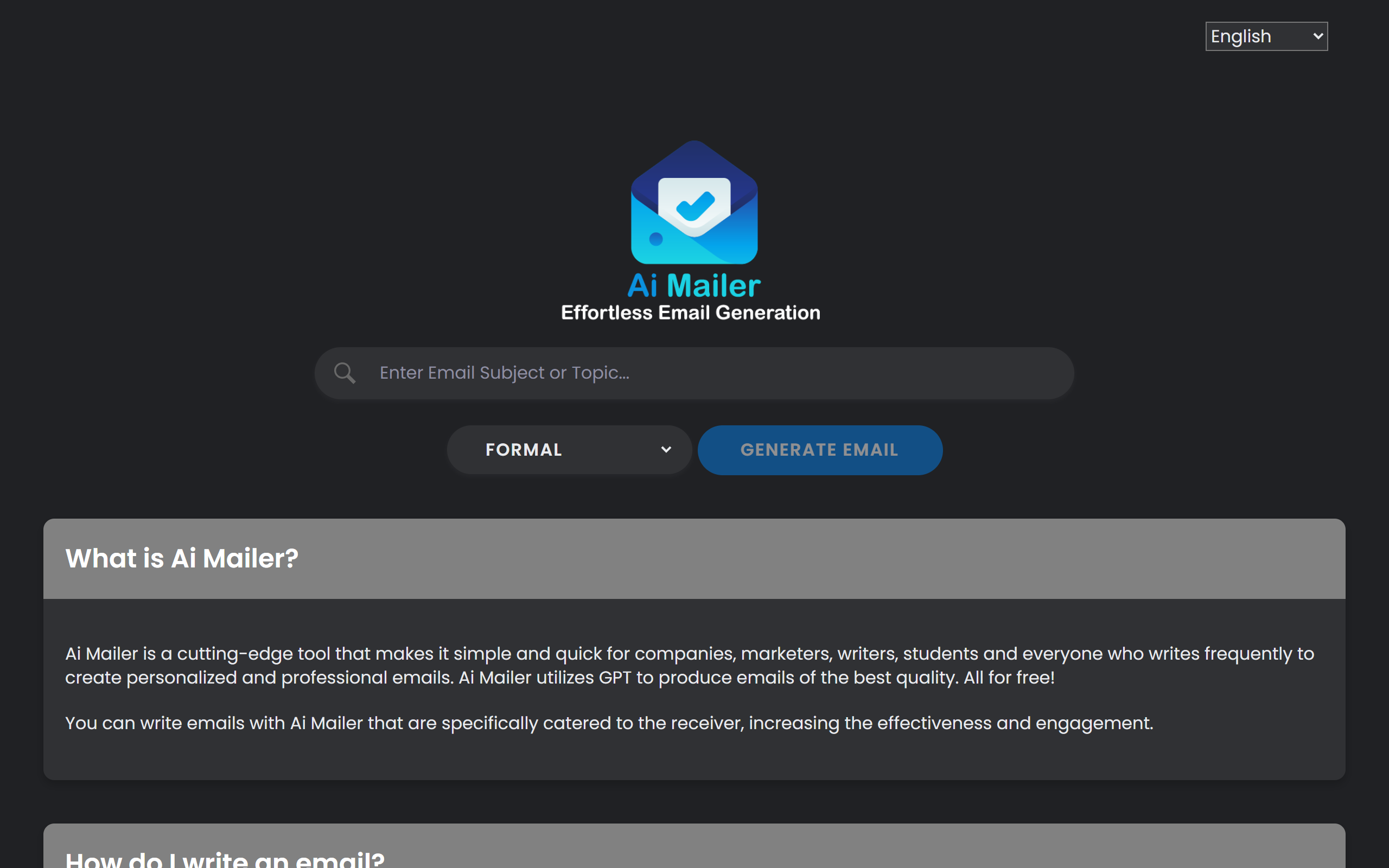
What is AI Mailer?
Key features
Email generation from prompts
describe what you need and receive a complete draft in seconds
Personalisation options
add recipient details, tone preferences, or specific information to tailor messages
Multiple email types
supports sales outreach, customer support, recruitment, and general business communication
Editing interface
refine generated emails before sending or copying to your email client
Freemium access
use basic features free, with paid options for higher usage or advanced customisation
Pros & cons
Advantages
- Significant time saving for repetitive email tasks; useful if you send dozens of similar messages daily
- Reduces blank page paralysis; helpful for non-native English speakers or those uncertain about tone
- Free tier available; experiment without committing budget
- No integration hassle; works independently of your email provider
Limitations
- Generated emails require careful review; AI output can be generic and miss important context you'd naturally include
- Limited to email composition only; doesn't handle sending, scheduling, or tracking open rates
- Quality depends heavily on your initial prompt; vague instructions produce vague emails
Use cases
Sales representatives sending initial outreach to multiple prospects with different backgrounds
Customer support teams responding to similar enquiry types throughout the day
Recruiters drafting personalised rejection or interview invitation emails
Managers writing routine team announcements or performance feedback messages
Business development professionals following up with leads
Ready to try AI Mailer?
Pricing
Get started with AI Mailer
Click through to AI Mailer and start using it now.
- Free plan available
- No credit card