
AI Query
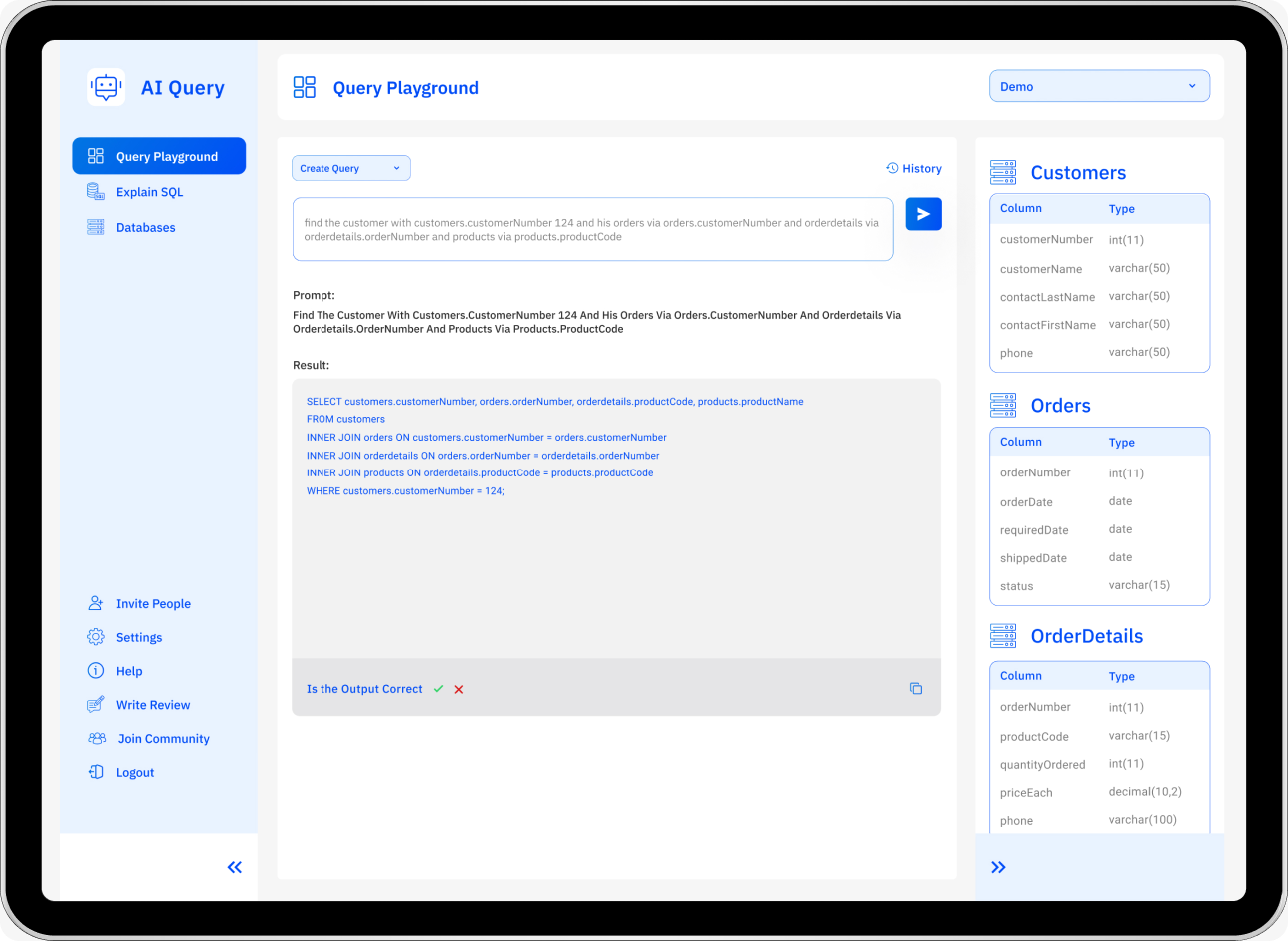
AI Query is a transformative tool designed to streamline the SQL query generation process. By leveraging advanced AI, users can effortlessly translate simple English queries into efficient SQL code, a
- Freemium
- Web
- Data & AnalyticsDesignAI Tools for SQL
- Free plan available
- No credit card
What is AI Query?
Key features
English to SQL conversion
Write questions in plain English and receive SQL code
SQL to English translator
Get plain language explanations of existing SQL queries
Multi-database support
Works with PostgreSQL, MySQL, SQL Server, and other engines
Schema dashboard
Define and manage your database structure within the tool
Query history and management
Track and organise previously generated queries
Pros & cons
Advantages
- Reduces the learning curve for people new to SQL
- Speeds up query writing for experienced developers
- Helps with understanding complex or unfamiliar SQL code
- Freemium pricing means you can test it without payment
- Works across multiple database systems
Limitations
- Generated SQL may require manual review or adjustment for complex or unusual requirements
- Accuracy depends on how clearly you phrase your English question
- Free tier likely has limitations on query volume or features
Use cases
Business analysts querying databases without SQL knowledge
Developers writing ad-hoc queries quickly during development
Teams maintaining legacy code and needing to understand old SQL statements
Data analysts explaining database queries to non-technical stakeholders
Learning SQL by comparing AI-generated code with your own attempts
Ready to try AI Query?
Pricing
Get started with AI Query
Click through to AI Query and start using it now.
- Free plan available
- No credit card