
AI voice detector
Automate customer service, identify accents, analyze characteristics for optimized customer experience.
- Freemium
- Web, API
- Customer SupportAI Tools for Customer ExperienceCode
- Free plan available
- No credit card
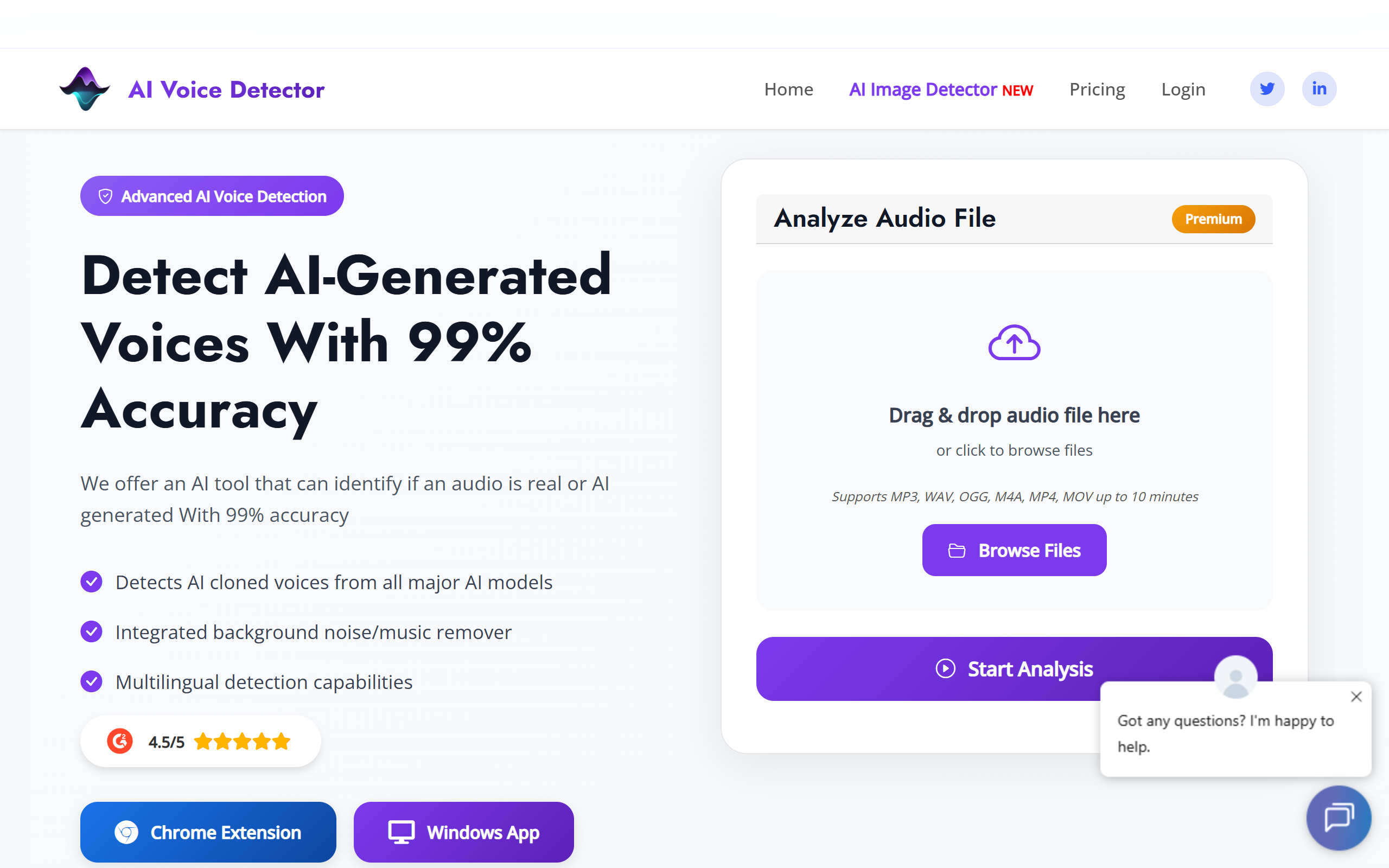
What is AI voice detector?
Key features
Accent identification
Detects and categorises regional and linguistic accent patterns in speech
Voice characteristic analysis
Identifies traits such as tone, pace, clarity, and emotional undertones
Batch processing
Analyse multiple audio files at once for efficient workflow integration
Customer interaction logging
Automatically tags and organises customer service calls with voice data
API access
Integrate voice analysis into existing business systems and workflows
Audio upload and processing
Support for various audio formats and file sizes
Pros & cons
Advantages
- Freemium model lets you test the tool without upfront cost
- Useful for understanding customer demographics and communication patterns in service interactions
- API integration allows incorporation into existing customer service platforms
- Automated processing saves time compared to manual voice analysis
Limitations
- Accent identification may vary in accuracy across different regional dialects and multilingual speakers
- Limited information available about data privacy practices and how audio files are stored or used
- Free tier may have significant restrictions that limit practical use for larger operations
Use cases
Contact centre quality assurance: Review customer service calls to assess communication effectiveness
Customer demographic analysis: Understand geographical and linguistic distribution of your customer base
Accessibility improvements: Identify speech clarity issues that might affect customer understanding
Staff training and coaching: Analyse employee voice characteristics to improve customer-facing interactions
Market research: Gather data on customer accents and speech patterns to inform targeted strategies
Ready to try AI voice detector?
Pricing
Get started with AI voice detector
Click through to AI voice detector and start using it now.
- Free plan available
- No credit card