
AI2sql
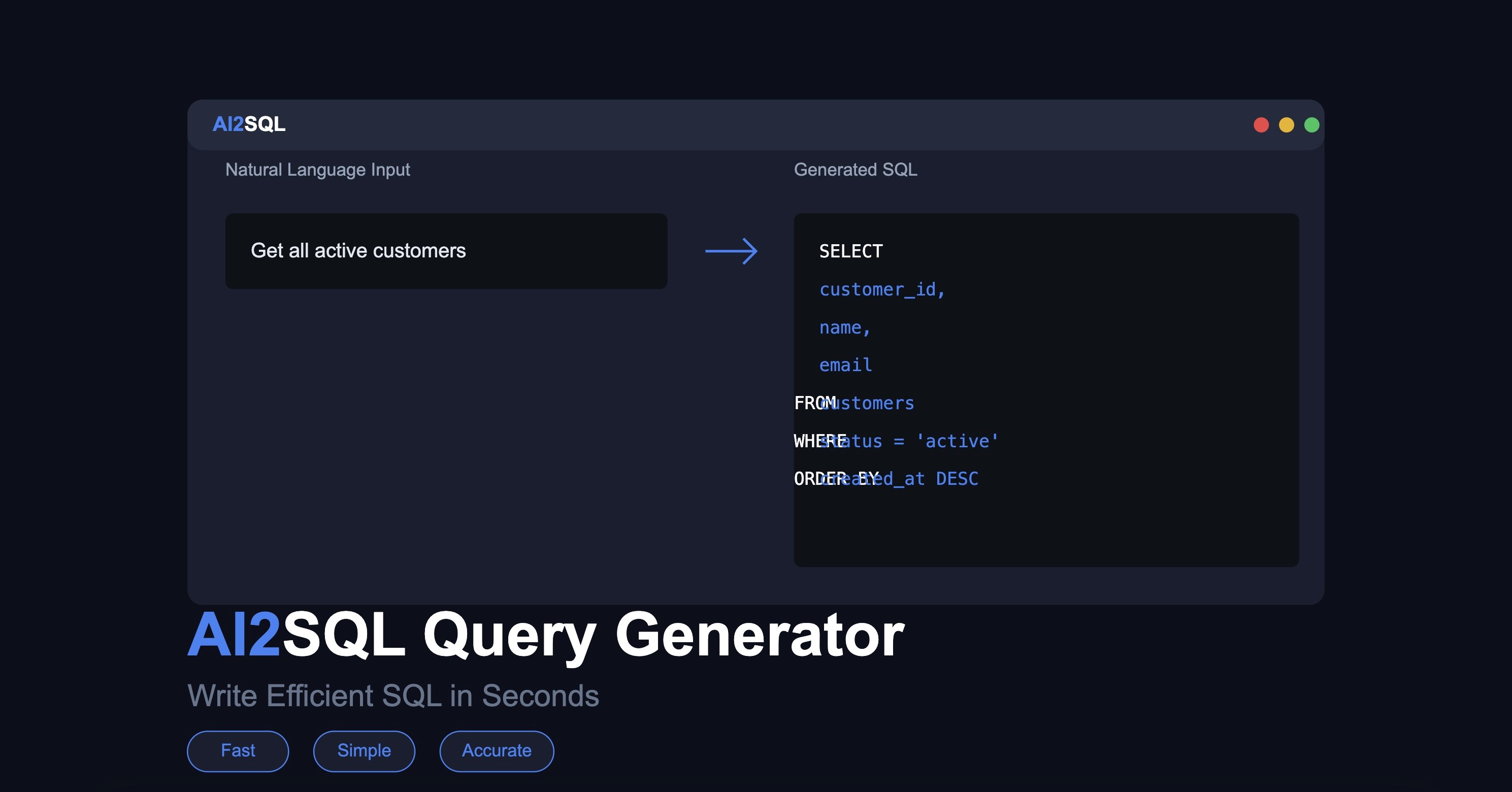
With AI2sql, engineers and non-engineers can easily write efficient, error-free SQL queries without knowing SQL.
- Always free
- No credit card
What is AI2sql?
Key features
Natural language to SQL conversion
describe your query in English and get SQL code in return
Multi-database support
works with major database systems including MySQL, PostgreSQL, SQL Server, and others
Query explanation
understand what the generated SQL does in plain language
Error checking
validates queries before you use them
Template library
access pre-built query templates for common tasks
Copy and run
easily copy generated queries for immediate use
Pros & cons
Advantages
- No SQL knowledge required to write queries, lowering the barrier to entry for non-technical staff
- Significantly faster query generation compared to learning or writing SQL manually
- Reduces human error and syntax mistakes in database queries
- Free to use with no subscription required
- Supports multiple database systems, making it useful across different tech stacks
Limitations
- Complex or highly specific queries may need manual refinement even after generation
- Relies on clear, well-written descriptions; ambiguous instructions produce less useful results
- May not optimise queries for very large datasets or unusual performance requirements
Use cases
Business analysts querying databases without SQL training to extract reports and metrics
Product teams quickly pulling data for analysis without waiting for engineering support
Developers speeding up routine query writing during rapid development
Data entry and support staff accessing specific database records without technical knowledge
Learning SQL by examining generated queries to understand syntax and structure
Ready to try AI2sql?
Pricing
Get started with AI2sql
Click through to AI2sql and start using it now.
- Always free
- No credit card