
aiPDF
The most advanced AI document assistant
- Free plan available
- No credit card
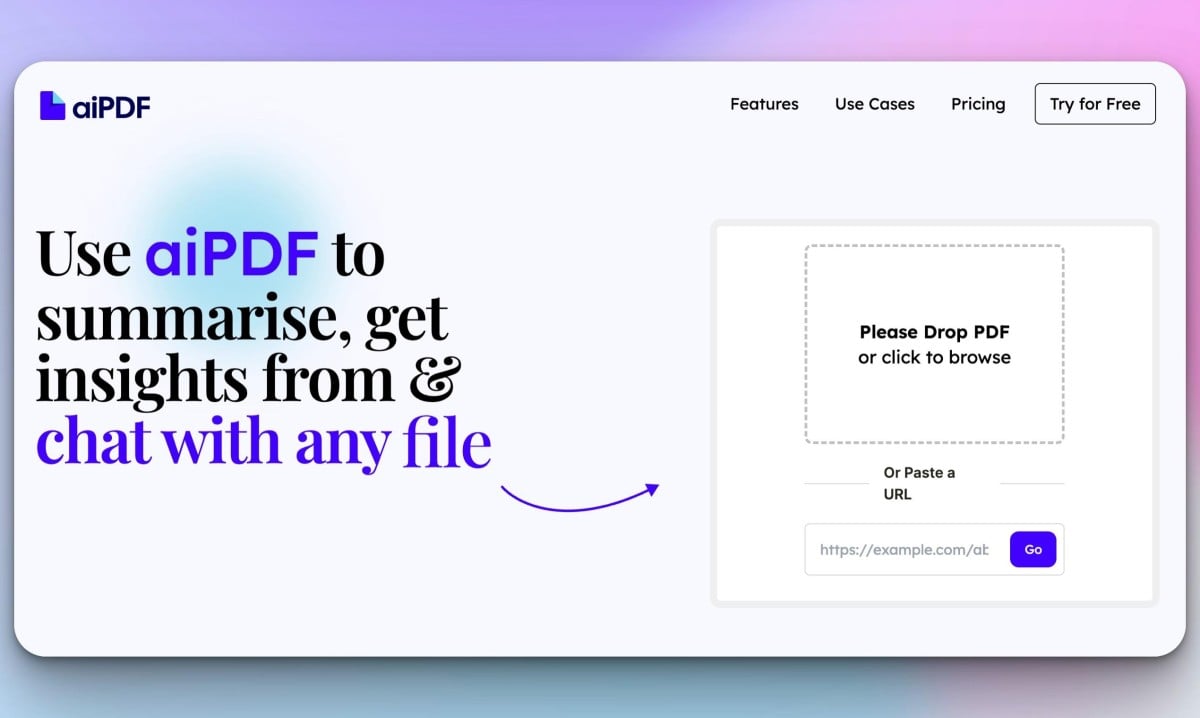
What is aiPDF?
Key features
Chat with PDFs
Ask questions about document content and receive contextual answers
Summarisation
Generate summaries of documents to quickly understand key points
Multi-format support
Works with PDFs, web articles, YouTube videos, and podcast content
Insight extraction
Identify and pull out specific information from documents automatically
Web-based interface
Access from any browser without installation
Pros & cons
Advantages
- Saves time when reviewing long documents or multiple files
- Free tier available, so you can test functionality without commitment
- Supports multiple content types beyond just PDFs, including video and audio
- Straightforward question-and-answer interaction requires no technical setup
Limitations
- Accuracy depends on document quality and formatting; scanned images or poorly structured PDFs may produce less reliable results
- Limited information available about data privacy and how documents are stored or processed
- Free tier likely has restrictions on document size, number of queries, or files per month
Use cases
Students summarising research papers and textbooks for assignments
Business analysts extracting key findings from market reports and competitor documents
Researchers comparing information across multiple academic publications
Legal professionals reviewing contracts or policy documents for specific clauses
Content creators summarising YouTube videos or podcast transcripts for reference
Ready to try aiPDF?
Pricing
Paid tiers
Pricing not publicly specified
Likely includes higher usage limits, larger file support, priority processing, and additional features
Get started with aiPDF
Click through to aiPDF and start using it now.
- Free plan available
- No credit card