
Apache Hadoop
Analyze, store, and process large and diverse data sets efficiently and reliably.
- Freemium
- API, Linux, macOS, Windows
- Data & Analytics
- Free plan available
- No credit card
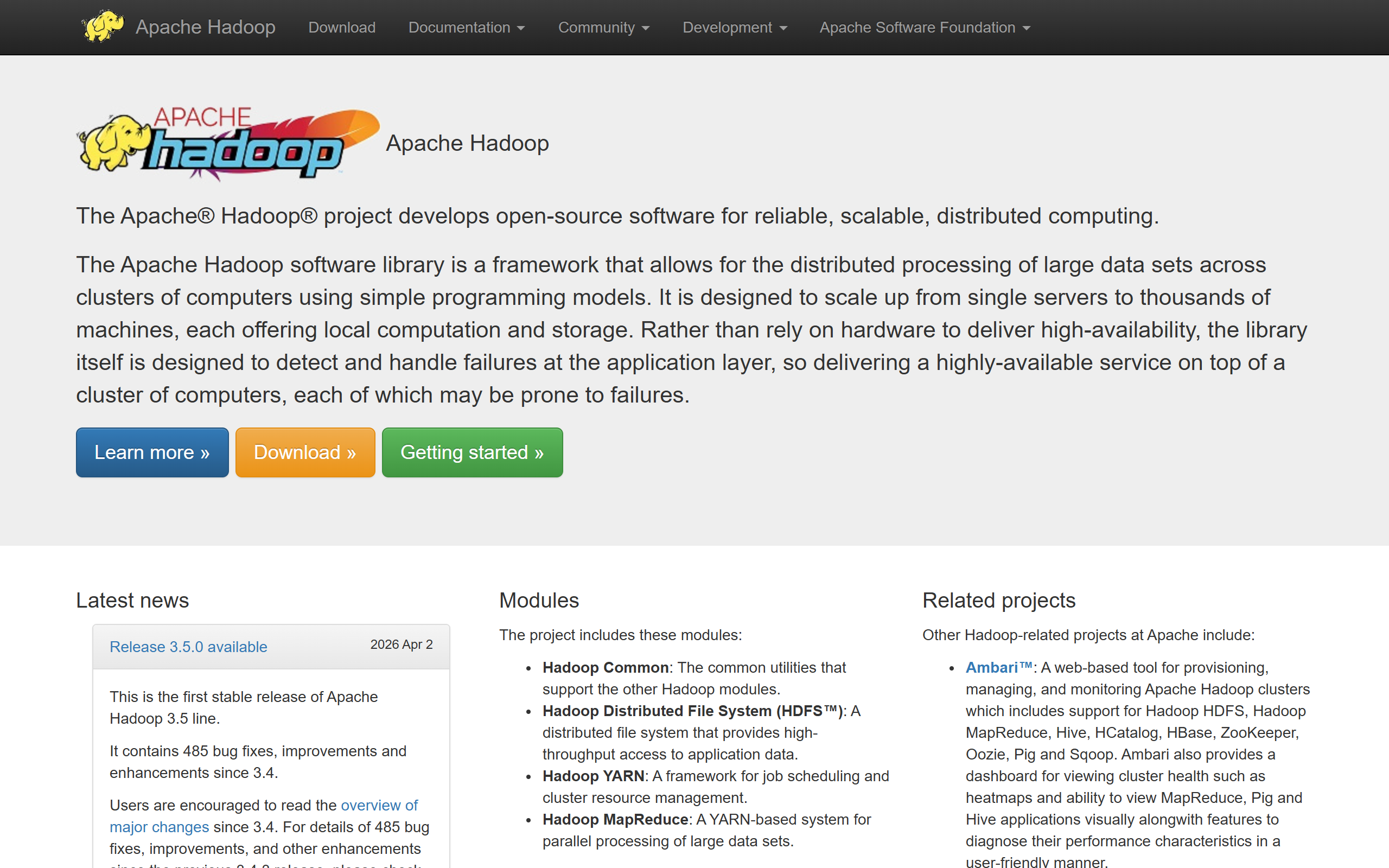
What is Apache Hadoop?
Key features
Distributed file system (HDFS)
stores large files across multiple computers while maintaining reliability through data replication
MapReduce processing
breaks complex data analysis jobs into smaller tasks that run in parallel across your cluster
Horizontal scalability
add more machines to handle growing data volumes without redesigning your system
Fault tolerance
automatically handles machine failures by replicating data and rerunning failed tasks
Works with diverse data types
processes structured, semi-structured, and unstructured data without rigid schema requirements
Pros & cons
Advantages
- Completely free and open-source; no licensing costs regardless of scale
- Can handle petabyte-scale datasets cost-effectively using ordinary hardware
- Strong community support with extensive documentation and many related tools
- Proven track record at major technology companies dealing with massive data volumes
Limitations
- Steep learning curve; requires understanding of distributed systems concepts and Java programming
- Slower than traditional databases for queries requiring quick results; better suited for batch processing than real-time analytics
- Requires significant infrastructure investment and operational expertise to set up and maintain properly
Use cases
Processing web server logs to understand user behaviour patterns across millions of requests
Analysing scientific research data from thousands of sensors or instruments
Building recommendation systems that need to process user interaction data at massive scale
Data warehousing for organisations generating terabytes of information daily
Machine learning on large datasets where training data is too big for single machines
Ready to try Apache Hadoop?
Pricing
Free
Free
Full access to Apache Hadoop framework, HDFS, and MapReduce. No restrictions on usage or data volume.
Get started with Apache Hadoop
Click through to Apache Hadoop and start using it now.
- Free plan available
- No credit card