Audify AI
User-friendly platform for voice synthesis with customizable options and instructions, making it versatile for both developers and creatives.
- Freemium
- Web
- AI Voice SynthesisDesignCode
- Free plan available
- No credit card
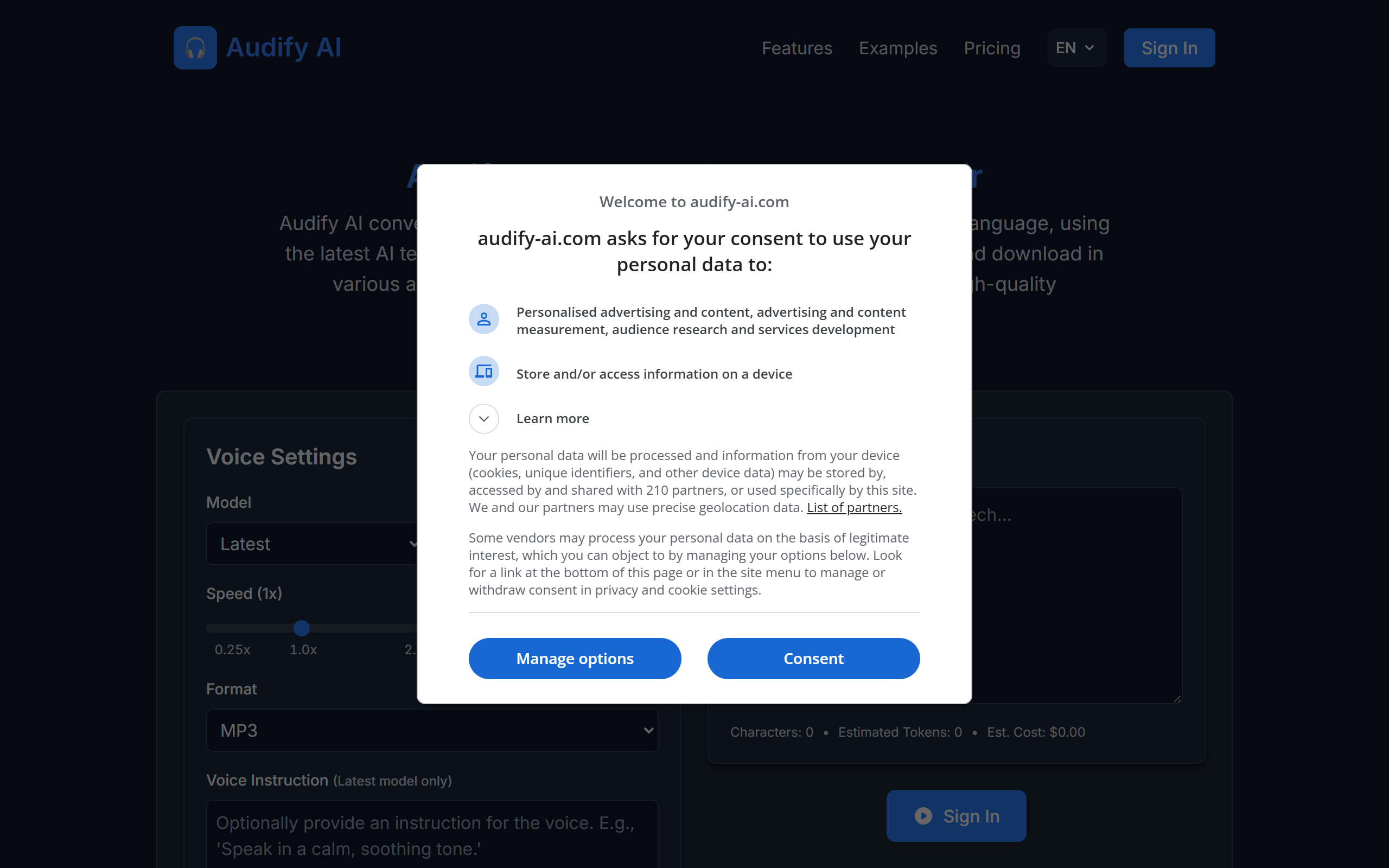
What is Audify AI?
Key features
Multi-language text-to-speech conversion supporting various languages and regional accents
Multiple voice options allowing you to select different voices for your projects
Adjustable speech speed to control the pace of generated audio
Multiple audio format exports including MP3, WAV, and other standard formats
Customisable voice instructions for developers building voice synthesis into applications
Pros & cons
Advantages
- Free tier available so you can test the service without commitment
- Supports many languages, useful for international projects and global audiences
- Straightforward export options in common audio formats ready for immediate use
- Suitable for both simple one-off projects and integration into larger applications
Limitations
- Quality and naturalness of speech output may vary depending on language and voice selection
- Free tier likely has usage limits or restrictions on download formats or voice options
- Customisation options may be limited compared to enterprise-grade voice synthesis tools
Use cases
Creating voiceovers for YouTube videos, presentations, and online courses
Generating audio versions of blog posts and written articles for accessibility
Producing podcast intros, outros, or automated content segments
Building interactive voice features into web applications and chatbots
Creating audiobook versions of ebooks or self-published written work
Ready to try Audify AI?
Pricing
Free
Free
Basic text-to-speech conversion, limited voice selection, standard audio formats, usage restrictions apply
Get started with Audify AI
Click through to Audify AI and start using it now.
- Free plan available
- No credit card