
Backdoor
Self-hostable database editing tool for your team
- Open Source
- Web
- Data & AnalyticsDeveloper ToolsCode
- Open source
- Free forever
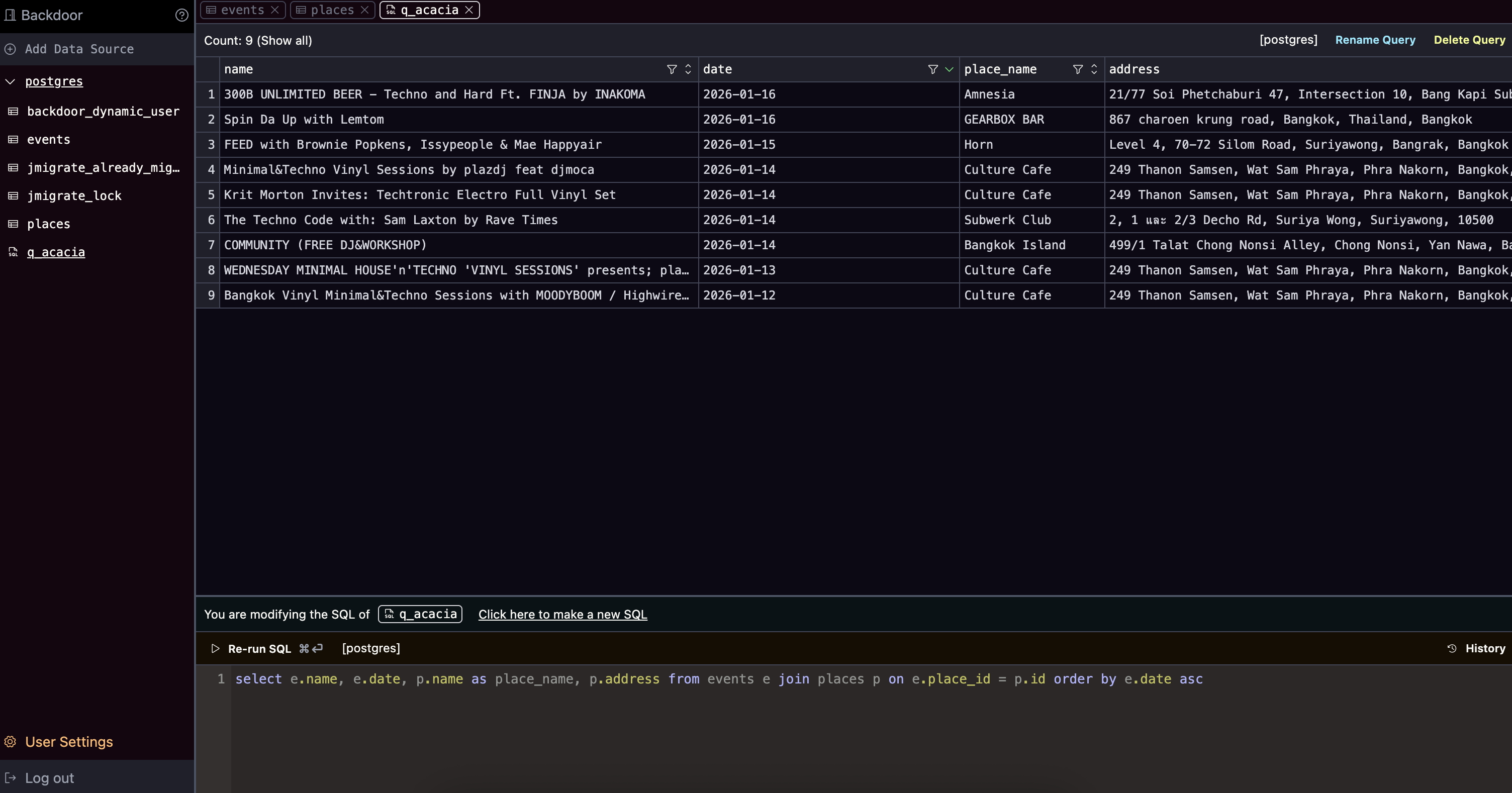
What is Backdoor?
Key features
Self-hosted deployment
Run Backdoor on your own servers with no reliance on external platforms
Database editing interface
Visual tools for creating, updating, and deleting records across your databases
Team access controls
Manage permissions and user roles to control who can edit what data
Multi-database support
Connect to and manage multiple databases from a single interface
Open-source codebase
Full access to the source code for customisation and security auditing
Pros & cons
Advantages
- Complete data ownership and privacy since everything runs on your infrastructure
- No ongoing subscription costs; open-source means you can use it freely indefinitely
- Customisable to your specific workflow and database setup
- No vendor dependency; you control the tool and your data
Limitations
- Requires technical knowledge to self-host and maintain the application
- You are responsible for security updates, backups, and infrastructure management
- Community support only; no dedicated commercial support team available
Use cases
Internal data management for small to medium teams without dedicated database administrators
Healthcare or financial organisations needing on-premises data handling for compliance
Development teams requiring quick database edits during testing and debugging
Organisations migrating away from expensive third-party database management tools
Ready to try Backdoor?
Pricing
Open Source
Free
Full access to Backdoor open-source software; self-hosted deployment; community support
Get started with Backdoor
Click through to Backdoor and start using it now.
- Open source
- Free forever