
backtestpods
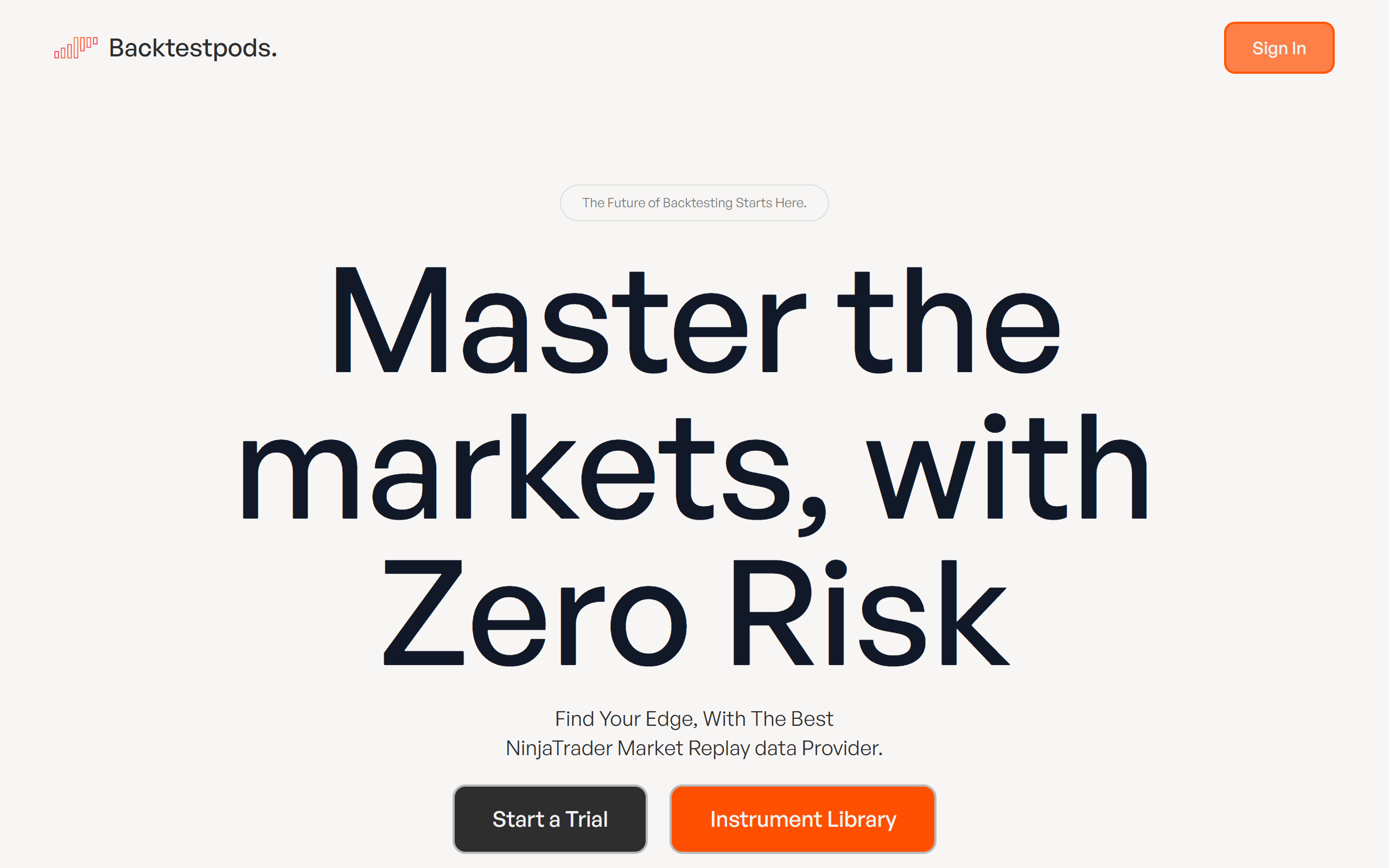
Master the markets, with Zero Risk
- Freemium
- Web
- AI Tools for TradingFinanceDeveloper Tools
- Free plan available
- No credit card
What is backtestpods?
Key features
Historical data backtesting
Run trading strategies against past market data to see how they would have performed
Multiple asset classes
Test strategies across stocks, cryptocurrencies, forex, and other financial instruments
Strategy customisation
Build and modify trading rules to match your specific approach
Performance metrics
Review detailed results including returns, drawdowns, win rates, and risk ratios
Visual charts
View strategy performance and trades plotted on price charts for easier analysis
Pros & cons
Advantages
- Free tier available so you can start testing strategies without paying
- No financial risk during testing, making it safe to experiment with new ideas
- Historical data provides realistic conditions for evaluating strategy behaviour
- Helps identify weaknesses in trading logic before committing real capital
Limitations
- Past performance does not guarantee future results; backtests cannot account for unexpected market conditions or structural changes
- Results may be affected by look-ahead bias or over-optimisation if strategies are tuned too heavily to historical data
Use cases
Testing a new stock trading strategy using ten years of historical price data
Comparing multiple cryptocurrency trading approaches to see which has better risk-adjusted returns
Validating a mean-reversion strategy before allocating real funds to it
Learning how different entry and exit rules would have affected past trades
Optimising position sizing and stop-loss levels based on historical volatility
Ready to try backtestpods?
Pricing
Free
Free
Basic backtesting functionality with access to historical data and core performance metrics
Premium
Paid (specific pricing available on website)
Advanced features, additional data sources, higher backtesting frequency, and priority support
Get started with backtestpods
Click through to backtestpods and start using it now.
- Free plan available
- No credit card