
Baidu PaddlePaddle
Develop adaptive AI solutions effortlessly, leverage GPU acceleration, and deploy applications quickly with its powerful tools.
- Freemium
- Linux, Windows, macOS, API, Cloud deployment
- DesignDeveloper Tools
- Free plan available
- No credit card
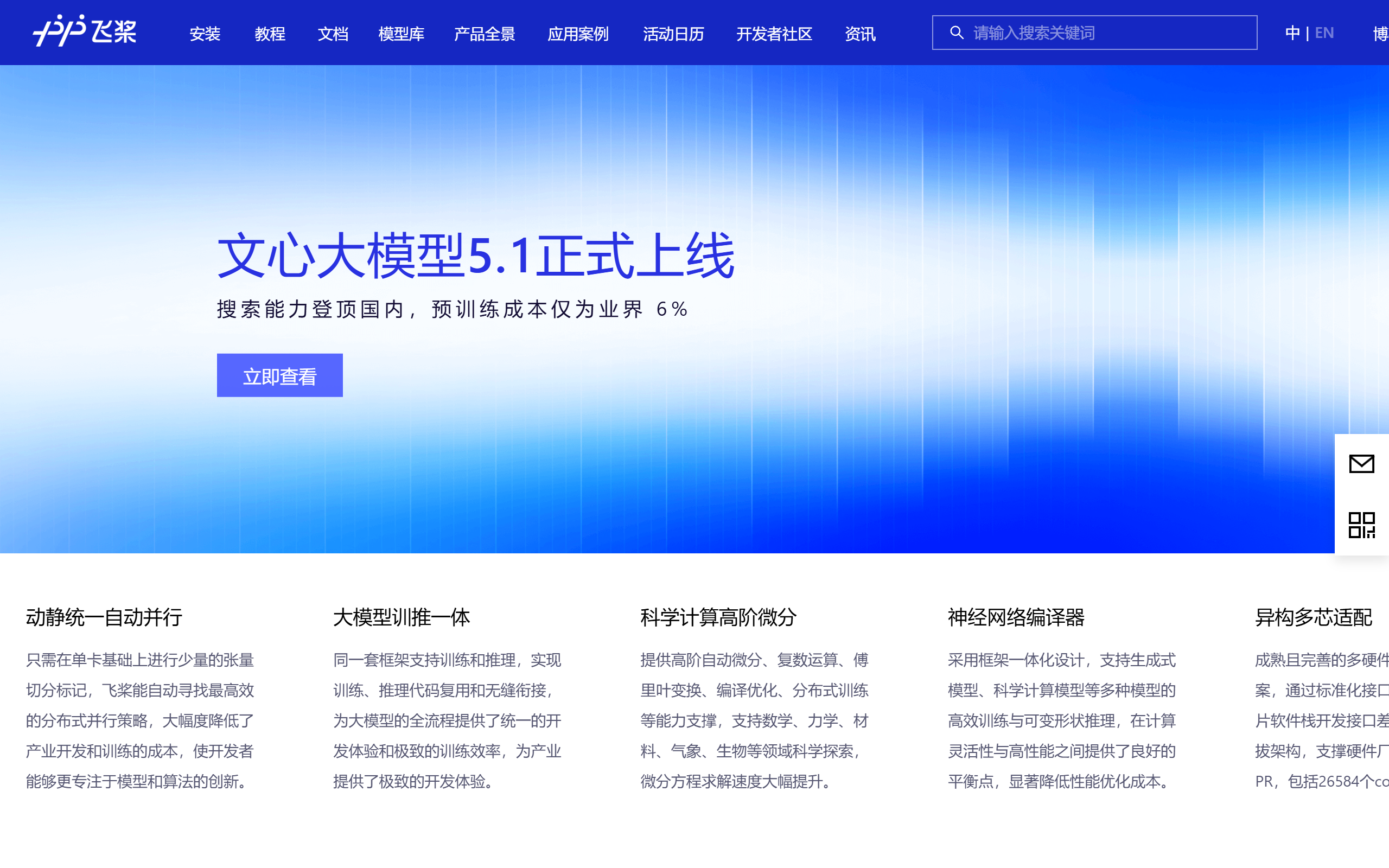
What is Baidu PaddlePaddle?
Key features
GPU acceleration
Optimised performance for training and running models on graphics processors
Pre-trained models
Access to ready-made models for common AI tasks across vision and language domains
Distributed training
Support for parallel training across multiple GPUs and machines
Deployment tools
Integrated tools for converting and deploying models to production environments
Model zoo
Extensive collection of reference implementations and tutorials
Cross-platform support
Runs on Linux, Windows, and macOS with Python bindings
Pros & cons
Advantages
- Completely free and open source with no licensing restrictions
- Strong performance optimisation for production deployment
- Backed by Baidu with ongoing development and maintenance
- Good documentation and active community support
- Efficient resource utilisation and scalability for large-scale projects
Limitations
- Smaller ecosystem and fewer third-party libraries compared to TensorFlow or PyTorch
- Primary documentation is in Chinese, though English resources do exist
- Less established in Western academic and industry communities
Use cases
Training computer vision models for image classification and object detection
Building natural language processing applications
Creating recommendation systems at scale
Developing production-ready AI systems with efficient deployment
Research projects requiring GPU-accelerated training
Ready to try Baidu PaddlePaddle?
Pricing
Free
Free
Complete open-source framework with all core features, GPU acceleration, pre-trained models, and community support
Get started with Baidu PaddlePaddle
Click through to Baidu PaddlePaddle and start using it now.
- Free plan available
- No credit card