
Chatfuel
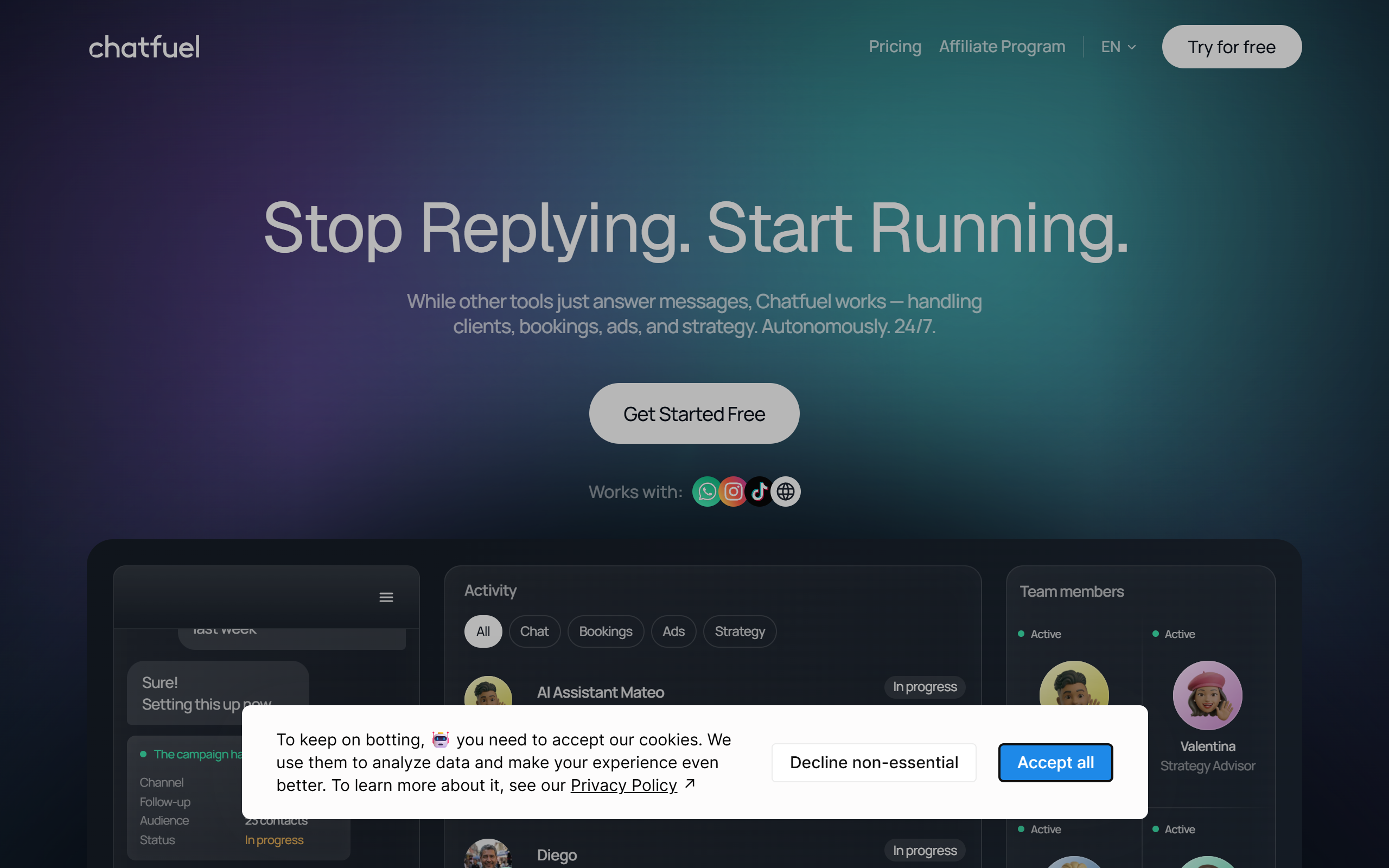
AI-driven chatbot for automating customer engagement on Messenger.
- Freemium
- Web, API, WhatsApp, Messenger
- Customer SupportDeveloper ToolsAI WhatsApp Tools
- Free plan available
- No credit card
What is Chatfuel?
Key features
WhatsApp and Messenger integration
Connect your business accounts and respond to customers across both platforms from one dashboard
ChatGPT integration
Use AI to generate responses and handle conversations that fall outside your predefined flows
Visual conversation builder
Create chatbot flows using a drag-and-drop editor without coding experience
Lead qualification
Automatically collect customer information and score leads based on answers to your questions
Human handoff
Route conversations to team members when the chatbot can't help or the customer requests assistance
Analytics and reporting
Track message volume, response times, and conversation outcomes
Pros & cons
Advantages
- Works with WhatsApp Business, which has billions of active users, so customers already have the app
- Freemium model means you can test it with a small number of conversations before paying
- No coding required to set up basic chatbots; the visual builder is straightforward
- Combines rule-based automation with AI, so you can handle both predictable and unexpected questions
Limitations
- WhatsApp's API restrictions may limit features compared to other chat platforms; you must follow Meta's guidelines on message types and frequency
- Limited customisation for complex workflows without using the API directly
- Pricing details for paid tiers are not clearly published on the website, making it hard to compare with competitors
Use cases
E-commerce businesses answering product questions and processing returns on WhatsApp
Appointment booking for salons, clinics, or service businesses that receive inquiries 24/7
Customer support teams triaging common issues and reducing response time
Lead generation campaigns that qualify prospects before sales contact
Marketing teams sending promotions or updates to opted-in customer lists on Messenger
Ready to try Chatfuel?
Pricing
Free
Free
Limited conversations per month; access to core features; ChatGPT integration available
Paid plans
Pricing varies
Higher conversation limits, priority support, and advanced analytics; exact pricing not publicly listed on website
Get started with Chatfuel
Click through to Chatfuel and start using it now.
- Free plan available
- No credit card