
ChatGPT
ChatGPT by OpenAI is a large language model that interacts in a conversational way.
- Freemium
- Web, iOS, Android, API, Chrome Extension
- Customer SupportChatbots & Live Chat
- Free plan available
- No credit card
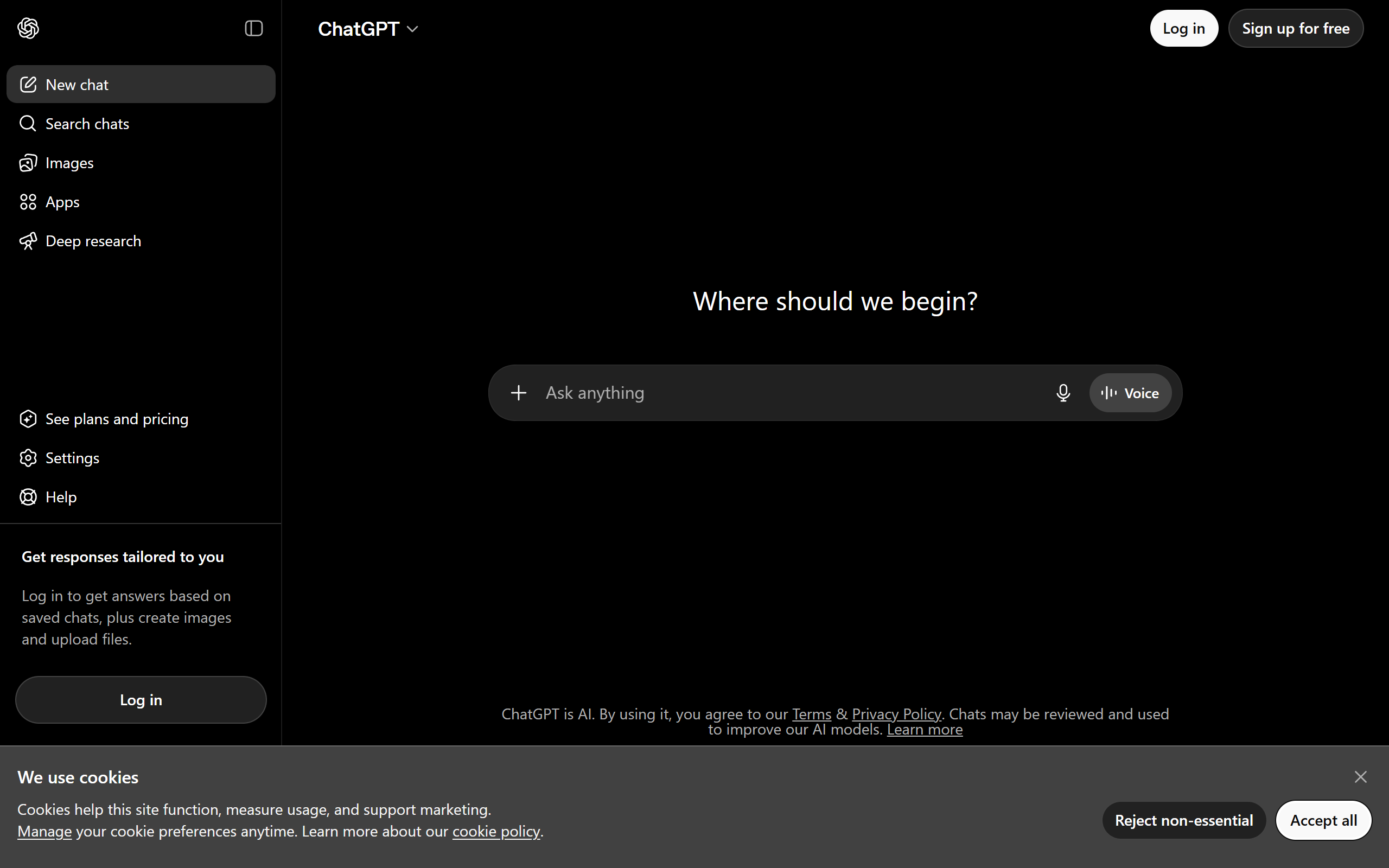
What is ChatGPT?
Key features
Conversational interface
Natural dialogue-based interaction for intuitive communication
Multi-domain knowledge
Handles questions across science, history, technology, creative writing, and more
Code assistance
Helps write, debug, and explain code across multiple programming languages
Content generation
Creates essays, stories, marketing copy, and other written content
Context awareness
Maintains conversation history and understands detailed follow-up questions
Customizable responses
Users can adjust tone, length, and format of answers
Pros & cons
Advantages
- Free tier available with no credit card required for basic access
- Highly versatile across professional, educational, and creative applications
- Excellent at explaining complex topics in accessible language
- Regular updates and improvements to model capabilities
Limitations
- Free tier has usage limitations and slower response times compared to paid tiers
- Can occasionally generate inaccurate or outdated information
- Limited real-time internet access in standard versions
Use cases
Student learning: Explaining difficult concepts and helping with research and writing
Professional writing: Drafting emails, reports, proposals, and marketing content
Software development: Writing and debugging code, explaining programming concepts
Creative projects: Brainstorming ideas, writing fiction, poetry, and other creative content
Research and analysis: Summarizing information and exploring topics from multiple angles
Ready to try ChatGPT?
Pricing
Free
Free
Access to ChatGPT with standard GPT models, basic conversation capabilities, limited usage during peak times
Plus
$20/month
Priority access, faster response times, access to advanced models like GPT-4, higher usage limits, early access to new features
Team
$30/user/month
Designed for teams, admin controls, higher usage limits, dedicated support
Enterprise
Custom pricing
Custom implementation, advanced security features, dedicated support, priority access to new models and features
Get started with ChatGPT
Click through to ChatGPT and start using it now.
- Free plan available
- No credit card