
CrawlQ AI
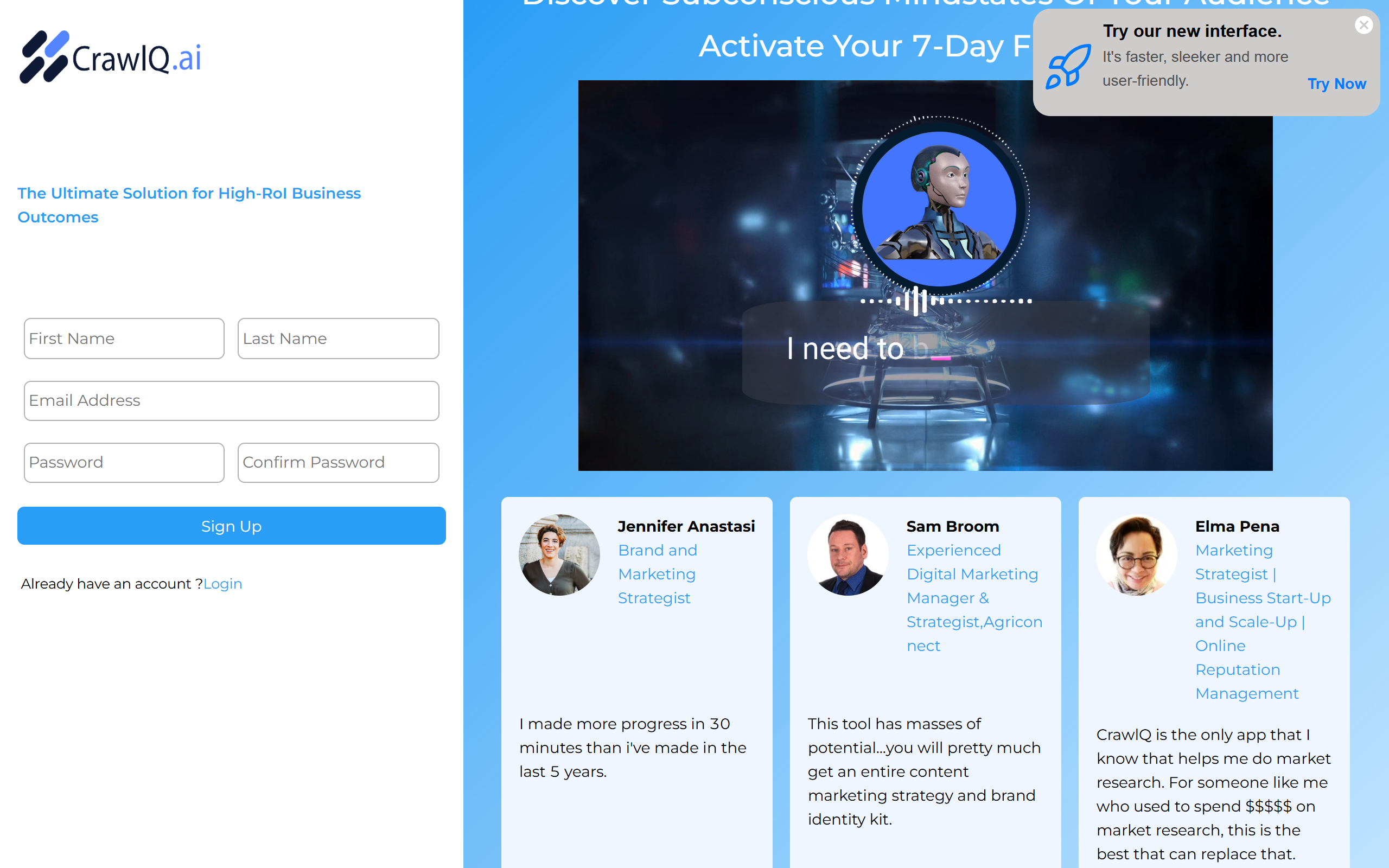
Brand governance platform for AI market research and content that is scored against your brand standards before it ships.
- Freemium
- Web, API
- Data & AnalyticsResearchProductivity
- Free plan available
- No credit card
What is CrawlQ AI?
Key features
Brand Health scoring
Live scoring of content across five dimensions including audience alignment, brand clarity, reasoning depth, defensibility and novelty.
Brand Memory graph
Knowledge graph that indexes 22+ entity types and links foundation documents with source citations.
Six-dimension research framework
Structured research across identity, audience, position, communication, performance and metrics with auto-generated personas.
Prebuilt content workflows
Ready-made flows for LinkedIn posts, blogs, newsletters, emails and digests, plus a node-based canvas to build custom processes.
Athena AI assistant
An assistant that generates structured scorecards and per-step confidence scoring for auditable content chains.
Competitive moat analysis
Analysis of a brand's defensibility across 12 dimensions with a prioritised strategic insight feed.
Open integrations
Support for any OpenAI-compatible endpoint with user-controlled API keys, plus MCP registry connectors for third-party tools.
Pros & cons
Advantages
- Combines research, persona generation and content creation in a single workspace rather than separate tools.
- Every piece of content is scored against brand standards before publishing, which helps maintain consistency.
- Offers a free starting tier and a low entry price, so teams can trial it before committing.
- Lets users bring their own OpenAI-compatible API keys, giving control over the AI provider.
- EU data residency (Ireland-hosted) helps teams with GDPR and EU AI Act considerations.
Limitations
- The credit-based pricing model means heavy research or content volumes can require a higher tier.
- The breadth of frameworks, scoring dimensions and workflows can be a steep learning curve for new users.
- Advanced capabilities such as Brand Radar and the Strategy Engine are paid add-ons on top of the base plan.
- There is no native mobile app or browser extension; it is a web application only.
Use cases
Brand and marketing teams generating on-brand content at scale while keeping outputs compliant with brand guidelines.
Agencies managing multiple client workspaces who need persona-driven research and content in one place.
Content strategists running structured market research before planning campaigns.
Startups building a content engine cheaply using the lower-priced Spark or Solo plans.
Enterprise teams that need EU data residency and audit-ready, scored content chains for regulated industries.
Ready to try CrawlQ AI?
Pricing
Free
Free
Free starting tier for new accounts to build a first workspace and try the Athena assistant before paying. No credit card required.
Spark
14.99 per month
50,000 credits per month, 10 documents, 3 workspaces, 30 web searches, 5 templates, single seat.
Solo
29 per month
100,000 credits per month, 25 documents, 5 workspaces, 50 web searches, 7 templates, single seat.
Startup
99 per month
250,000 credits per month, 50 documents, 10 workspaces, 100 web searches, 10 templates, up to 5 seats.
Growth
149 per month
500,000 credits per month, 100 documents, 25 workspaces, 200 web searches, 20 templates, up to 10 seats.
Agency
499 per month
1,000,000 credits per month, 250 documents, 50 workspaces, 500 web searches, 50 templates, unlimited seats. Add-ons available: Brand Radar (19/mo), Strategy Engine (49/mo), Brand Command Center (69/mo).
Get started with CrawlQ AI
Click through to CrawlQ AI and start using it now.
- Free plan available
- No credit card