
Crelate
Streamline hiring process, find qualified job applicants, analyze recruitment trends for job market opportunities.
- Freemium
- Web, API
- DesignHR & Recruiting
- Free plan available
- No credit card
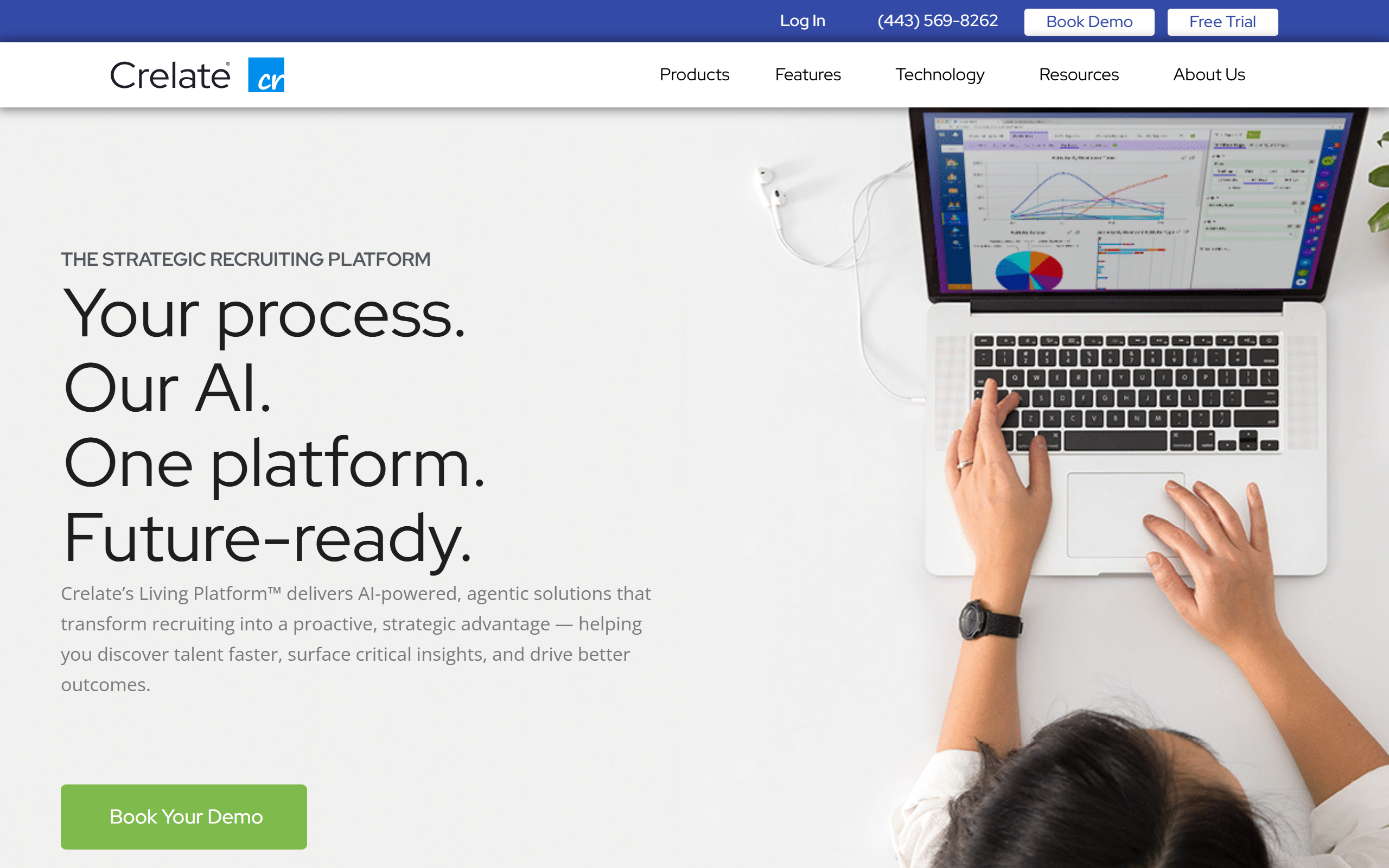
What is Crelate?
Key features
Applicant tracking system
organise and manage candidates across multiple job openings in one place
Job posting distribution
post open roles to multiple job boards and track where applications come from
Recruitment analytics
analyse hiring trends, time-to-hire metrics, and job market data
Candidate database
maintain searchable records of all applicants and past candidates for future roles
Application workflow
set up custom stages and automate status updates as candidates move through the process
Collaboration tools
share candidate notes and feedback with team members during the review process
Pros & cons
Advantages
- Centralises all recruitment activity in one platform, reducing time spent switching between tools
- Labour market analytics help you understand salary trends and competition for talent
- Freemium model lets you test the basics without upfront investment
- Suitable for small teams and larger recruitment operations
Limitations
- The free tier likely has limitations on the number of job postings or candidates you can track
- Smaller user base compared to larger ATS platforms, so integration options may be more limited
- Analytics features may require paid tiers to access full depth of market insights
Use cases
Recruitment agencies managing applications across dozens of open positions and client companies
HR departments needing to track hiring progress and identify bottlenecks in their process
Growing startups building out their first recruitment infrastructure
Job boards and employment platforms distributing postings to multiple channels
In-house recruiters monitoring local job market trends to benchmark salaries and benefits
Ready to try Crelate?
Pricing
Free
Free
Basic applicant tracking, job posting creation, candidate database with limited records
Pro
Contact for pricing
Expanded candidate capacity, advanced analytics, integrations with job boards, priority support
Enterprise
Contact for pricing
Unlimited candidates and job postings, custom workflows, dedicated account management, API access
Get started with Crelate
Click through to Crelate and start using it now.
- Free plan available
- No credit card