
Dataminr
Real-time platform detecting high-impact events and emerging risks from public data.
- Freemium
- Web, API, Mobile apps
- AI Tools for JournalistsData & AnalyticsAI Data Preparation Tools
- Free plan available
- No credit card
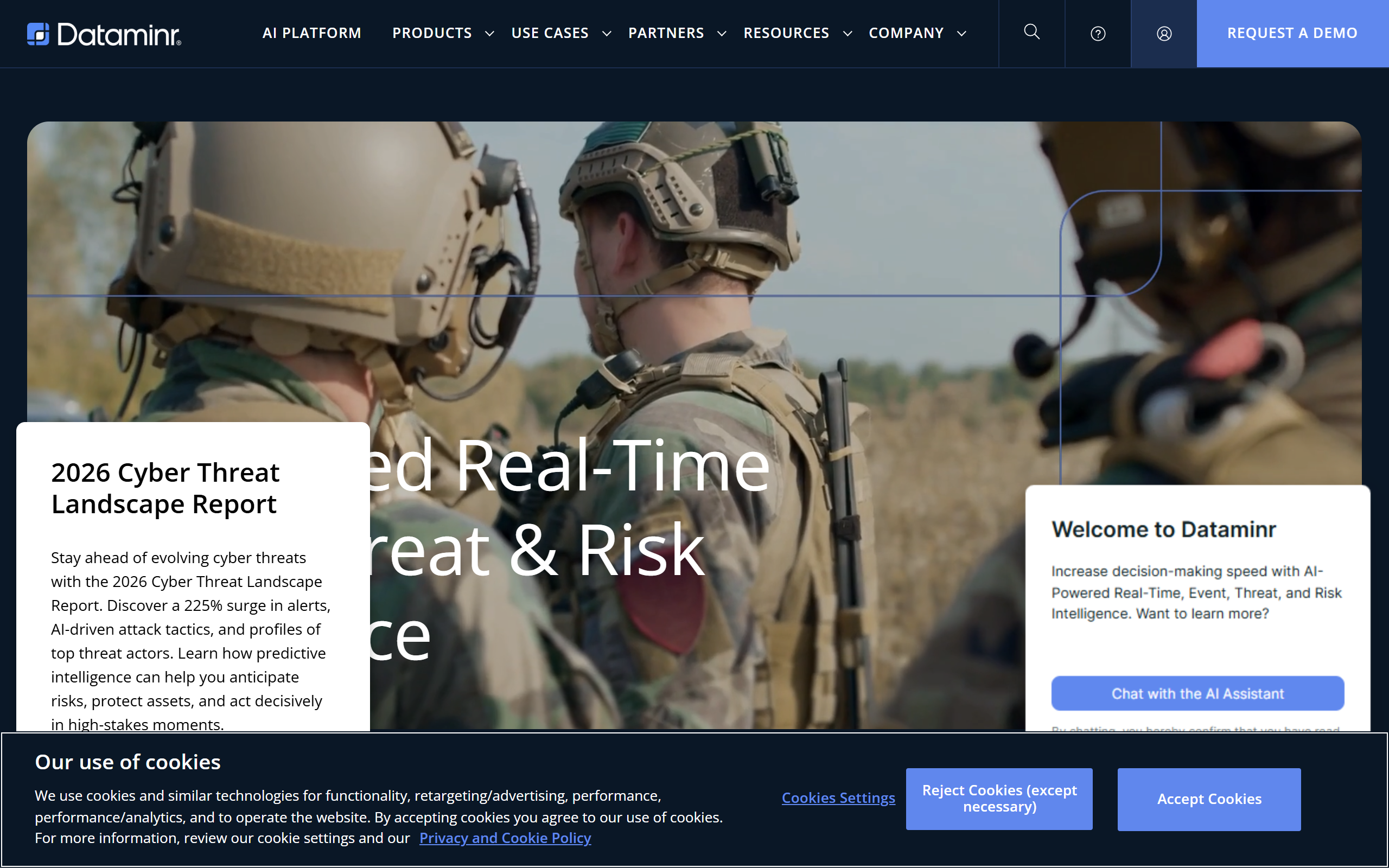
What is Dataminr?
Key features
Real-time event detection
AI algorithms monitor public data continuously to identify significant events as they unfold
Risk alerts
Customisable notifications warn users about emerging threats relevant to their industry or region
Multi-source data fusion
Combines information from news outlets, social media, government sources and other public channels
Custom filtering
Users set parameters to receive alerts tailored to their specific interests and business needs
Dashboard and reporting
Centralised interface to review detected events and track risk patterns over time
Pros & cons
Advantages
- Early awareness of events before mainstream coverage spreads, giving users a competitive or operational advantage
- Covers global events across many sectors and geographies with continuous monitoring
- Reduces manual research time by automatically identifying relevant developments from vast data sources
- Useful for crisis management, business continuity planning and news discovery
Limitations
- Real-time monitoring of public data means alert volume can be high, requiring careful filtering to avoid noise
- Accuracy depends on the quality and availability of public data sources, which may vary by region or event type
- Paid tiers likely required for advanced features and higher alert volumes, with pricing not publicly listed
Use cases
Financial services firms tracking market-moving events and geopolitical risks that could affect trading or portfolios
Supply chain teams monitoring disruptions like natural disasters, port strikes or political instability in key regions
News organisations discovering breaking stories and developing news leads faster than competitors
Government agencies responding quickly to public safety threats, infrastructure failures or civil unrest
Insurance and risk management teams identifying claims-related events or emerging coverage issues
Ready to try Dataminr?
Pricing
Professional
Custom pricing
Advanced filtering, higher alert volumes, priority support, API access
Enterprise
Custom pricing
Full platform access, dedicated account management, custom integrations, SLA guarantees
Get started with Dataminr
Click through to Dataminr and start using it now.
- Free plan available
- No credit card