DaVinciFace
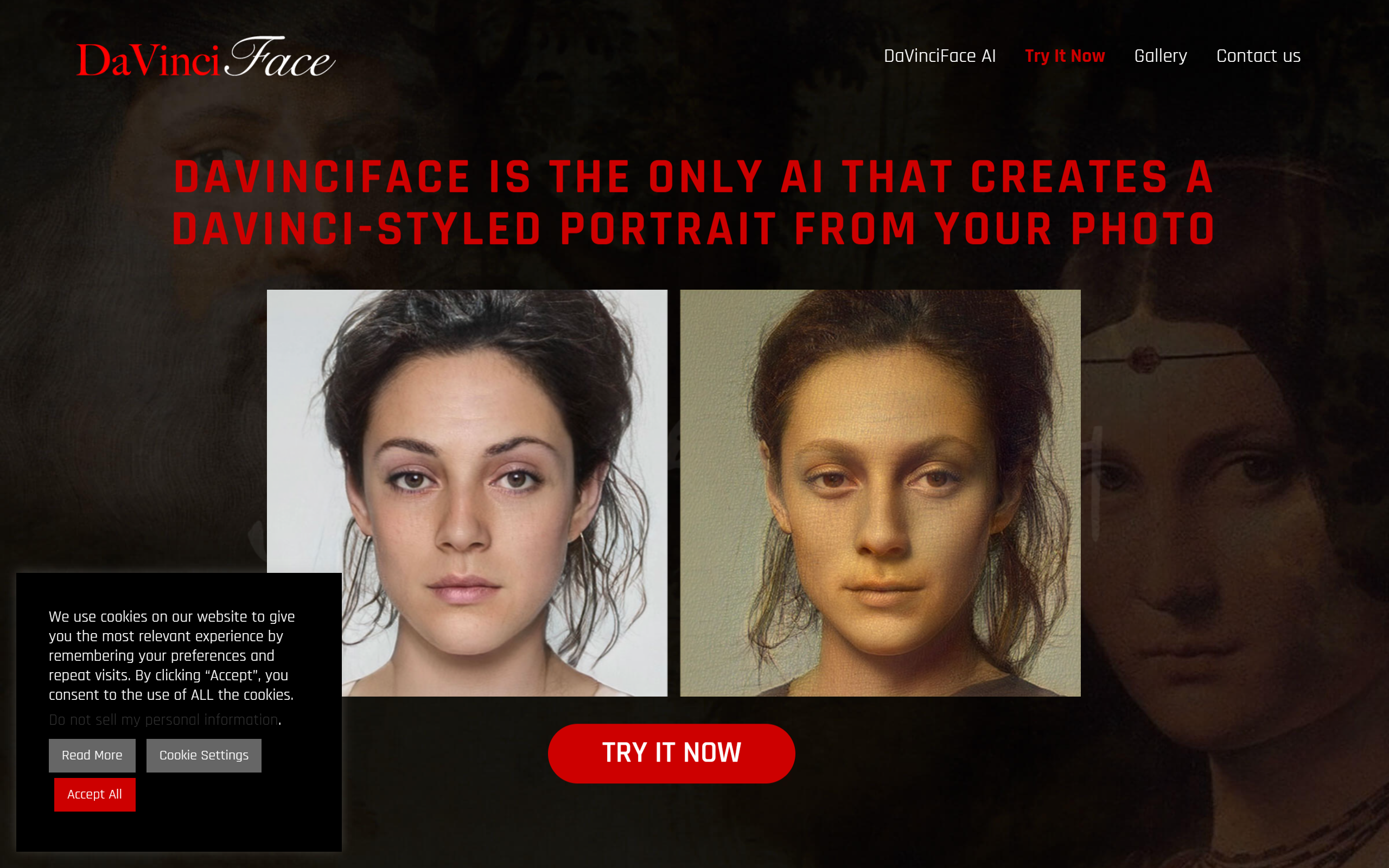
AI portrait generator that turns a photo of your face into a Renaissance-style portrait in the manner of Leonardo da Vinci.
- Freemium
- Web
- Image GenerationCodeEducation
- Free plan available
- No credit card
What is DaVinciFace?
Key features
GAN portrait generation
A Generative Adversarial Network converts an uploaded face photo into a da Vinci-style Renaissance portrait.
Trained on da Vinci masterpieces
The model is trained on works such as the Mona Lisa and La Belle Ferronniere to reproduce the artist's style.
Large model architecture
The network uses around 56 layers and roughly 500 million parameters to perform the transformation.
Fast processing
Each portrait is generated in about 100 seconds using high-end graphics hardware.
Free watermarked output
Every user can generate a free portrait that carries the DaVinciFace logo.
High-resolution purchase
A logo-free 4096 x 4096 pixel PNG version can be bought for a one-off fee.
Privacy handling
Submitted photos are deleted after the portrait is generated and are not shared publicly without consent.
Pros & cons
Advantages
- Produces a distinctive Renaissance portrait style from a single face photo without any editing skills.
- Lets users try the service for free before deciding whether to buy a high-resolution copy.
- Generates results quickly, in roughly 100 seconds per image.
- Deletes uploaded photos after processing, which reduces privacy concerns.
- Offers a one-off purchase at a low price rather than a recurring subscription.
Limitations
- The output is limited to a single artistic style, so it suits novelty and gift uses more than varied creative work.
- Free portraits carry a watermark logo and cannot be used commercially.
- Pricing and licensing details are spread across the shop pages rather than a single clear pricing page.
- There is no API, automation, or bulk option, so it is not suited to high-volume or integrated workflows.
Use cases
Individuals creating a stylised Renaissance portrait of themselves as a novelty or social media image.
People buying a high-resolution da Vinci-style portrait as a personalised gift or print.
Artists and hobbyists experimenting with AI image styling for inspiration.
Event organisers and brands using the portrait effect as an interactive activation for guests.
Social media users generating shareable artistic profile pictures.
Ready to try DaVinciFace?
Pricing
Free
Free
Generate a da Vinci-style portrait from your photo with the DaVinciFace logo watermark; not for commercial use.
DVF Portrait High Resolution
4.99 EUR one-off
High-resolution 4096 x 4096 pixel PNG portrait without the logo, purchased per image.
Get started with DaVinciFace
Click through to DaVinciFace and start using it now.
- Free plan available
- No credit card