
Decisionmentor
Prioritize courses, assess investments, and make informed decisions for students, entrepreneurs, and executives.
- Freemium
- Web
- Education
- Free plan available
- No credit card
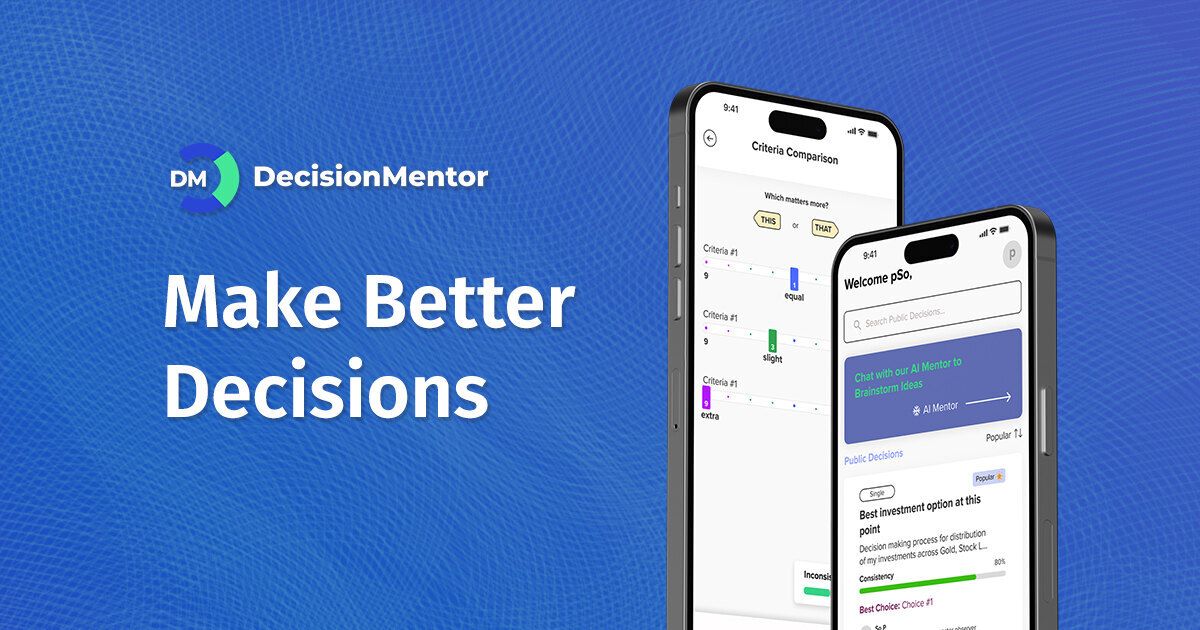
What is Decisionmentor?
Key features
Decision comparison framework
structure options side-by-side using custom criteria you define
Investment assessment
evaluate financial decisions with cost-benefit analysis tools
Course evaluation
compare educational programmes across cost, duration, career prospects, and other factors
Weighted scoring
assign importance levels to different criteria so your priorities shape the outcome
Decision history
save and revisit past decisions to track how your choices unfolded
Pros & cons
Advantages
- Forces you to clarify what actually matters in a decision rather than relying on gut feeling
- Works across different decision types, from career choices to financial investments
- Free version offers genuine functionality without severe feature restrictions
- Reduces decision paralysis by providing a structured process
Limitations
- The quality of results depends entirely on the criteria and weights you input; garbage in, garbage out
- Cannot replace expert advice for complex financial or legal decisions
- Limited information on how much the free tier differs from paid options
Use cases
A student comparing university courses to decide which offers the best value for their career goals
An entrepreneur assessing whether to invest in equipment, training, or hiring for their business
An executive evaluating competing projects or vendor proposals using consistent criteria
Someone deciding between a job offer and staying in their current role
A freelancer comparing which client projects to accept based on pay, workload, and growth potential
Ready to try Decisionmentor?
Pricing
Get started with Decisionmentor
Click through to Decisionmentor and start using it now.
- Free plan available
- No credit card