Dozer
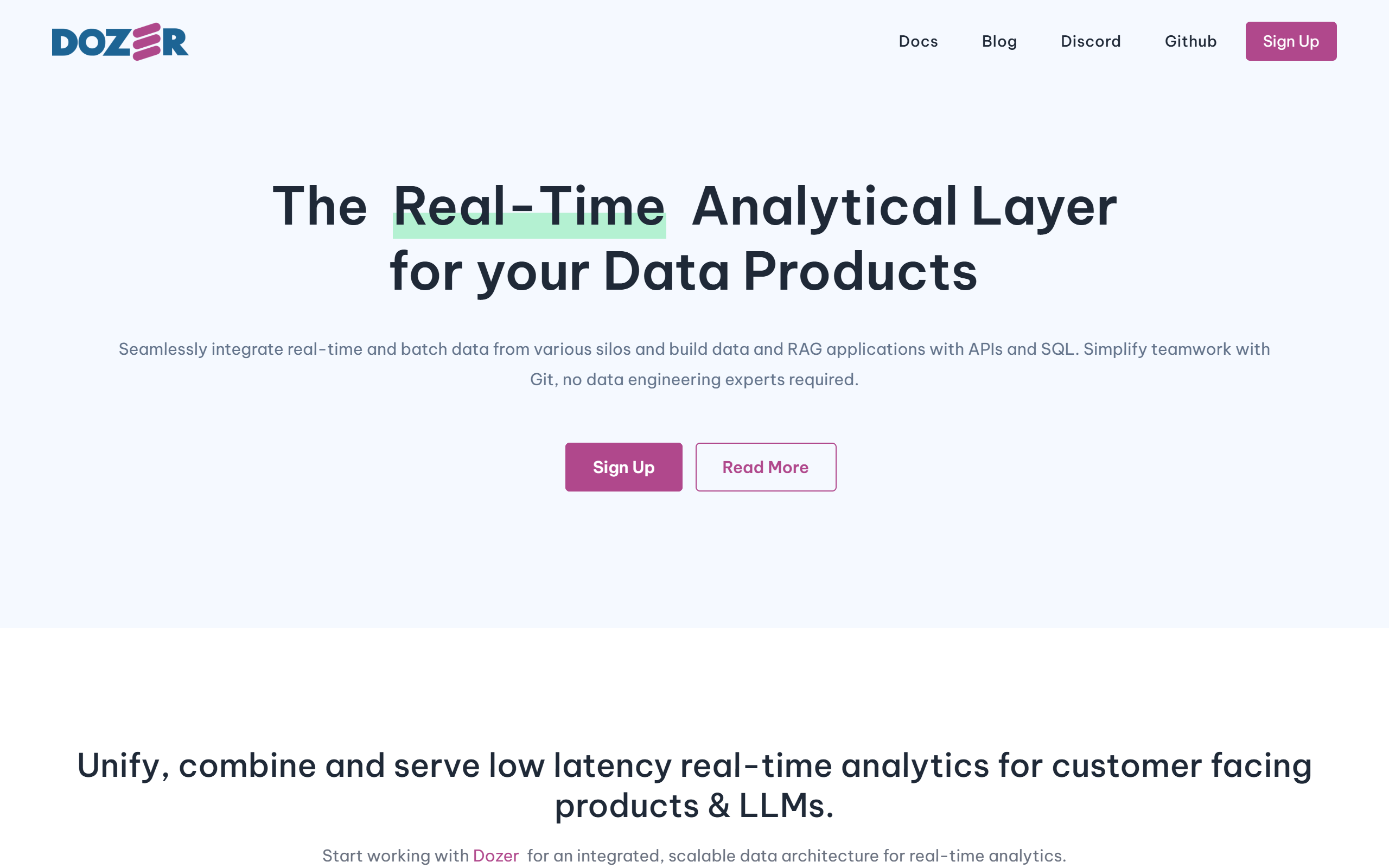
Real-time analytical layer for data products with API and SQL integration.
- Freemium
- Web, API
- Data & AnalyticsCustomer SupportAI Tools for Engineering
- Free plan available
- No credit card
What is Dozer?
Key features
Real-time connectors
ingest data from applications and APIs with CDC support
SQL transformations
define data pipelines and materialized views in standard SQL
Automatic API generation
expose queries as REST endpoints with OpenAPI documentation
LLM and RAG support
integrate with language models and build chatbot experiences
YAML-based semantic layer
manage calculations, security rules, and metadata in version control
ClickHouse backend
use columnar storage for fast analytical queries at scale
Batch and streaming
combine historical data with real-time updates in the same queries
Pros & cons
Advantages
- Fast query performance due to Rust implementation and ClickHouse architecture
- SQL-first approach means existing data analysts can contribute without learning new languages
- API-first design eliminates the need for separate backend code to expose data
- Git-friendly configuration makes it easy to review and version control data pipelines
- Low operational overhead compared to building a custom data stack
Limitations
- Requires some SQL and YAML knowledge; not truly no-code for complex transformations
- Pricing details not publicly listed, may need to contact sales for enterprise plans
- Relatively new platform with smaller ecosystem compared to established analytics tools
- Limited documentation on advanced use cases and edge cases
Use cases
Building customer-facing dashboards and analytics products with real-time data
Creating internal decision support systems that update instantly as data changes
Exposing operational data via APIs for third-party integrations
Building RAG applications that search and reason over your proprietary data
Replacing custom ETL infrastructure for small to mid-sized teams
Ready to try Dozer?
Pricing
Starter
Free
Limited data ingestion and query volume, suitable for evaluation and small projects
Enterprise
Contact sales
Custom data limits, dedicated infrastructure, SLA, advanced security and compliance features
Get started with Dozer
Click through to Dozer and start using it now.
- Free plan available
- No credit card