FileGPT
Generate custom knowledge bases, automate NLP, sentiment analysis, and deploy with an intuitive interface.
- Freemium
- Web
- Data & AnalyticsDesignResearch
- Free plan available
- No credit card
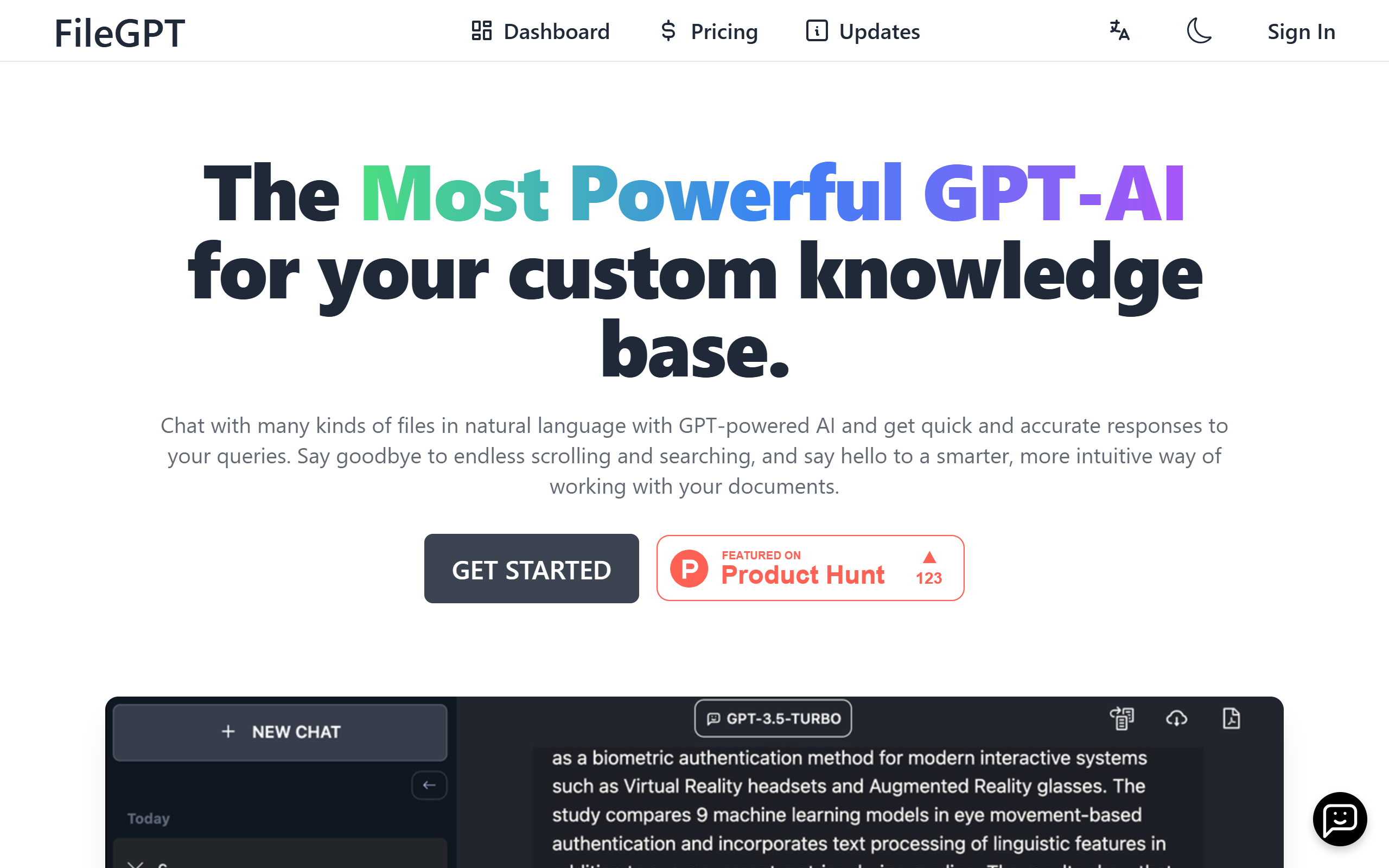
What is FileGPT?
Key features
Custom knowledge base creation
Upload documents and files to build a searchable knowledge base tailored to your content
Sentiment analysis
Automatically analyse the emotional tone and sentiment in text data
Natural language processing
Perform text analysis tasks like entity recognition and classification without coding
Intuitive deployment
Launch your knowledge base through a user-friendly interface with minimal technical setup
File compatibility
Work with multiple document formats to centralise your data sources
Query interface
Ask questions and retrieve relevant information from your knowledge base in plain language
Pros & cons
Advantages
- No coding required to set up natural language processing and sentiment analysis tasks
- Freemium model means you can test the tool and build small knowledge bases without paying
- User-friendly interface makes it accessible to non-technical team members
- Useful for document management and quick insights extraction from your own data
Limitations
- Limited information available about scalability limits or performance with large datasets
- Free tier constraints may restrict file size, number of documents, or query limits
- May not offer advanced customisation for highly specialised NLP requirements
Use cases
Building internal knowledge bases for customer support teams to answer questions faster
Analysing customer reviews and feedback to track sentiment over time
Creating searchable repositories of company documents, policies, and procedures
Extracting insights from research papers, reports, or legal documents
Automating initial document classification and sorting tasks
Ready to try FileGPT?
Pricing
Free
Free
Basic knowledge base creation, limited document uploads, core sentiment analysis and NLP features
Paid plans
Varies
Higher file upload limits, larger knowledge bases, priority support, advanced deployment options
Get started with FileGPT
Click through to FileGPT and start using it now.
- Free plan available
- No credit card