
Gemesys
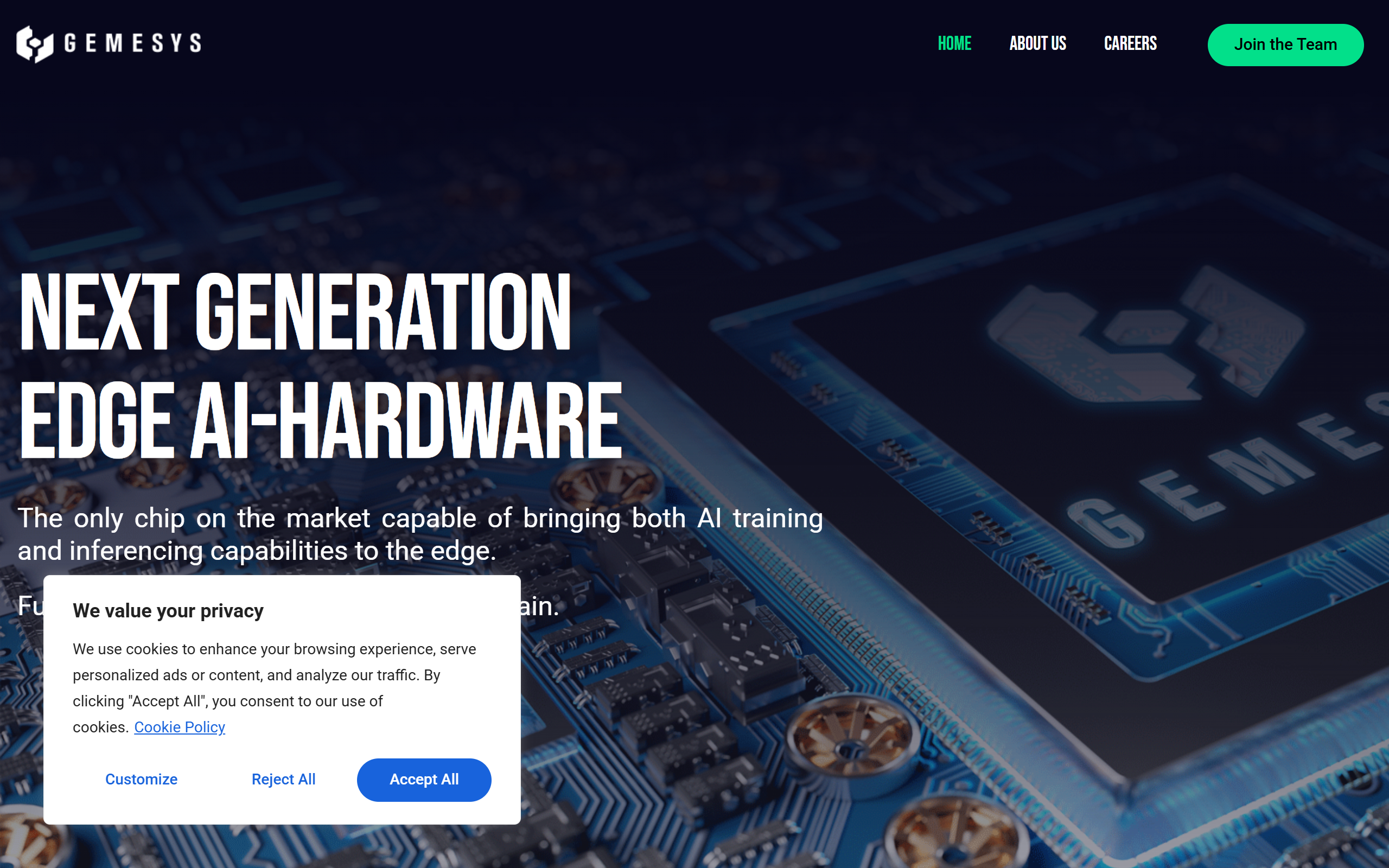
AI-powered platform for next-generation AI hardware.
What is Gemesys?
Key features
Brain-inspired chip architecture
Design tools based on neural system principles rather than traditional processor design
AI-optimised processor development
Platform for creating hardware specifically for machine learning workloads
Energy efficiency focus
Tools and methodology centred on reducing power consumption in AI computing
Custom silicon design support
Enables development of chips tailored to specific AI infrastructure needs
Pros & cons
Advantages
- Addresses real performance bottlenecks in traditional AI hardware
- Purpose-built hardware approach can deliver substantial efficiency improvements
- Supports ongoing AI hardware innovation and development
- Relevant for organisations with significant AI infrastructure investment
Limitations
- Requires substantial technical expertise and engineering resources to use effectively
- Hardware development has extended timelines compared to software approaches
- Adopting custom hardware creates integration and compatibility challenges
- Specialised chip development involves technical complexity and risk
Use cases
Large-scale AI model training and fine-tuning
High-performance AI inference systems
AI research developing next-generation hardware architectures
Organisations with substantial compute and energy infrastructure constraints
Ready to try Gemesys?
Pricing
Enterprise
Contact sales
Custom hardware design and development support for AI infrastructure
Get started with Gemesys
Click through to Gemesys and start using it now.