
Genesis Therapeutics
Genesis Therapeutics is a biotech leader in molecular AI that unites deep learning and physics-based machine learning in its proprietary GEMS platform and Pearl foundation model to unlock tough protei
- Freemium
- Web, API
- Data & AnalyticsImage GenerationAI Model Training Frameworks
- Free plan available
- No credit card
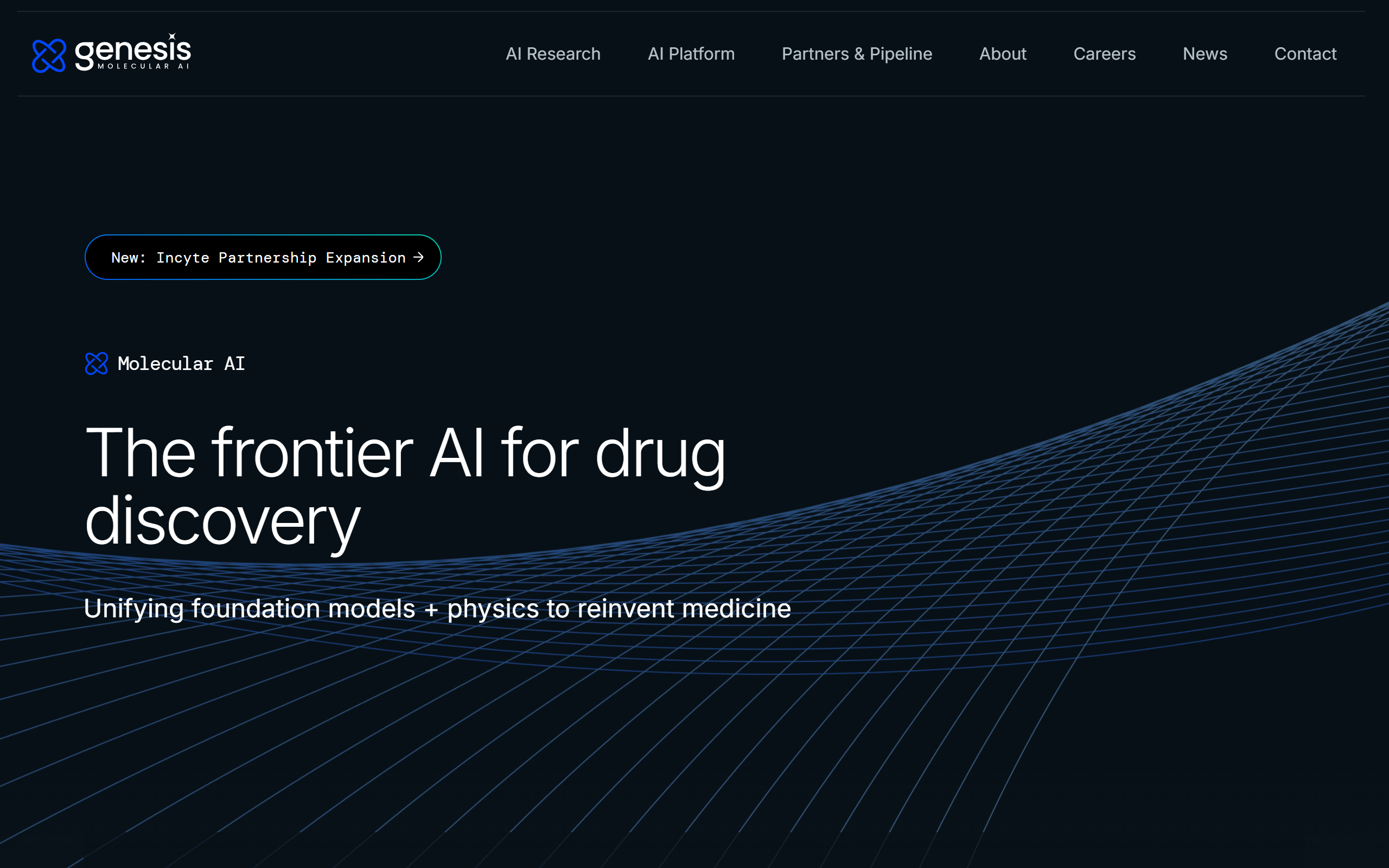
What is Genesis Therapeutics?
Key features
GEMS platform
Proprietary system that combines deep learning and physics-based machine learning for molecular prediction
Pearl foundation model
A trained AI model designed to understand and predict protein-ligand interactions
Protein-ligand prediction
AI-driven prediction of how drug molecules bind to and interact with target proteins
Small-molecule candidate identification
Automated discovery of potential drug candidates across disease areas
Pharma partnership capability
Integration with pharmaceutical companies' existing research pipelines
Pros & cons
Advantages
- Addresses challenging protein targets that are difficult to drug using conventional methods
- Combines multiple machine learning approaches rather than relying on a single technique
- Backed by experienced biotech team with access to pharma partnerships and funding
- Freemium model allows some access without upfront costs
Limitations
- As an early-stage discovery tool, results still require validation through traditional wet-lab testing and clinical trials
- Limited public information available about specific performance metrics or success rates compared to competitors
- Intended primarily for pharmaceutical organisations rather than individual researchers or small teams
Use cases
Pharmaceutical companies screening potential drug candidates for hard-to-drug protein targets
Biotech firms accelerating their small-molecule discovery programmes
Academic research groups exploring protein-ligand interactions at scale
Drug development teams prioritising which molecules to synthesise and test first
Ready to try Genesis Therapeutics?
Pricing
Freemium
Free with limitations
Basic access to platform functionality with usage restrictions; paid or enterprise tiers available for greater capacity and features
Get started with Genesis Therapeutics
Click through to Genesis Therapeutics and start using it now.
- Free plan available
- No credit card