
Google Health
Access health records, track goals, and receive personalized advice from experts.
- Freemium
- Web, iOS, Android
- Healthcare
- Free plan available
- No credit card
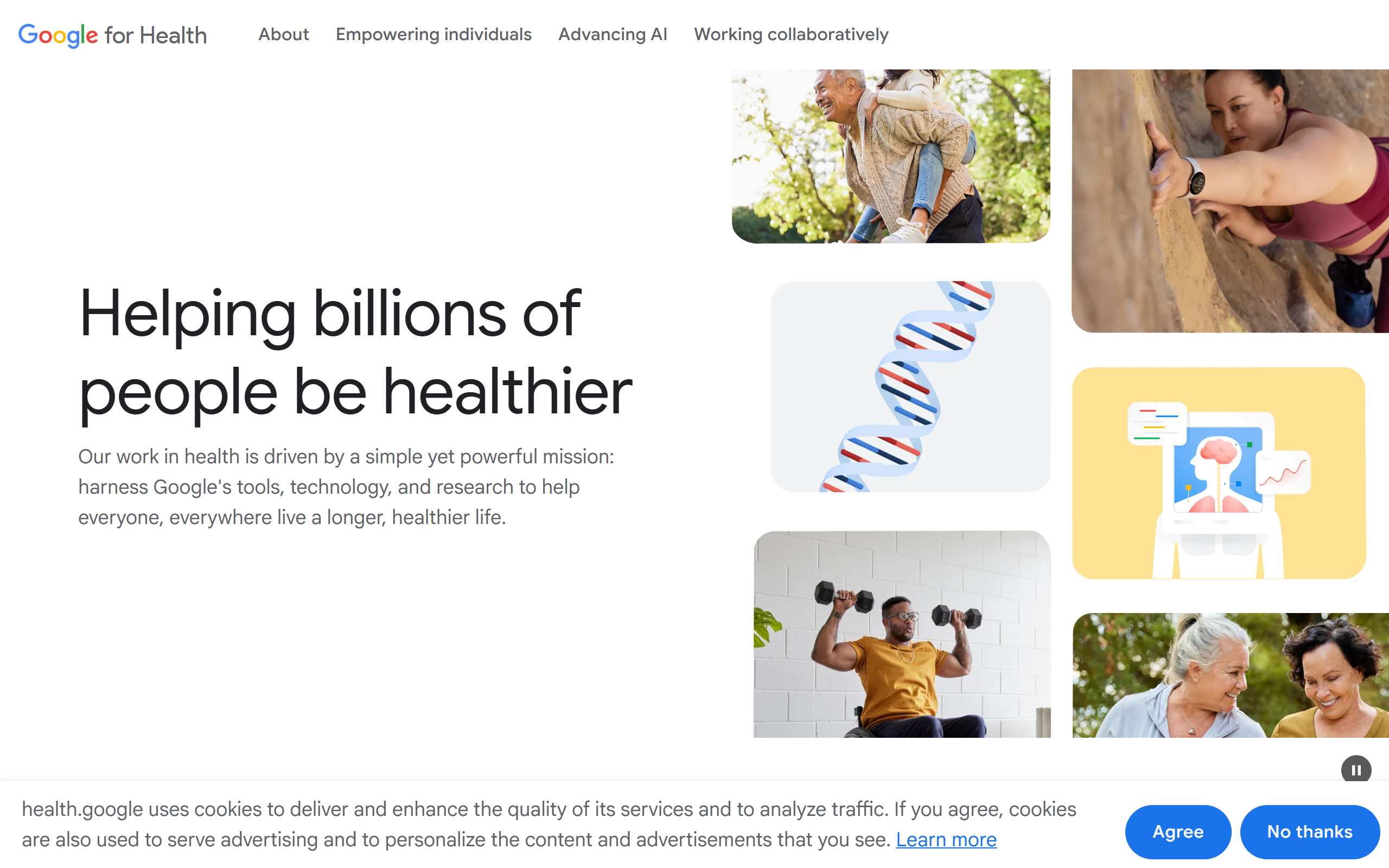
What is Google Health?
Key features
Health record storage
Import and organise medical records from healthcare providers and clinics in a centralised digital vault
Activity and metrics tracking
Monitor fitness data, vital signs, and health metrics from connected wearables and apps
Goal setting and progress monitoring
Create personal health goals and track your progress over time with visual dashboards
Expert guidance
Receive personalised health advice and recommendations based on your stored data and goals
Data integration
Connect data from multiple sources including hospitals, pharmacies, fitness apps, and wearable devices
Secure sharing
Control access to your health information and share specific records with healthcare providers or family members when needed
Pros & cons
Advantages
- Free to use at the base level, making health management accessible without subscription costs
- Aggregates data from multiple sources, reducing the need to manage separate apps and platforms
- Backed by Google's infrastructure, offering reliable cloud storage and data security
- Helps establish a complete health picture by centralising scattered medical information
Limitations
- Adoption depends on healthcare providers participating in the integration ecosystem; not all clinics or hospitals may support data exports yet
- Data privacy concerns may arise for users hesitant about storing sensitive health information with a large technology company
- Limited clinical functionality compared to dedicated electronic health record systems used by medical professionals
Use cases
Managing chronic conditions by tracking multiple health metrics and sharing relevant data with your GP or specialist
Maintaining a portable health record when relocating or changing healthcare providers
Coordinating care across multiple doctors by centralising records and medication information
Tracking fitness and wellness goals alongside medical data for a complete health overview
Preparing for medical appointments with organised records and accurate symptom or measurement history
Ready to try Google Health?
Pricing
Free
Free
Access to health record storage, activity tracking, goal setting, and basic expert guidance
Get started with Google Health
Click through to Google Health and start using it now.
- Free plan available
- No credit card