
Groove
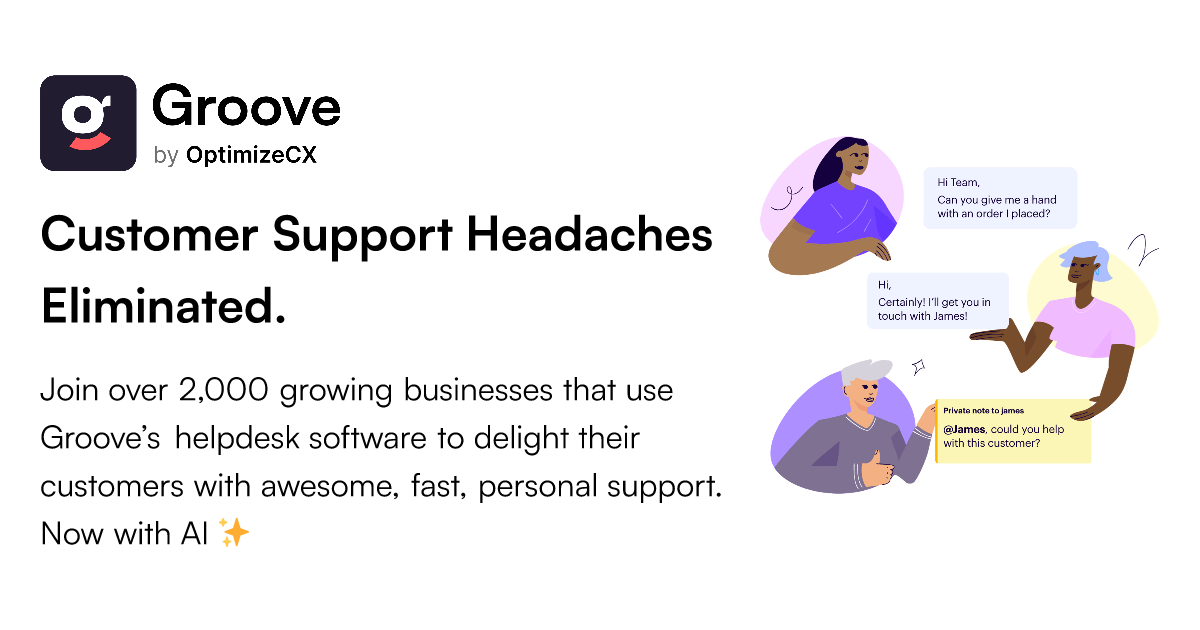
Automate customer inquiries, respond quickly, gain insights with an intuitive interface and analytics dashboard.
- Freemium
- Web, API
- Data & AnalyticsCustomer SupportDesign
- Free plan available
- No credit card
What is Groove?
Key features
Multi-channel inbox
manage emails, chat, social media messages and other customer contacts in one place
Automation rules
set up automatic responses and routing for common inquiry types to reduce manual work
Analytics dashboard
track metrics like response times, resolution rates and team member performance
Template library
create and save response templates for faster replies to recurring questions
Team collaboration
assign tickets to team members, add internal notes and track conversation history
Knowledge base integration
link to help articles so customers can find answers without creating tickets
Pros & cons
Advantages
- Freemium option lets you try the core features without paying upfront
- Simple interface means your team can start using it with minimal training
- Consolidates multiple communication channels so nothing gets missed
- Automation rules cut down time spent on repetitive replies
Limitations
- Limited customisation options compared to enterprise support platforms like Zendesk or Freshdesk
- Analytics features are basic; teams needing deep reporting or custom dashboards may find it insufficient
- Integrations with third-party tools may be fewer than larger competitors
Use cases
Small SaaS companies handling customer onboarding questions and technical support
E-commerce teams managing order status inquiries and returns requests
Service businesses responding to booking and scheduling questions
Product teams using support data to identify common customer problem
Growing startups that need organised support without the cost of enterprise software
Ready to try Groove?
Pricing
Get started with Groove
Click through to Groove and start using it now.
- Free plan available
- No credit card