
GSpeech
Convert any text content into engaging audio with this realistic AI voice generator
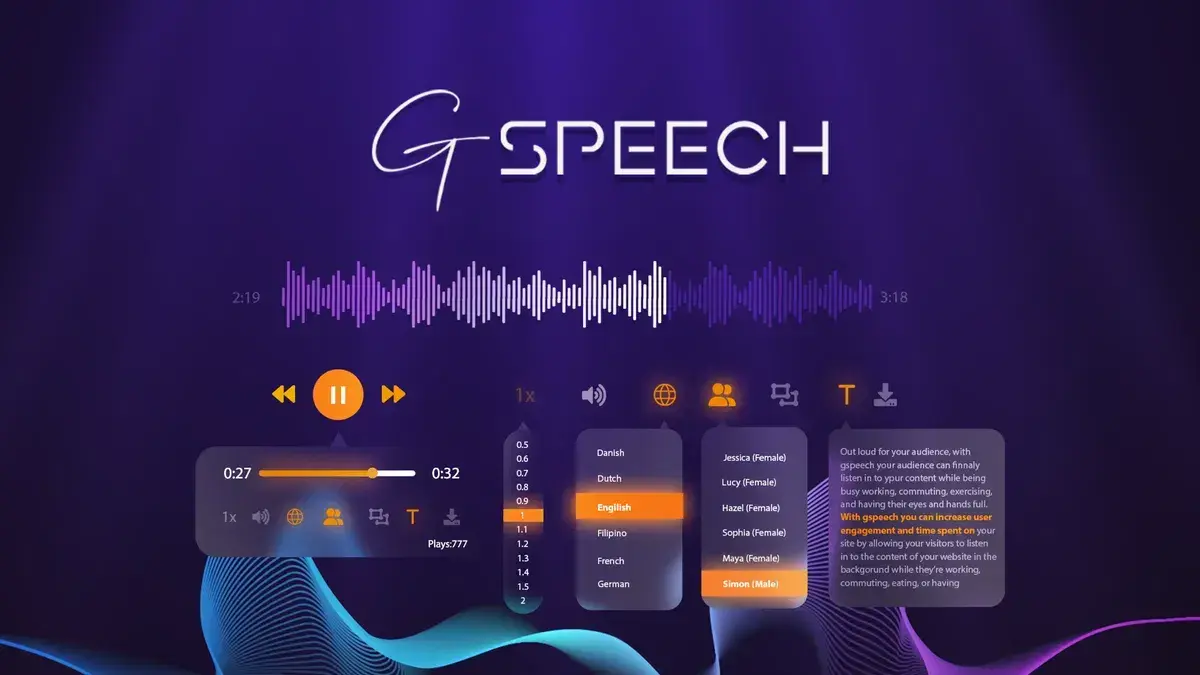
What is GSpeech?
Key features
Text-to-speech conversion
transforms written content into natural-sounding audio files
Multiple voice options
choose from different voices and accents to suit your content
Language support
handles text in various languages for international use
Customisable playback
adjust speed and tone to match your preferences
File export
download audio in standard formats for use across platforms
Batch processing
convert multiple pieces of content efficiently
Pros & cons
Advantages
- Quick way to repurpose existing written content into audio format
- Natural-sounding voices that don't require professional voice actors
- Affordable entry point through AppSumo's pricing model
- Works with any text, so no content is off-limits
- Accessible alternative for readers who prefer audio or have visual impairments
Limitations
- Synthetic voices, while improved, may lack the emotional nuance of human narration
- Pronunciation of proper nouns, technical terms, or unusual words may sometimes be inaccurate
- Quality and available voices may vary by language; some languages have fewer options than others
Use cases
Podcasters converting written articles into audio episodes
Accessibility: making blog posts and documents available to users who listen rather than read
E-learning content: creating audio versions of course materials or training documents
Busy professionals listening to work emails or reports during commutes
Content creators producing multiple formats from a single written piece
Ready to try GSpeech?
Pricing
Pricing varies by AppSumo deal
Variable (typically one-time purchase or annual subscription)
Specific pricing and feature tiers depend on the current AppSumo promotion; check the website for current options
Get started with GSpeech
Click through to GSpeech and start using it now.