
Helicone AI
The open-source LLM observability for developers.
- Open Source
- Web, API
- Data & AnalyticsAI for DevelopersAI LLMOps & Frameworks
- Open source
- Free forever
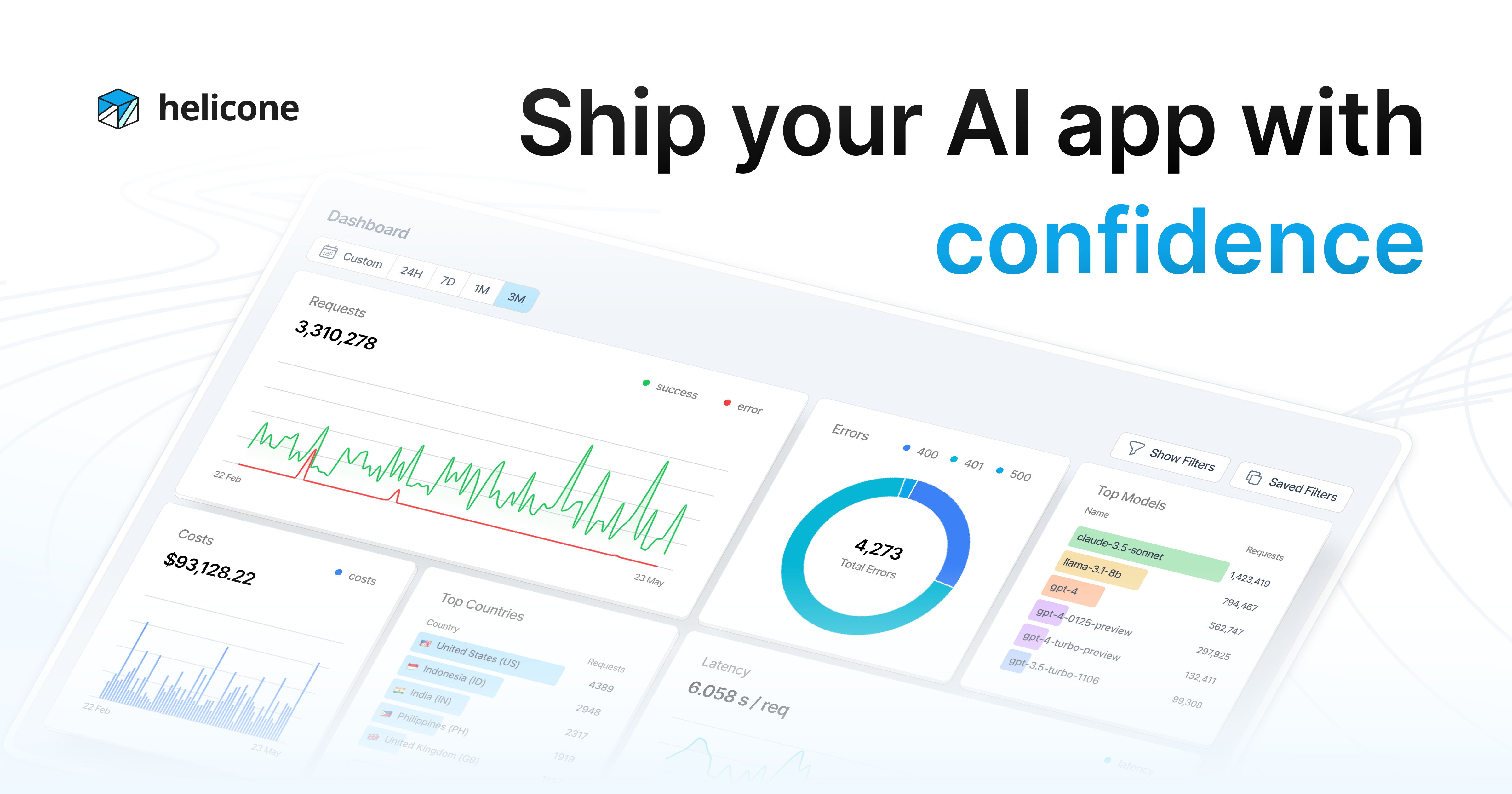
What is Helicone AI?
Key features
Request logging and analytics
Capture and analyse every interaction with your LLM, including latency, token usage, and costs
Model routing
Direct requests to different LLM providers based on rules you define, helping optimise performance and expense
Error tracking and debugging
Identify failed requests and problematic prompts with detailed error information
Cost monitoring
Track spending across different models and providers in real time
API integration
Connect via API with minimal changes to your existing codebase
Open-source availability
Self-host the platform or use the managed cloud version
Pros & cons
Advantages
- Open-source means you can self-host and retain full control of your data
- Straightforward integration with existing LLM applications without major refactoring
- Provides practical visibility into model performance and costs, which is often overlooked
- Supports multiple LLM providers, allowing you to compare and route between them
Limitations
- Self-hosting requires infrastructure knowledge and ongoing maintenance
- May have a steeper learning curve for teams unfamiliar with observability tools
- Community support for open-source version may be more limited than commercial alternatives
Use cases
Monitoring production LLM applications to catch performance regressions early
Reducing operational costs by identifying which models and prompts are most expensive
Debugging unexpected behaviour in AI-powered features by reviewing detailed request logs
A/B testing different models or prompts to find the best balance of quality and cost
Building compliance and audit trails for regulated industries that need detailed LLM usage records
Ready to try Helicone AI?
Pricing
Cloud (free tier)
Free
Managed hosting with limited monthly requests or data retention
Get started with Helicone AI
Click through to Helicone AI and start using it now.
- Open source
- Free forever