
Helicone AI
The open-source LLM observability for developers.
- Open Source
- Web, API
- Data & AnalyticsAI for DevelopersAI LLMOps & Frameworks
- Open source
- Free forever
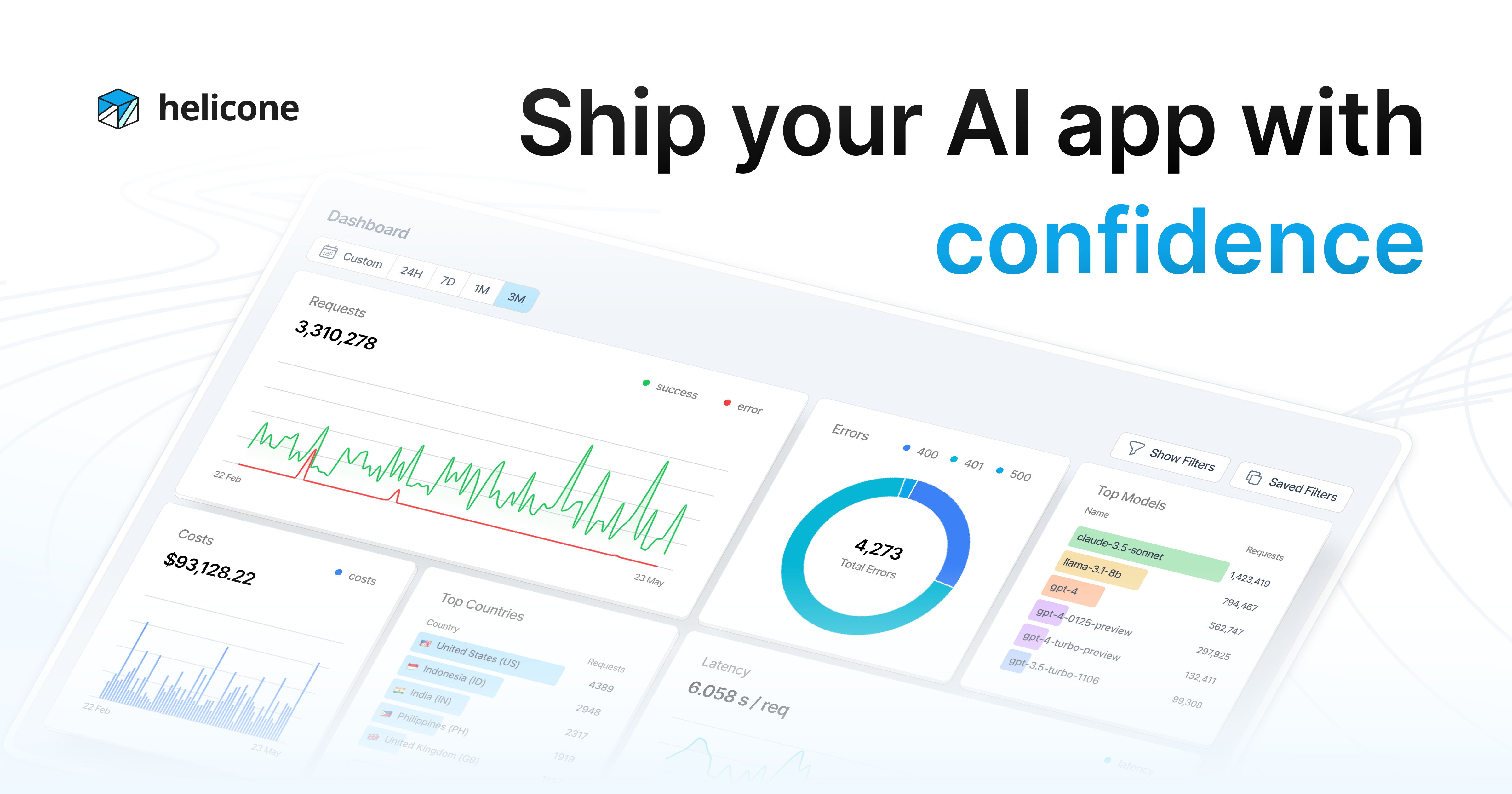
What is Helicone AI?
Key features
Request routing and load balancing across multiple LLM providers and models
Detailed logging and analytics for tracking latency, token usage, and costs
Error tracking and debugging tools to identify and resolve issues quickly
Cache management to reduce redundant API calls and lower expenses
User and session tracking to monitor behaviour and usage patterns
Integration with popular LLM frameworks and API providers
Pros & cons
Advantages
- Open-source, so you can self-host and customise it to your needs
- Reduces costs by identifying inefficient queries and enabling intelligent caching
- Provides detailed insights into model performance and application behaviour without heavy instrumentation
- Supports multiple LLM providers, reducing vendor lock-in
Limitations
- Self-hosting requires infrastructure knowledge and maintenance responsibility
- May have a learning curve for teams unfamiliar with observability tooling
- Open-source support depends on community activity rather than dedicated vendor support
Use cases
Monitoring production LLM applications to catch performance degradation early
Reducing API costs by analysing token usage and caching frequently used requests
Debugging user-reported issues with AI features by reviewing request logs and model responses
A/B testing different models or prompts to measure quality and cost trade-offs
Building cost allocation systems by tracking LLM usage per user or feature
Ready to try Helicone AI?
Pricing
Open Source
Free
Self-hosted observability platform with full source code access; suitable for teams wanting complete control and customisation
Get started with Helicone AI
Click through to Helicone AI and start using it now.
- Open source
- Free forever