
Heuristica
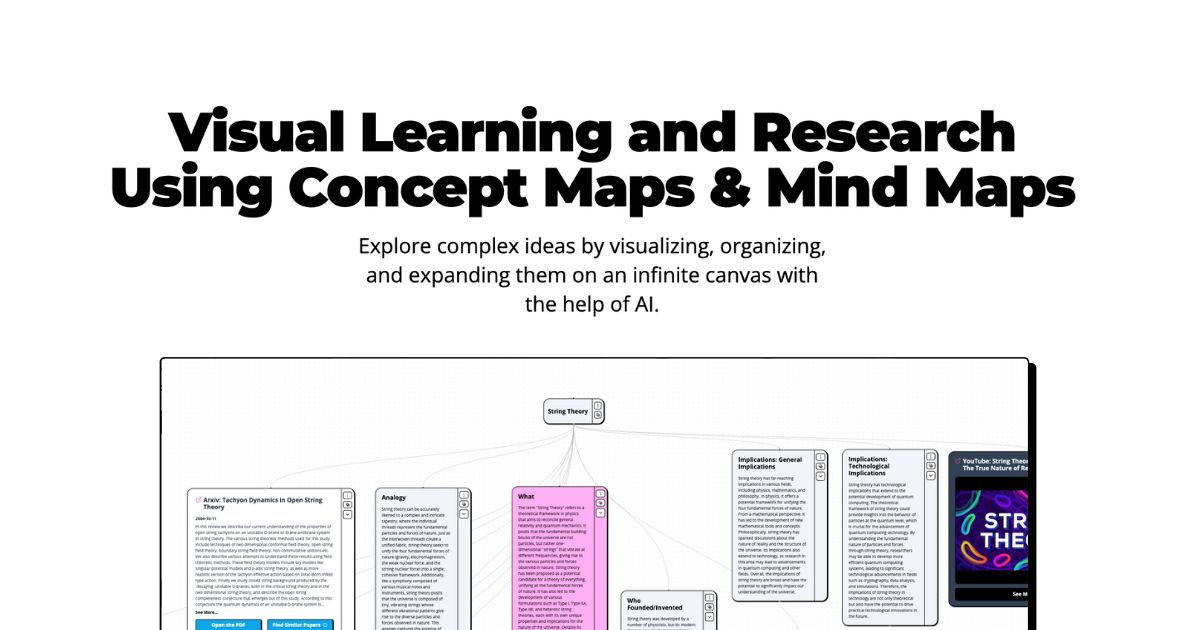
Heuristica is a cutting-edge platform that revolutionizes learning and research by enabling the creation of personalized learning paths, concept maps, and AI-generated content. The platform provides t
- Free plan available
- No credit card
What is Heuristica?
Key features
Concept maps
Convert complex subjects into visual diagrams that show how ideas connect
Personalised learning paths
Create structured sequences of topics to learn in order
AI-generated content
Produce summaries, essays, and other written formats on demand
Multi-source integration
Pull information from Wikipedia, arXiv, Semantic Scholar, and other sources
Multi-language support
Learn and create content in different languages
Knowledge exploration tools
Browse and handle connected topics and concepts
Pros & cons
Advantages
- Integrates credible academic sources, making research more reliable than general-purpose AI alone
- Visual concept maps help you understand how different ideas relate to each other
- Freemium model lets you try the core features without paying
- Supports multiple languages, useful for international learners
Limitations
- Quality of generated content depends on underlying sources and AI model capabilities
- Learning curve for creating effective concept maps and learning paths
- Limited details available about what features are restricted in the free tier
Use cases
Students researching topics for essays or projects who want structured learning paths
Researchers exploring new academic areas and creating visual summaries of connections
Educators designing curriculum or preparing course materials
Professionals upskilling in new domains with organised, visual learning frameworks
Language learners exploring topics in different languages
Ready to try Heuristica?
Pricing
Free
Free
Access to core features including concept maps, learning paths, and content generation with limitations
Paid (specific tier name not confirmed)
Price not publicly specified
Likely includes unlimited content generation, advanced customisation, and premium integrations
Get started with Heuristica
Click through to Heuristica and start using it now.
- Free plan available
- No credit card