
Hookdeck Outpost
Open-source outbound webhooks for your platform
- Freemium
- Web, API, Self-hosted
- Data & AnalyticsImage GenerationSocial Media
- Free plan available
- No credit card
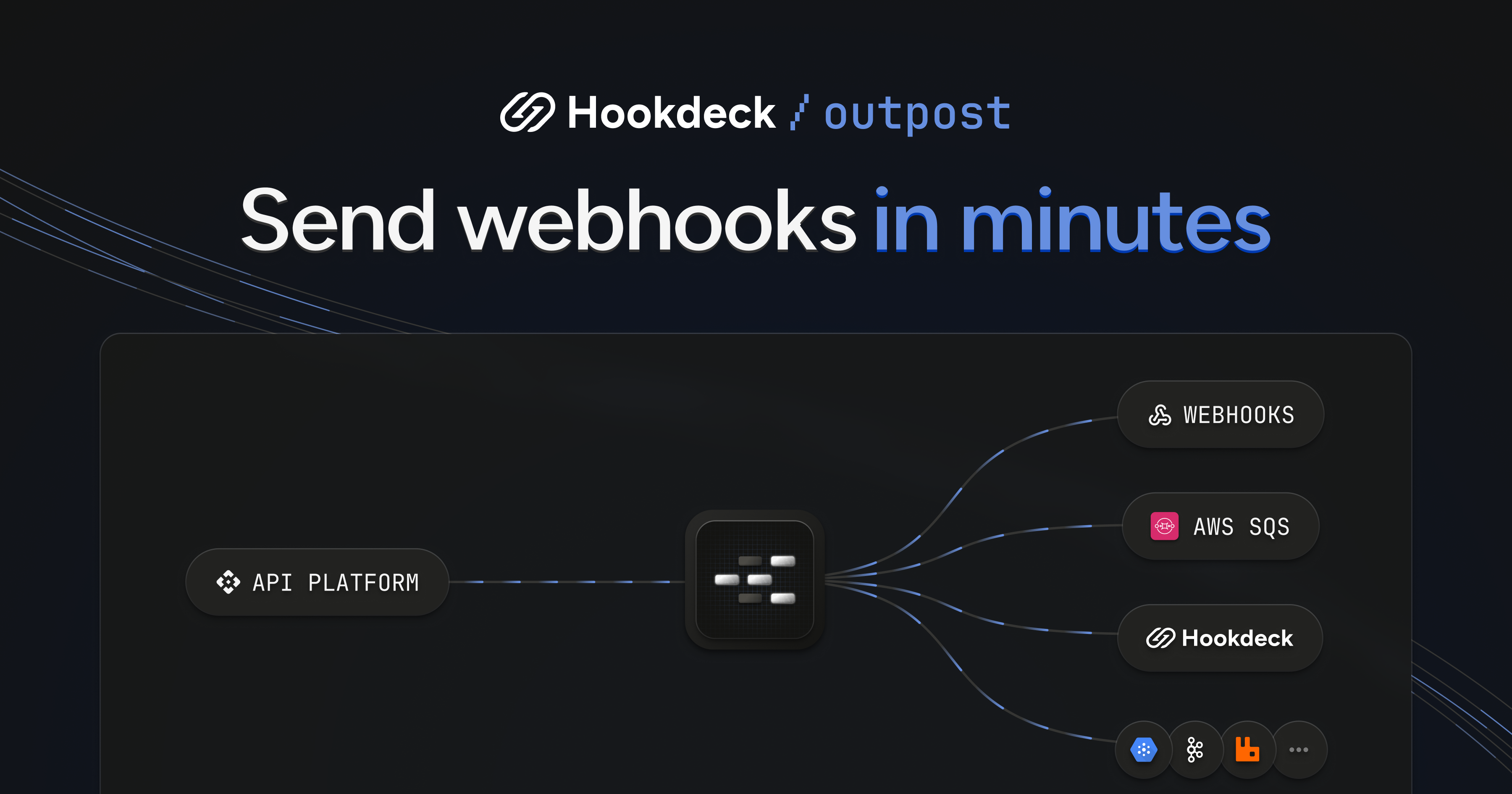
What is Hookdeck Outpost?
Key features
Multi-destination routing
send events to webhooks, SQS, RabbitMQ, Pub/Sub, EventBridge, Kafka, and other services from a single integration
Open-source codebase
full source code available for inspection, modification, and self-hosting
User-preferred destinations
customers can configure where they receive their events rather than being forced to use one channel
Event transformation and filtering
modify event payloads and apply conditional logic before delivery
Retry and failure handling
automatic retries with configurable policies and dead-letter queues for failed deliveries
Low operational overhead
designed to run efficiently with minimal infrastructure requirements
Pros & cons
Advantages
- Significantly cheaper than alternative webhook platforms, roughly 10% of typical costs
- Open-source and self-hostable, giving you control over your infrastructure and data
- Supports many destination types, making it flexible for different technical stacks
- Allows end-users to choose their own delivery destinations, improving product value
Limitations
- Open-source projects require more hands-on management and operational responsibility than fully managed services
- Smaller community and ecosystem compared to established webhook platforms, so fewer third-party integrations
- Self-hosting requires infrastructure knowledge and ongoing maintenance work
Use cases
SaaS platforms offering customers configurable webhook delivery to their preferred systems
Event-driven architectures where multiple internal systems need to consume the same events
Companies wanting to reduce webhook delivery costs while maintaining reliability
Platforms requiring HIPAA, SOC2, or other compliance controls by using self-hosted infrastructure
Organisations building internal event buses that feed multiple downstream systems
Ready to try Hookdeck Outpost?
Pricing
Open Source (Free)
Free
Self-hosted deployment, full source code access, community support, all core routing and delivery features
Outpost Cloud (Freemium)
Free to start, paid tiers available
Managed cloud hosting, free tier with usage limits, paid options for higher volume and additional features
Get started with Hookdeck Outpost
Click through to Hookdeck Outpost and start using it now.
- Free plan available
- No credit card