
JsonGPT
JsonGPT is an innovative API designed to make it easier for developers to obtain structured JSON data from Large Language Models (LLMs). Acting as a mediator, JsonGPT integrates seamlessly with popula
- Freemium
- Web, API
- AI for DevelopersDesignDeveloper Tools
- Free plan available
- No credit card
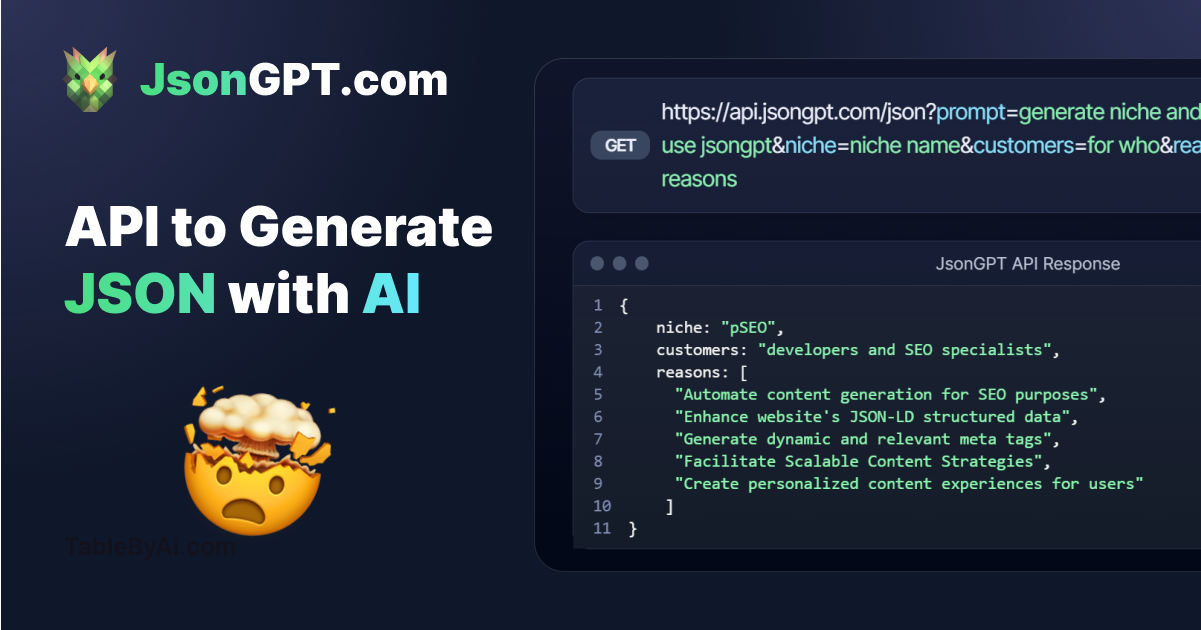
What is JsonGPT?
Key features
Multi-provider support
works with OpenAI, Google Gemini, Meta Llama, Azure OpenAI, Groq, and Anthropic Claude
Schema validation
ensures LLM output conforms to your specified JSON structure
Prompt caching
reduces costs by caching repeated requests across API calls
JSON streaming
delivers results incrementally for faster perceived performance
Web and document extraction
pulls structured data from websites and PDF files
Automatic retry logic
includes fallback mechanisms to handle failed requests
Pros & cons
Advantages
- Eliminates manual JSON parsing and validation work from your codebase
- Works across multiple LLM providers, reducing vendor lock-in
- Cost-efficient through prompt caching and request optimisation
- Handles extraction from unstructured sources like web pages and PDFs
Limitations
- Adds another API layer between your application and LLMs, increasing latency slightly
- Dependency on a third-party service means potential downtime affects your data pipeline
- Specific pricing details for paid tiers are not clearly documented publicly
Use cases
Extracting structured product data from e-commerce websites for price monitoring
Converting unstructured text documents into consistent JSON schemas for database storage
Building data pipelines that process PDFs and extract key information automatically
Generating structured API responses from multiple LLM providers without custom parsing
Creating web scraping tools that maintain data consistency across requests
Ready to try JsonGPT?
Pricing
Get started with JsonGPT
Click through to JsonGPT and start using it now.
- Free plan available
- No credit card