
KnowledgeGraph GPT
Convert text to knowledge graph, export as JSON, access open-source code on GitHub.
- Open source
- Free forever
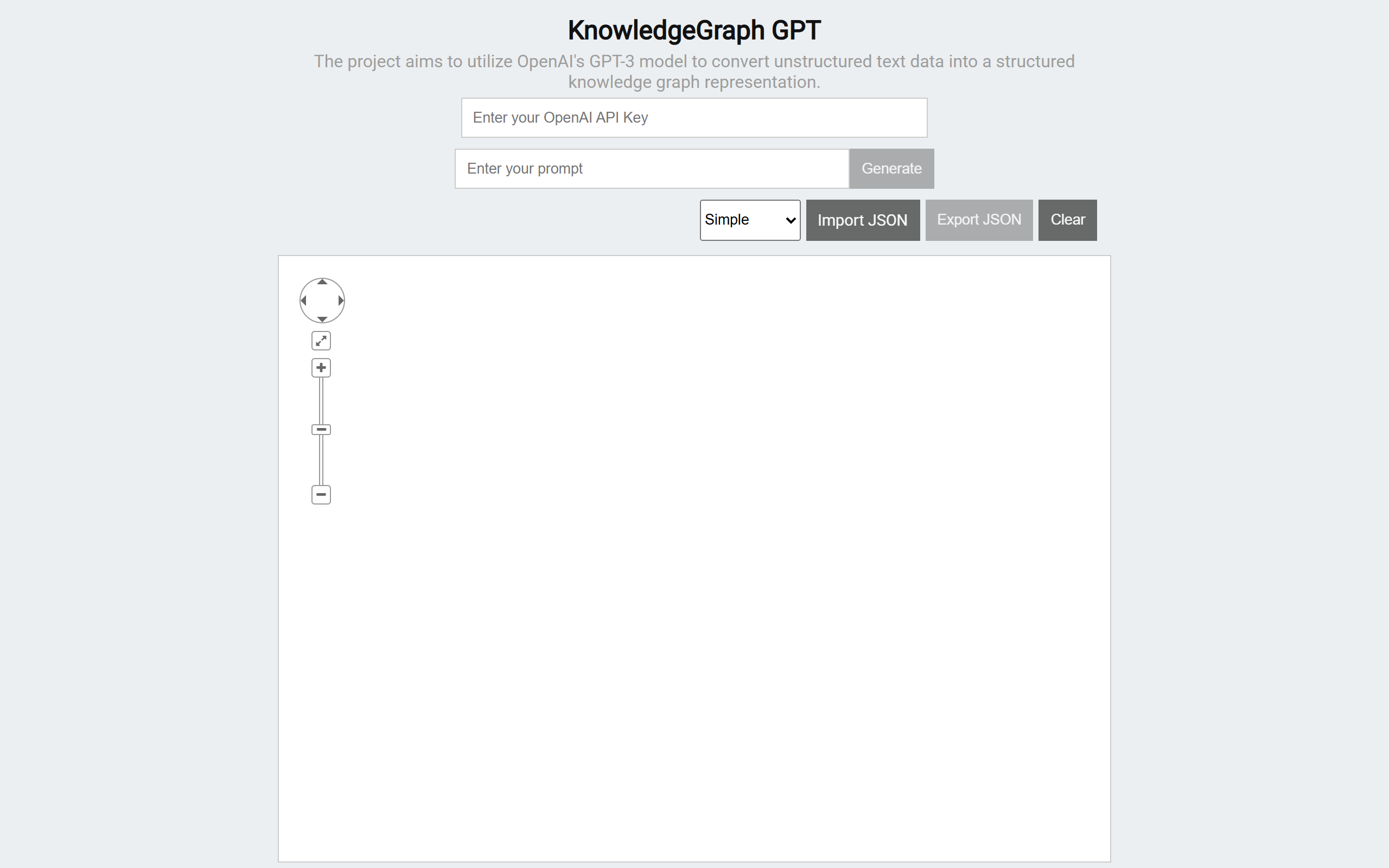
What is KnowledgeGraph GPT?
Key features
Text to knowledge graph conversion
automatically extracts entities and relationships from unstructured text
JSON export
download your knowledge graph in a standard format for use in other tools or systems
Open-source code
full access to the source code on GitHub for transparency and customisation
No authentication required
get started immediately without creating an account
Web-based interface
use it directly in your browser without installation
Pros & cons
Advantages
- Completely free and open-source, with no subscription fees or usage limits
- Transparent codebase means you can verify exactly how your data is being processed
- JSON output is flexible and compatible with most data processing workflows
- Self-hosting option available if you need to keep data on your own infrastructure
Limitations
- Limited documentation or support resources compared to commercial tools
- May struggle with complex, ambiguous, or domain-specific text without customisation
- No built-in visualisation interface; you'll need external tools to display graphs visually
Use cases
Extracting structured data from research papers or documents for literature reviews
Building knowledge bases from unstructured business documentation
Mapping relationships in interview transcripts or qualitative research data
Creating entity and relationship datasets for training machine learning models
Organising technical documentation into queryable knowledge structures
Ready to try KnowledgeGraph GPT?
Pricing
Open Source
Free
Full access to web tool and GitHub repository; unlimited conversions; no account required
Get started with KnowledgeGraph GPT
Click through to KnowledgeGraph GPT and start using it now.
- Open source
- Free forever