
Liner.ai
enable machine learning: code-free, end-to-end, fast, and accessible to all.
- Always free
- No credit card
What is Liner.ai?
Key features
Visual workflow builder
create machine learning pipelines by connecting components rather than writing code
Automated data preprocessing
handles data cleaning, normalisation, and feature engineering without manual configuration
Multiple algorithm support
access to different machine learning models suited to classification, regression, and other tasks
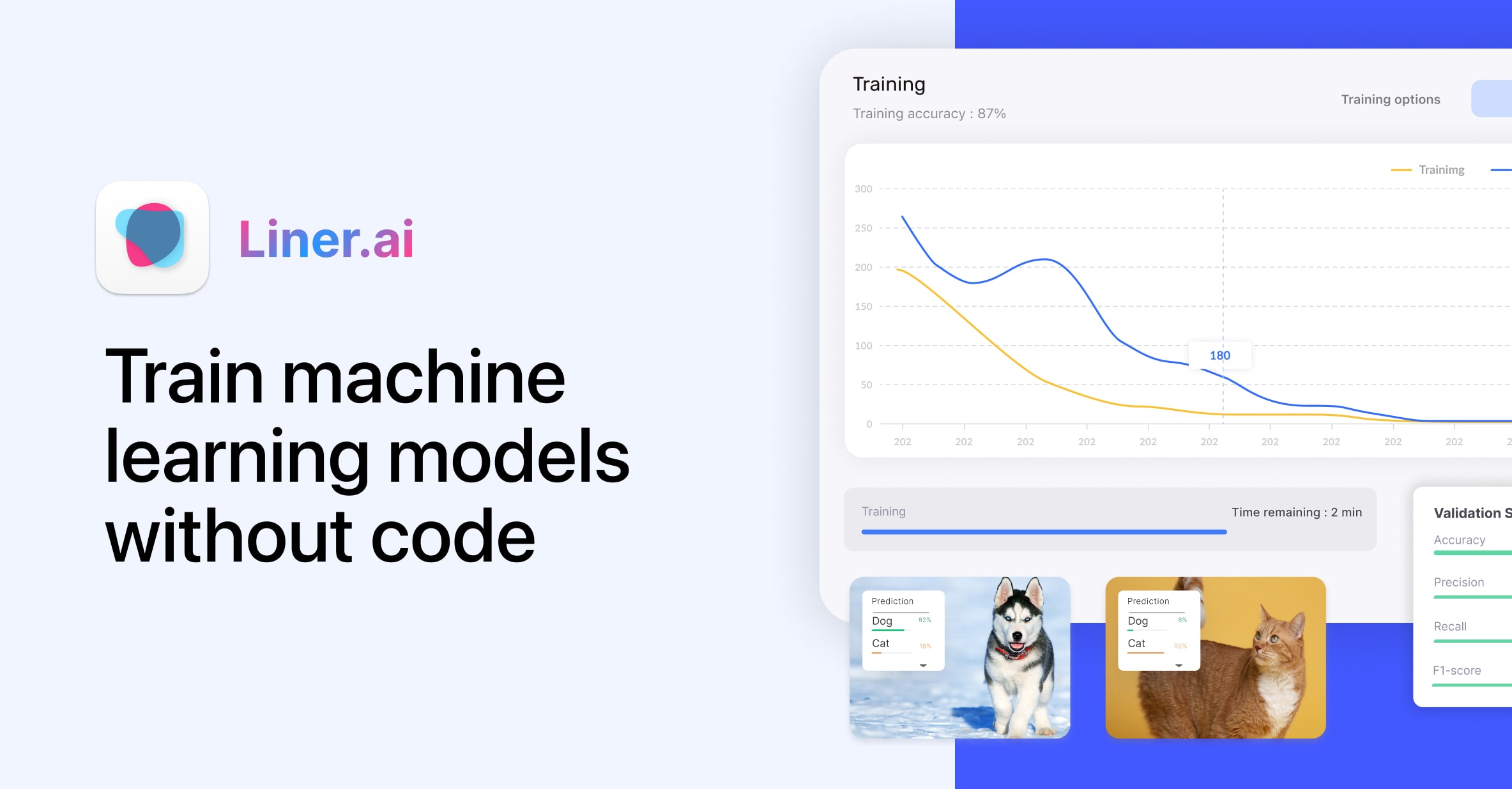
Model training and evaluation
built-in tools to train models and assess their performance using standard metrics
End-to-end pipeline
covers the journey from raw data to a ready-to-use model in one environment
Free tier availability
experiment and build projects without paying
Pros & cons
Advantages
- No coding required, making machine learning accessible to non-technical users
- Single platform handles multiple stages of the ML workflow, reducing tool-switching
- Free access removes financial barriers to experimentation and learning
Limitations
- Visual interfaces can become difficult to handle with complex projects or large numbers of steps
- Limited customisation compared to code-based approaches; advanced users may hit functionality limits
- Free tier may have restrictions on model complexity, data size, or deployment options
Use cases
Analysts building predictive models for business problems without data science support
Teams creating proof of concept projects to demonstrate ML viability before larger investment
Researchers prototyping models quickly without setting up Python or R environments
Business users automating classification or prediction tasks on internal datasets
Students and newcomers learning machine learning concepts through practical application
Ready to try Liner.ai?
Pricing
Free
Free
Full access to core machine learning features, code-free model building, and basic project creation
Get started with Liner.ai
Click through to Liner.ai and start using it now.
- Always free
- No credit card