
LLMTest
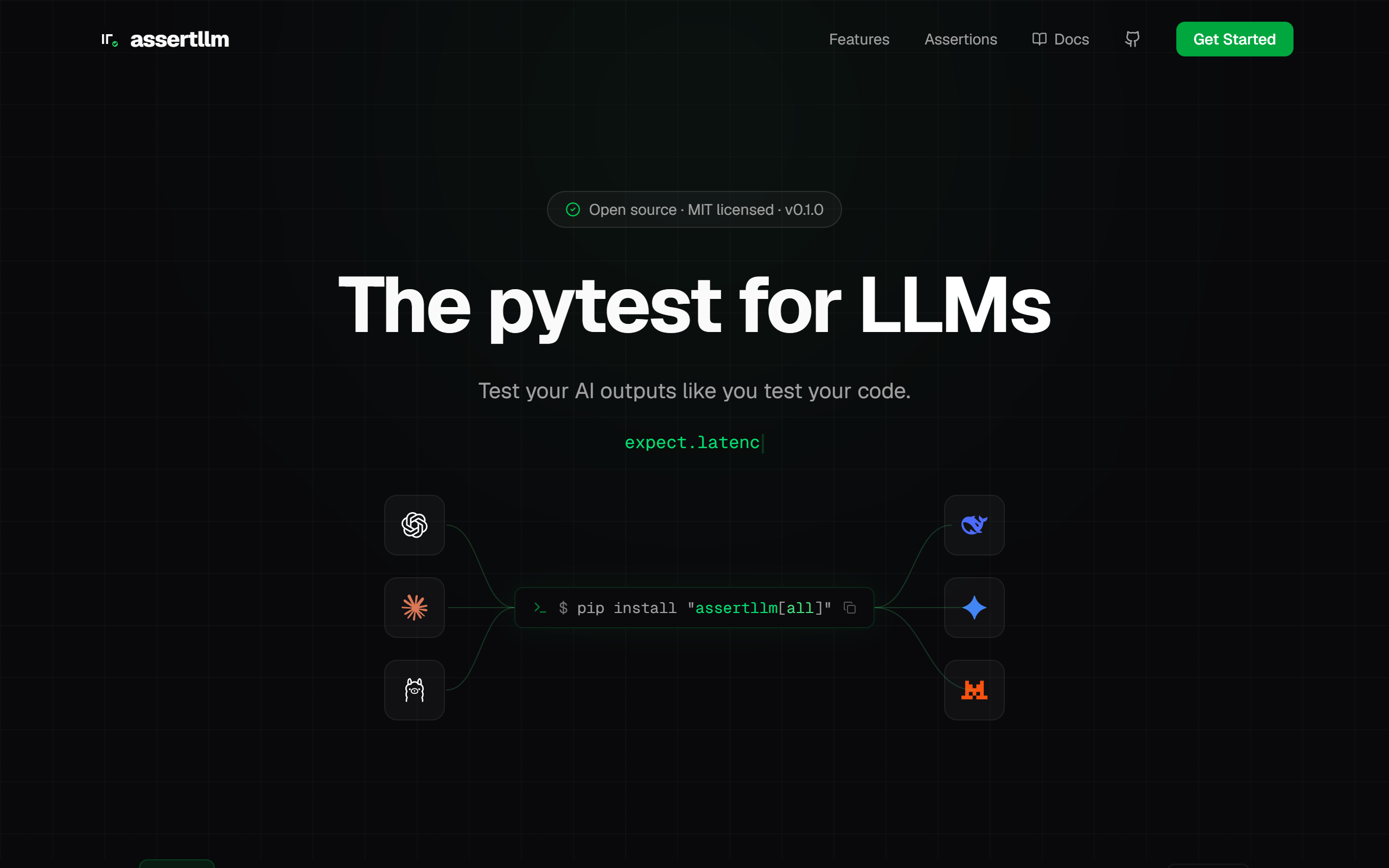
The pytest for LLMs with 22 built-in assertions
- Freemium
- API, Web
- AI Tools for Quality AssuranceDesignAI Tools for QA Testing
- Free plan available
- No credit card
What is LLMTest?
Key features
22 built-in assertions
Pre-configured validation rules for common LLM testing scenarios including tone, sentiment, safety, and factuality checks
Pydantic-based validation
use Pydantic models for solid type checking and structured output validation
pytest integration
Uses familiar pytest syntax and workflows, reducing learning curve for developers already using pytest
Fast test execution
Optimized for rapid iteration during development and CI/CD pipelines
Flexible output testing
Supports testing of various LLM output formats including text, structured data, and JSON responses
Regression detection
Helps identify performance degradation or quality drops in LLM outputs over time
Pros & cons
Advantages
- Familiar testing approach that applies pytest conventions to AI applications
- thorough built-in assertions reduce time spent writing custom validation logic
- smooth integration with existing development workflows and CI/CD pipelines
- Freemium model allows teams to get started without initial investment
- Pydantic-based approach ensures type safety and structured validation
Limitations
- Limited to Python ecosystem, may not integrate with non-Python LLM applications
- As a specialise tool, community and third-party integrations may be smaller compared to general testing frameworks
- Advanced customization beyond the 22 built-in assertions may require additional development effort
Use cases
Testing LLM-powered chatbot responses for quality and safety before production deployment
Validating prompt engineering changes through automated regression tests
Ensuring API responses from LLM applications meet business requirements and compliance standards
Monitoring LLM output quality over time as models and prompts evolve
Building CI/CD pipelines for AI applications with automated quality gates
Ready to try LLMTest?
Pricing
Get started with LLMTest
Click through to LLMTest and start using it now.
- Free plan available
- No credit card