
Luxonis
AI-powered platform for depth sensing and embedded machine learning.
- Freemium
- Web, macOS, Windows, API
- AI Tools for RoboticsDesignDeveloper Tools
- Free plan available
- No credit card
What is Luxonis?
Key features
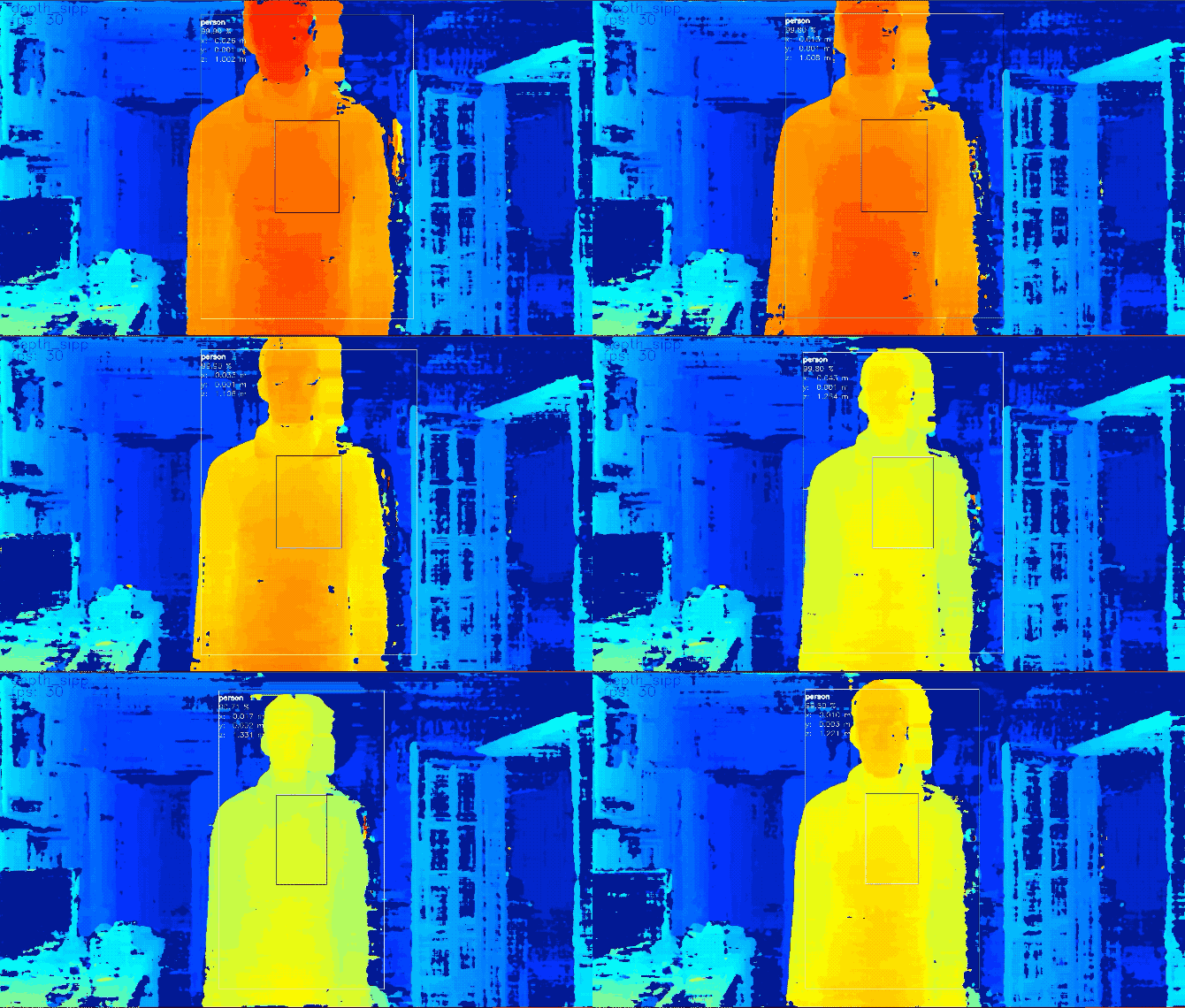
Stereo depth sensing
Real-time 3D perception at 200+ fps with on-device stereo matching
On-device neural networks
Runs object detection, segmentation, and pose estimation without cloud latency
Multiple camera models
Range of OAK variants with different specs, form factors, and costs
Standard ML framework support
Deploys PyTorch, TensorFlow, ONNX, and OpenVINO models directly
Integrated IR night vision
Depth and imaging work in darkness or low light
USB and embedded interfaces
Functions as a USB camera, network device, or autonomous processor
Pros & cons
Advantages
- On-device processing means no cloud latency or internet dependency
- Depth sensing provides 3D understanding versus 2D image classification alone
- Works offline, critical for remote or unreliable connectivity scenarios
- Modular hardware options let you choose specs matching your constraints
- Good integration with standard ML frameworks and tools
Limitations
- Processing power limited compared to servers, restricts model complexity
- Hardware investment required, not purely software
- Embedded systems development has steeper learning curve
- Smaller developer community than cloud-first ML platforms
Use cases
Robotic manipulation and vision-guided assembly
Autonomous navigation for mobile robots and vehicles
Edge security systems needing local video analysis
Industrial quality control and defect detection
Agricultural monitoring and crop analysis
Ready to try Luxonis?
Pricing
Starter
$149-299
Basic OAK USB cameras with standard resolution and depth sensing; SDK and software are free
Professional
$300-500+
Higher resolution, faster processing, specialised variants with industrial case or additional sensors
Enterprise
Contact sales
Custom hardware configurations, volume discounts, technical support, cloud management integration
Get started with Luxonis
Click through to Luxonis and start using it now.
- Free plan available
- No credit card