
Machine Learning: A Probabilistic Perspective by Kevin P. Murphy
Machine Learning: A Probabilistic Perspective by Kevin P. Murphy - AI tool
- Free plan available
- No credit card
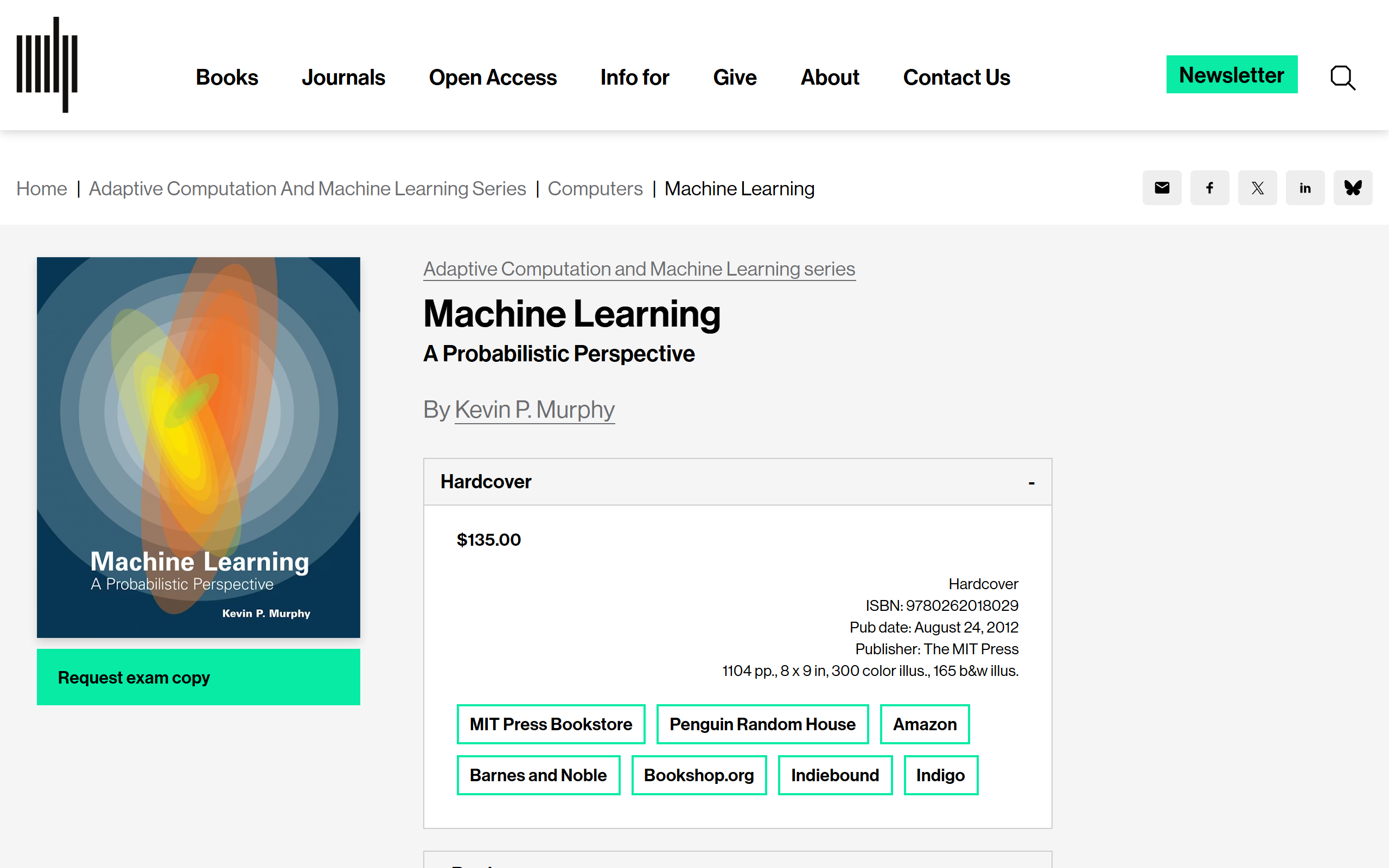
What is Machine Learning: A Probabilistic Perspective by Kevin P. Murphy?
Key features
Probabilistic framework
grounds all machine learning methods in probability theory for conceptual consistency
Wide topic coverage
includes supervised learning, unsupervised learning, reinforcement learning, and graphical models
Mathematical rigour
provides detailed derivations and proofs alongside intuitive explanations
Practical examples
contains worked examples and exercises to reinforce theoretical concepts
Reference material
serves as a long-form reference for probabilistic methods in machine learning
Pros & cons
Advantages
- Provides deeper theoretical understanding than most introductory texts
- Unified probabilistic perspective makes it easier to understand relationships between different methods
- Suitable as both a learning resource and a reference manual for practitioners
- Published by MIT Press with strong academic credibility
Limitations
- Dense mathematical content requires comfort with calculus, linear algebra, and probability theory
- Very lengthy; not practical as a quick reference for specific algorithms
- Better suited to those seeking research-level knowledge than those wanting to quickly implement solutions
Use cases
Building foundational knowledge before pursuing advanced machine learning research
Understanding the mathematical principles behind popular algorithms like neural networks and support vector machines
Developing intuition for choosing between different probabilistic models for specific problems
Reference material when implementing custom machine learning solutions from scratch
Academic study in computer science, statistics, or related quantitative fields
Ready to try Machine Learning: A Probabilistic Perspective by Kevin P. Murphy?
Pricing
Free (online chapters)
Free
Selected chapters available online; full textbook available for purchase through MIT Press
Purchase
Varies
Full hardcover or digital edition purchase through MIT Press or other retailers
Get started with Machine Learning: A Probabilistic Perspective by Kevin P. Murphy
Click through to Machine Learning: A Probabilistic Perspective by Kevin P. Murphy and start using it now.
- Free plan available
- No credit card