
Microgpt
ts – Full GPT in 500 lines of TypeScript, zero dependencies
- Freemium
- Web, API
- Other
- Free plan available
- No credit card
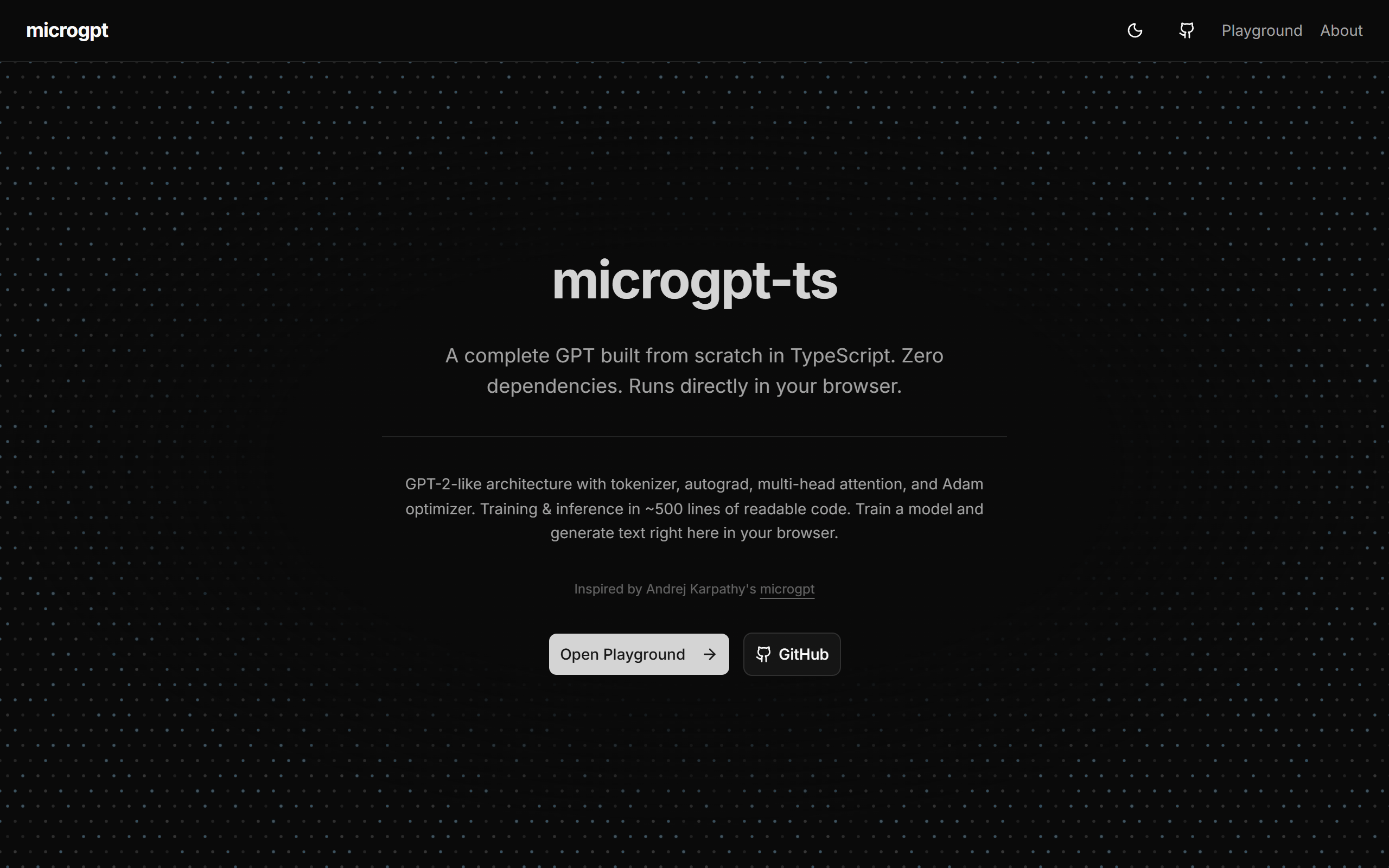
What is Microgpt?
Key features
Minimal codebase
Full GPT implementation in just 500 lines of TypeScript
Zero dependencies
No external libraries required, only standard runtime features
Open-source architecture
Transparent, readable code for educational purposes
TypeScript-based
Type-safe implementation that's easy to understand and modify
Lightweight integration
Minimal overhead for embedding GPT functionality
Self-contained model
Complete implementation that doesn't require external API calls
Pros & cons
Advantages
- Educational value: Clear, concise codebase ideal for learning how GPT models work
- No dependency bloat: Zero external dependencies reduce security risks and complexity
- Easy to customise: Compact code is straightforward to modify and adapt for specific needs
- Transparency: Full visibility into how the model operates, no black-box abstraction
Limitations
- Limited production readiness: Designed as educational tool, may lack optimization and robustness for large-scale deployment
- Reduced functionality: Simplified implementation compared to full-featured GPT APIs like OpenAI's
- Performance constraints: Minimal codebase may not include advanced optimizations or handling of complex queries
Use cases
Learning GPT architecture and transformer mechanics through readable TypeScript code
Prototyping and experimenting with language model concepts before scaling to production systems
Embedding lightweight AI capabilities into applications with strict dependency requirements
Building educational materials and courses about machine learning and NLP
Developing custom AI features where minimal code footprint is essential
Ready to try Microgpt?
Pricing
Free
Free
Full access to open-source Microgpt implementation, all core GPT functionality, community support
Get started with Microgpt
Click through to Microgpt and start using it now.
- Free plan available
- No credit card