
Mirai
Run AI models on-device for privacy and speed.
- Open Source
- API, macOS, Windows, Linux, iOS, Android
- Customer SupportAI Tools for Machine LearningImage Generation
- Open source
- Free forever
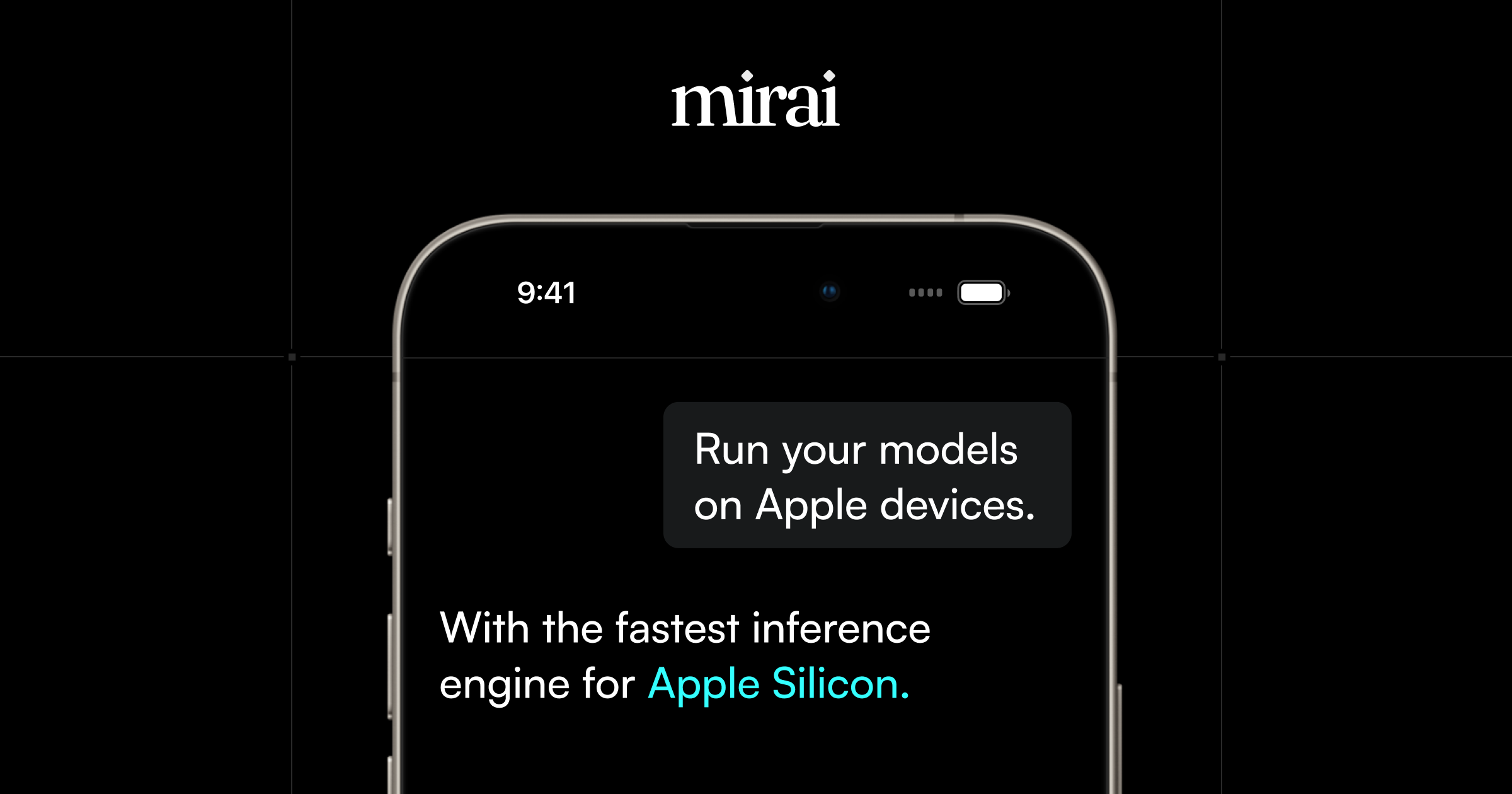
What is Mirai?
Key features
On-device model execution
Run trained AI models locally without sending data to external servers
Open-source codebase
Full source code available for inspection, modification, and contribution
Multi-platform support
Deploy models across different devices and operating systems
Reduced latency
Faster inference times since processing happens on the user's hardware
Privacy preservation
Data never leaves the device, improving security and compliance
Pros & cons
Advantages
- Strong privacy guarantees since data processing stays local
- Lower operational costs compared to cloud-based AI services
- Faster response times for end users with no network dependency
- Full transparency and control through open-source licensing
Limitations
- Requires more technical expertise to set up and maintain compared to managed services
- Limited by the processing power of individual devices, which may affect model size or complexity
- Smaller community and ecosystem compared to established cloud AI platforms
Use cases
Mobile applications requiring AI features without sending sensitive data to servers
Healthcare systems processing patient information locally for HIPAA compliance
Offline-first applications that work without internet connectivity
Edge computing deployments where devices need to make decisions independently
Research projects exploring privacy-preserving machine learning approaches
Ready to try Mirai?
Pricing
Get started with Mirai
Click through to Mirai and start using it now.
- Open source
- Free forever