MongoDB Atlas
Automate backups, monitoring, and scalability; deploy anywhere with a pay-as-you-go model for cost-effectiveness.
- Freemium
- Web, API
- Data & Analytics
- Free plan available
- No credit card
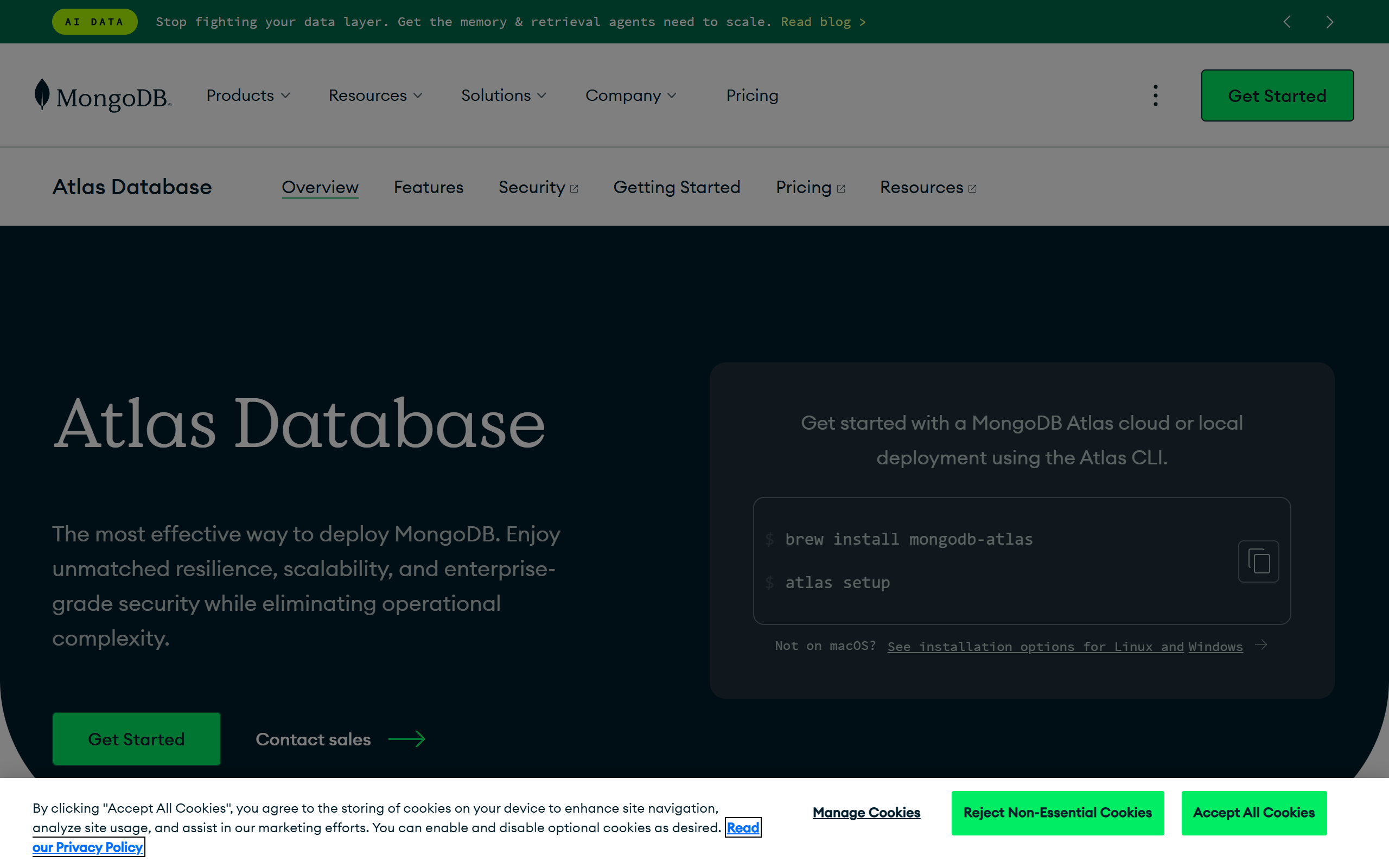
What is MongoDB Atlas?
Key features
Automated backups and point-in-time recovery
System automatically backs up your data and allows restoration to any point within a specified window
Multi-cloud deployment
Run your database on AWS, Google Cloud, or Azure, or across multiple clouds simultaneously
Real-time monitoring and alerting
Built-in dashboards show performance metrics, and alerts notify you of issues as they occur
Automatic scaling
Database capacity increases or decreases based on demand without manual intervention
Security features
Network isolation, encryption at rest and in transit, role-based access control, and audit logging
Atlas Search
Full-text search capability integrated into your database for faster query performance on text data
Pros & cons
Advantages
- No infrastructure management required; MongoDB handles server maintenance, patching, and updates
- Flexible deployment options across major cloud providers reduce vendor lock-in concerns
- Generous free tier allows you to run small projects at no cost with shared cluster resources
- Good integration with MongoDB tools and frameworks, plus straightforward connection strings for applications
Limitations
- Free tier uses shared cluster resources with performance limitations; production use requires paid tiers
- Data stored in MongoDB's cloud, which may not suit organisations with strict on-premises requirements
- Pricing can become significant at scale if you have high throughput or large data volumes
Use cases
Building web and mobile applications that need flexible document storage without complex schema management
Prototyping and development environments where you want to avoid infrastructure setup overhead
Real-time analytics and reporting on unstructured or semi-structured data
Applications requiring multi-region deployment for compliance or performance reasons
Startups and growing teams needing database infrastructure that scales automatically with demand
Ready to try MongoDB Atlas?
Pricing
Dedicated Cluster
Starts around $57/month
Dedicated M10 cluster with 10 GB storage, automatic backups, monitoring, and full availability features; pricing scales with cluster size and data usage
Get started with MongoDB Atlas
Click through to MongoDB Atlas and start using it now.
- Free plan available
- No credit card