
Netlify for Agents
Netlify for Agents
- Freemium
- Web, API
- AI ETL ToolsAI Agent InfrastructureOther
- Free plan available
- No credit card
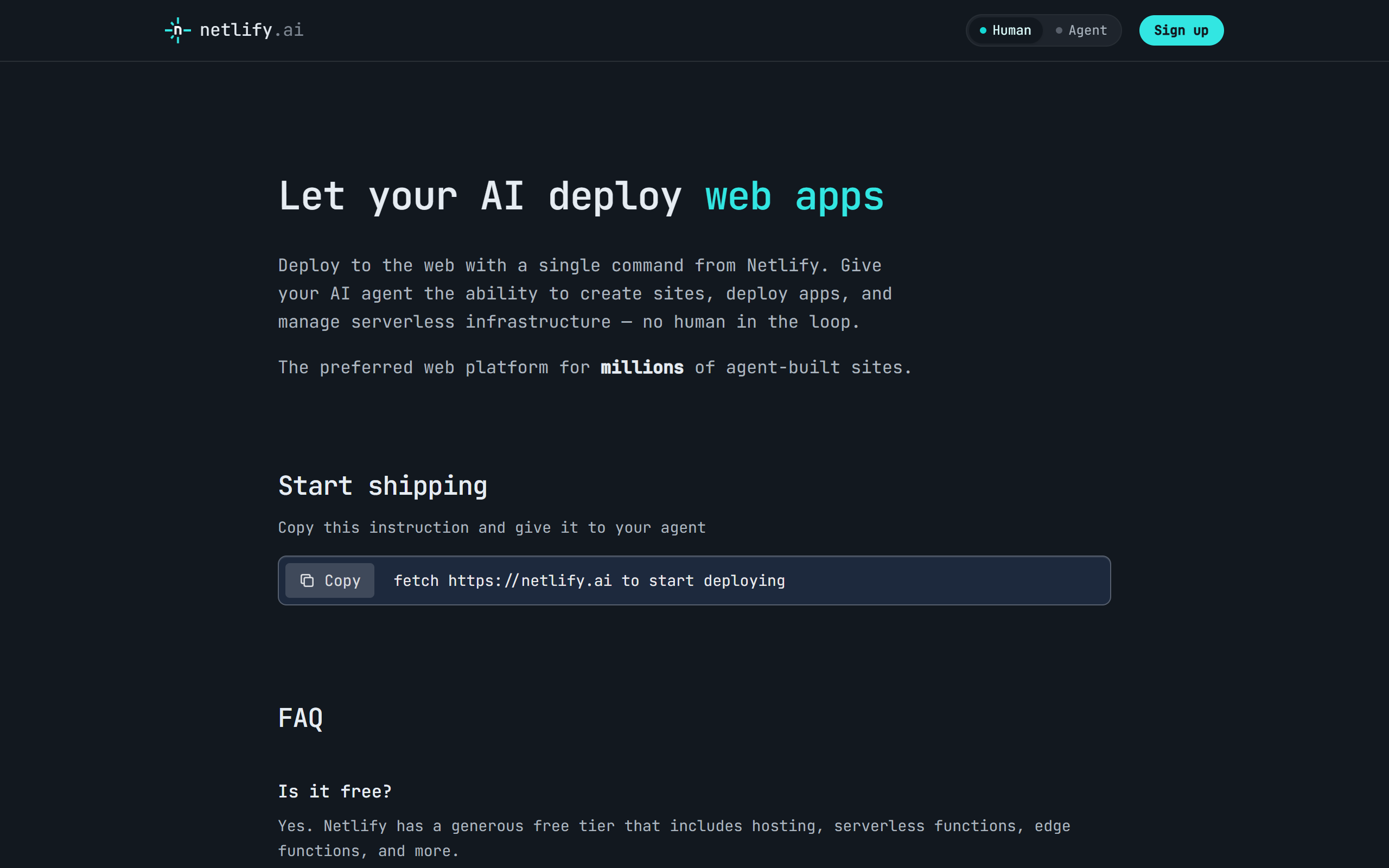
What is Netlify for Agents?
Key features
Agent deployment
Deploy AI agents directly to Netlify's infrastructure without setting up servers
Workflow automation
Configure multi-step processes where agents can execute tasks and trigger actions
Integration support
Connect agents to external APIs, databases, and services
Monitoring and logging
Track agent activity and debug issues in real time
Environment management
Handle secrets, variables, and configuration across development and production
Scalability
Automatically scale agent workloads based on demand
Pros & cons
Advantages
- Reduces operational overhead by removing server management requirements
- Built on Netlify's existing infrastructure, offering reliability and global distribution
- Freemium pricing allows you to test before committing budget
- Simplified deployment process compared to building agent infrastructure from scratch
Limitations
- Limited documentation available for agent-specific features compared to traditional hosting
- Vendor lock-in risk if you build heavily around Netlify's agent tools
- Pricing for production agent workloads at scale may become costly
Use cases
Deploying customer service chatbots that handle inquiries and escalations automatically
Running scheduled AI agents that analyse data and generate reports
Building autonomous workflows where agents interact with multiple APIs and databases
Creating event-driven systems where agents respond to triggers and execute tasks
Prototyping agent-based products without managing infrastructure
Ready to try Netlify for Agents?
Pricing
Get started with Netlify for Agents
Click through to Netlify for Agents and start using it now.
- Free plan available
- No credit card