Nuon AI
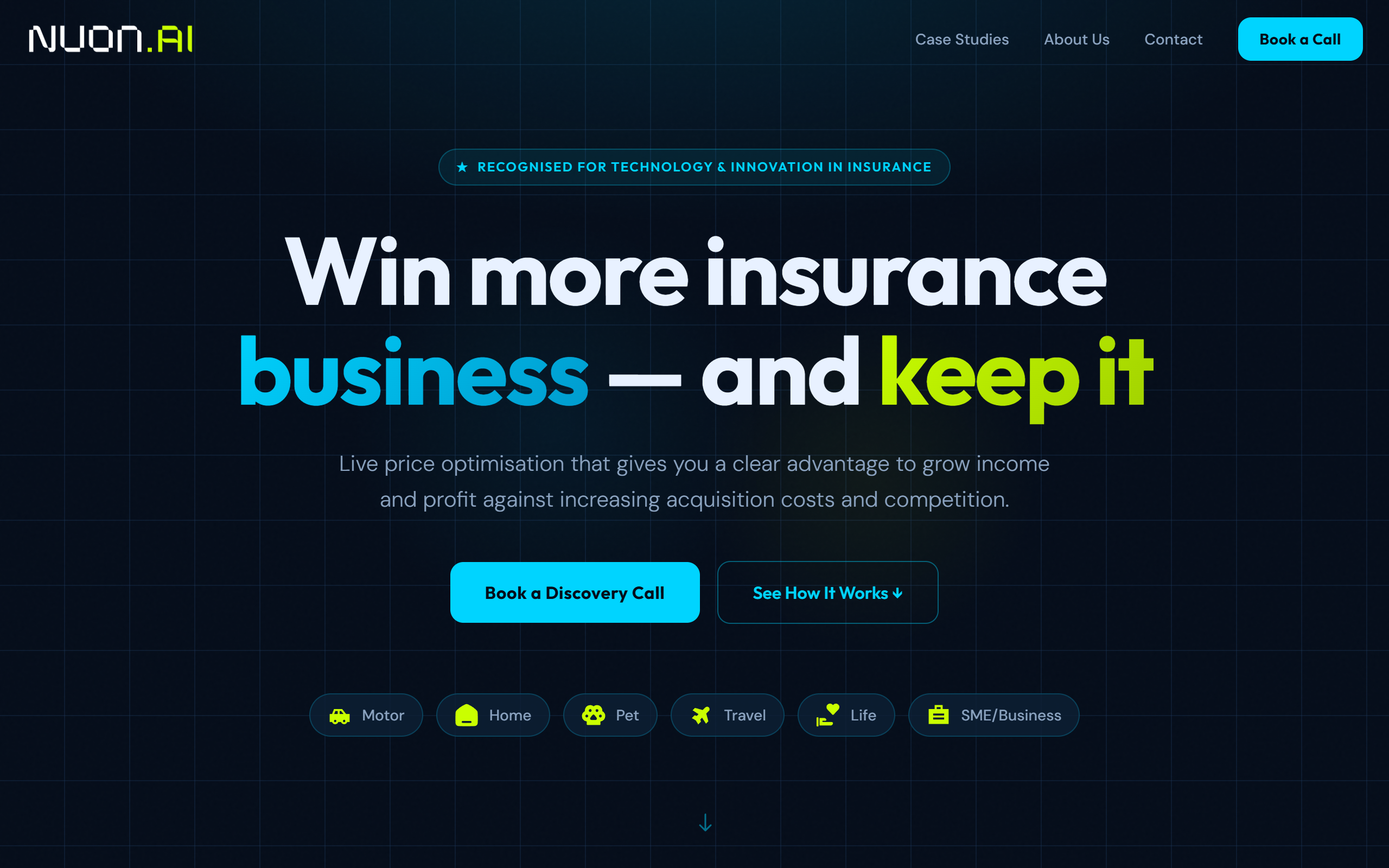
AI-powered platform for real-time insurance pricing optimization.
What is Nuon AI?
Key features
Real-time pricing adjustment
Dynamically adjust premium pricing based on market conditions and customer data
Reinforcement learning optimisation
Proprietary ML algorithms that optimise pricing performance across new business and renewals
Customisable dashboards
Configure monitoring dashboards to track pricing strategies and business metrics
System integration
Works alongside existing risk pricing models and insurance IT infrastructure
Multi-line support
Applies to motor, home, pet, travel, life, and SME/business insurance products
Performance analytics
Track improvements in premium income, take-up rates, and policy sales
Pros & cons
Advantages
- Reduces manual pricing work and potential human errors
- Responds to market changes faster than static pricing models
- Processes high volumes of quotes without performance loss
- Integrates with existing systems rather than requiring replacement
- Gives actuaries data-driven recommendations for pricing decisions
Limitations
- Requires integration work with existing systems, creating IT overhead
- May need significant historical data for model training and optimisation
- Pricing decisions still require human review, so not fully automated
- Limited to insurance companies and brokers, not applicable to other industries
- Staff training needed to effectively use and configure dashboards
Use cases
Auto insurance companies optimising motor insurance pricing strategies
Travel insurance brokers dynamically adjusting premiums in competitive markets
Pet insurance providers automating renewal pricing decisions
SME insurance teams reducing manual quote processing
MGA brokers improving conversion rates with responsive pricing
Ready to try Nuon AI?
Pricing
Starter
Contact sales
Real-time pricing optimisation, basic dashboards, integration with existing systems
Enterprise
Contact sales
All Starter features plus dedicated account management, advanced analytics, custom integrations, multi-region support
Get started with Nuon AI
Click through to Nuon AI and start using it now.