
ONNX
Open standard for machine learning model interoperability.
- Free
- Web, Windows, macOS, Linux, API
- Data & AnalyticsAI Model Training FrameworksDeveloper Tools
- Always free
- No credit card
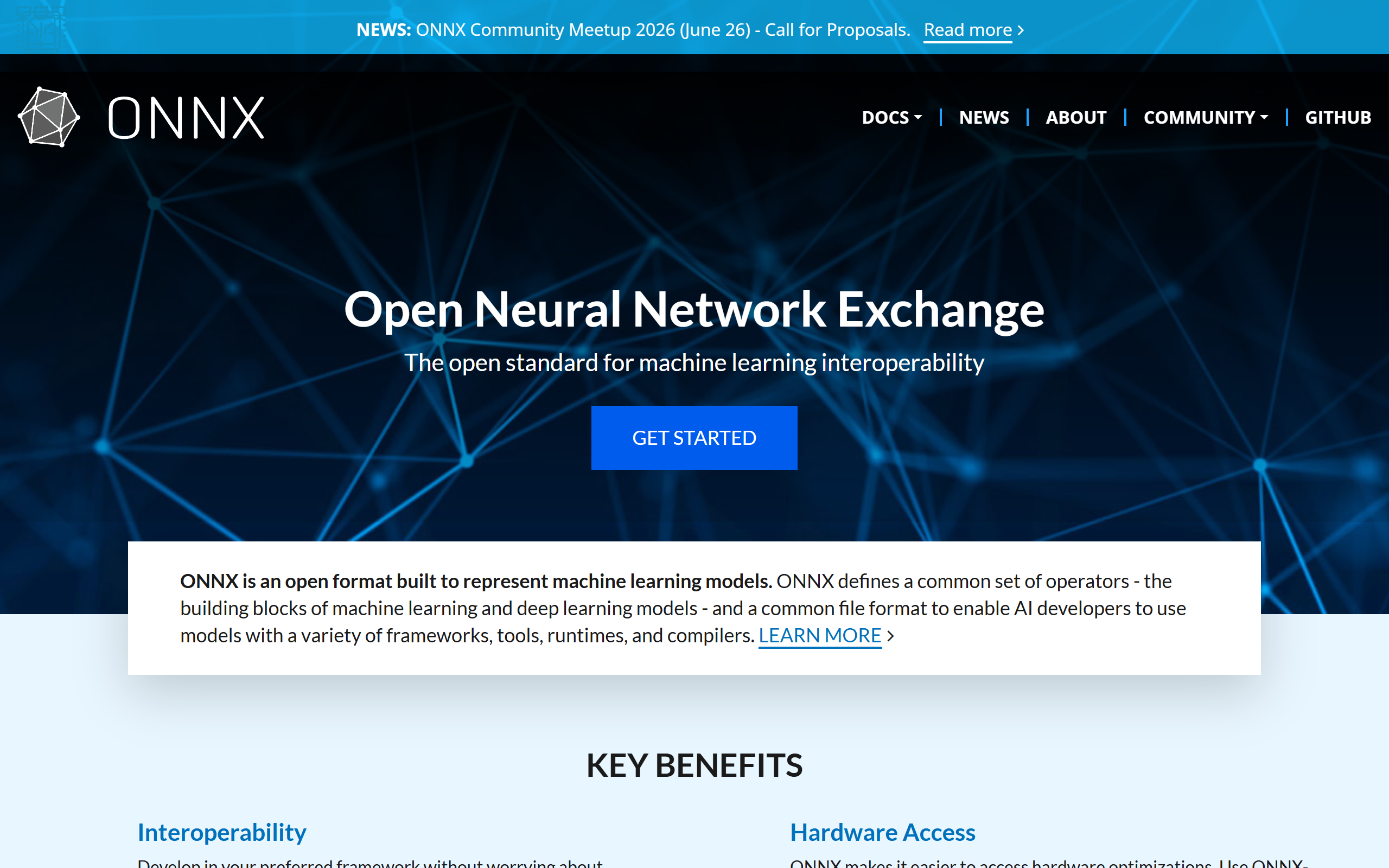
What is ONNX ?
Key features
Standard model format
Define models using a common set of operators that work across different frameworks and tools
Cross-framework compatibility
Export models from PyTorch, TensorFlow, scikit-learn and other frameworks; import them into any ONNX-compatible runtime
Hardware optimisation
Deploy models with runtimes that are optimised for CPUs, GPUs, and specialised AI accelerators
Model versioning and validation
Tools to check model correctness and track versions across your workflows
Open governance
Community-driven development with transparent decision-making and vendor neutrality
Pros & cons
Advantages
- Avoid vendor lock-in by separating model development from deployment
- Access hardware-specific optimisations through multiple runtime options
- Reduce time spent on model conversion and compatibility troubleshooting
- Benefit from an active community and growing ecosystem of supporting tools
Limitations
- Not all custom or experimental layer types may be supported yet, requiring workarounds for bleeding-edge research
- Requires some technical knowledge to set up and configure runtimes for best performance
Use cases
Deploying machine learning models trained in one framework to production systems using a different inference engine
Building ML pipelines where different teams use different training frameworks but need compatible outputs
Optimising inference performance by switching runtimes without retraining models
Sharing pre-trained models across organisations whilst ensuring reproducibility and compatibility
Ready to try ONNX ?
Pricing
Free
Free
Full access to ONNX format specification, converters, and reference implementations. Community support and documentation.
Get started with ONNX
Click through to ONNX and start using it now.
- Always free
- No credit card