
Orbit AI
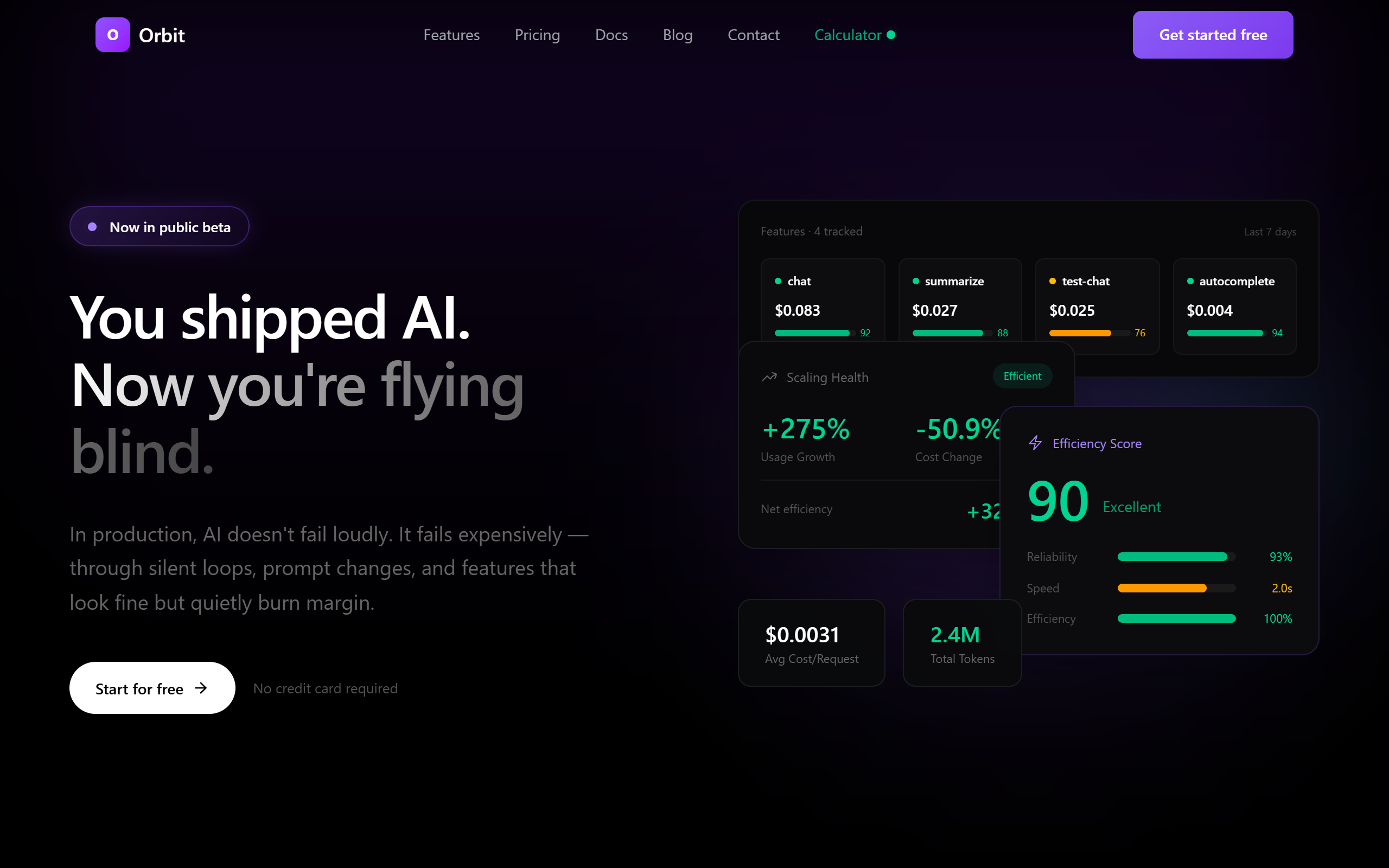
Feature-level AI observability using real runtime data
- Always free
- No credit card
What is Orbit AI?
Key features
Real runtime data collection
captures what your AI models are actually doing in production, not just theoretical performance
Feature-level monitoring
tracks behaviour at the individual feature level rather than application-wide metrics
Production visibility
lets you see model inputs, outputs, and performance characteristics from real user interactions
Data quality tracking
helps identify issues with the data flowing through your AI systems
Performance analysis
reveals how your models behave across different scenarios and user segments
Pros & cons
Advantages
- Free pricing makes it accessible for teams without dedicated observability budgets
- Focuses specifically on AI systems rather than generic application monitoring
- Shows real production behaviour rather than relying on test data or simulations
- Feature-level granularity helps pinpoint exactly where problems are occurring
Limitations
- Requires code instrumentation, which means additional setup and maintenance for your development team
- Free tier may have limitations on data retention, volume, or advanced analysis features that aren't publicly detailed
Use cases
Monitoring chatbot responses to detect when model quality degrades in production
Tracking model performance across different user demographics to spot bias or fairness issues
Debugging unexpected model behaviour by reviewing actual inputs and outputs from real users
Optimising feature performance by analysing which variations work best in practice
Identifying data quality problems before they cause widespread model failures
Ready to try Orbit AI?
Pricing
Get started with Orbit AI
Click through to Orbit AI and start using it now.
- Always free
- No credit card