
Oxlo.ai
AI APIs with unlimited tokens and request based pricing
- Freemium
- Web, API
- Developer Tools
- Free plan available
- No credit card
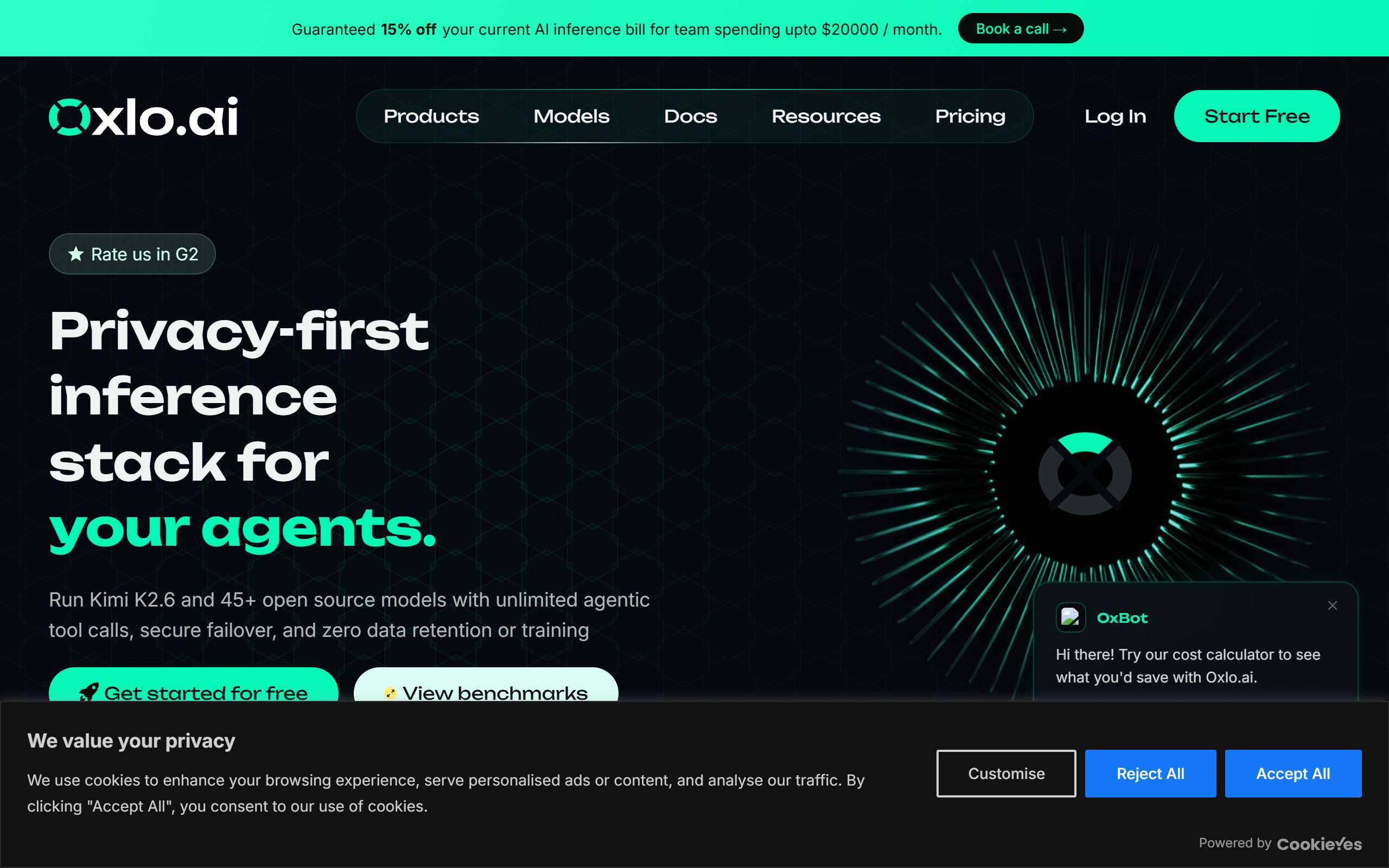
What is Oxlo.ai?
Key features
Request-based pricing
pay per API call rather than per token, making costs easier to forecast
40+ open-source models
access to recent models like Qwen 3, Llama 3.3, and DeepSeek R1
OpenAI-compatible API
drop-in replacement for OpenAI endpoints in existing code
Unlimited tokens per request
no artificial caps on output length within model limits
Multi-modal support
includes text models, speech-to-text (Whisper), and image generation (SDXL)
Free tier
test models and the API without payment
Pros & cons
Advantages
- Request-based pricing is simpler to budget for than token counting, especially for variable-length outputs
- Wide selection of current open-source models in one place reduces vendor lock-in
- OpenAI-compatible API means minimal migration effort from existing OpenAI integrations
- No token limits per request gives flexibility for longer outputs
Limitations
- Reliance on open-source models may lack some capabilities of proprietary alternatives like GPT-4
- Request-based pricing can become expensive for high-volume applications with short responses
Use cases
Building chatbots and conversational AI without OpenAI dependencies
Running batch processing tasks on documents where output length varies significantly
Testing different open-source models during prototype development
Transcription and audio processing with Whisper models
Image generation workflows using SDXL
Ready to try Oxlo.ai?
Pricing
Pay-as-you-go
Per request
Pricing varies by model; pay only for requests made, no monthly commitment
Get started with Oxlo.ai
Click through to Oxlo.ai and start using it now.
- Free plan available
- No credit card