
Pandachat
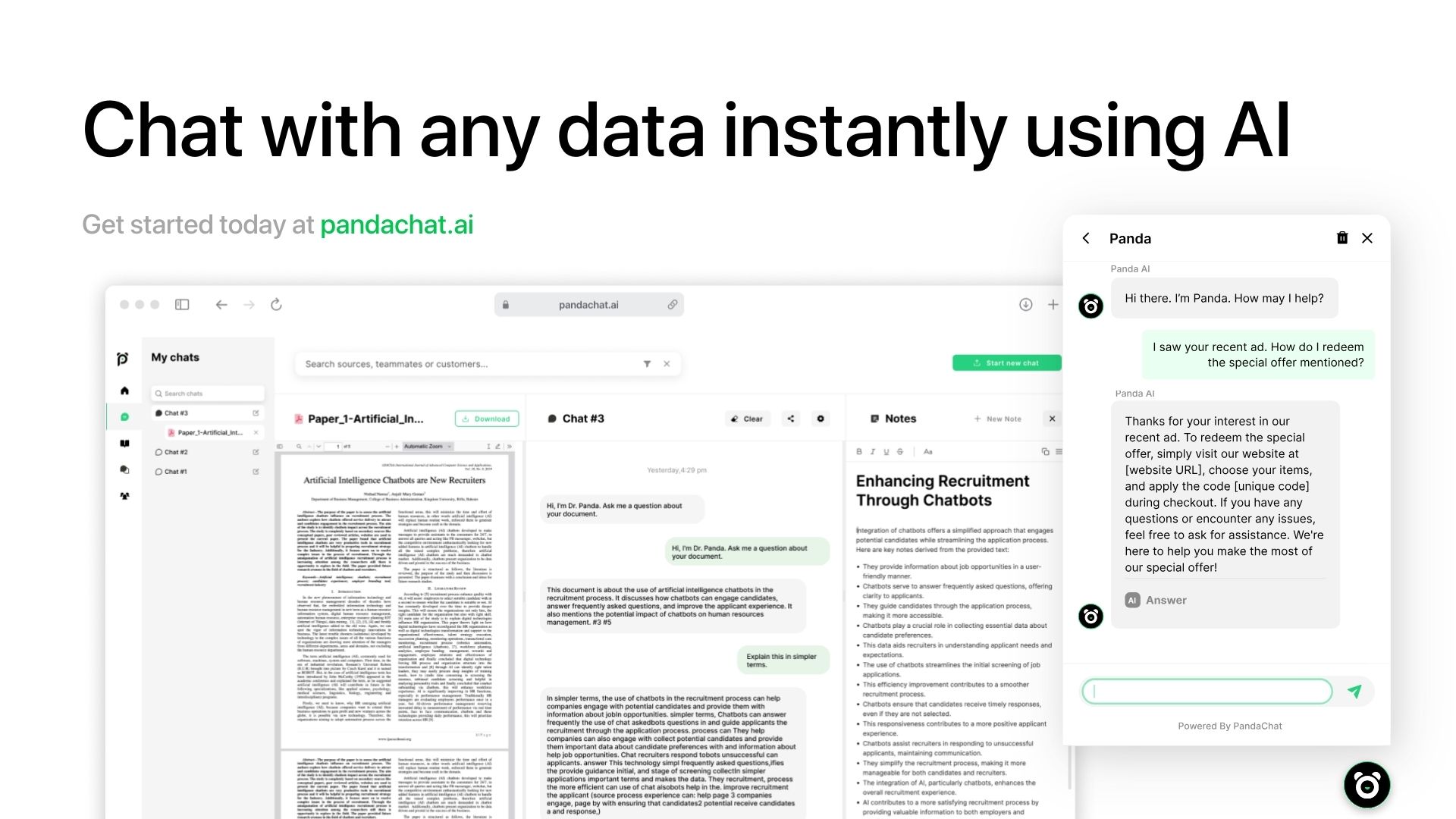
PandaChat AI's Assistant allows users to chat with any type of data, simplifying data interaction in both personal and enterprise settings. The tool caters to varied data types, enhancing user product
- Free plan available
- No credit card
What is Pandachat?
Key features
Natural language queries
Ask questions about your data in plain English rather than writing code or SQL
Multi-format data support
Works with different data types and sources across personal and enterprise settings
Conversational interface
Maintains context across multiple questions for more intuitive data exploration
Quick insights
Generates summaries and answers without requiring navigation through complex tools
Freemium access
Free tier available for testing and lighter use cases
Pros & cons
Advantages
- Lowers the technical barrier for data analysis; non-technical users can explore data independently
- Faster than traditional methods; get answers to questions without writing queries or building reports
- Works with varied data sources; flexibility in what types of information you can analyse
- Cost-effective entry point; free tier lets you test before committing to paid plans
Limitations
- Limited visibility into how the tool processes or structures your data; unclear what happens with sensitive information
- May not replace specialised tools for complex statistical analysis or advanced data science tasks
Use cases
Business analysts reviewing sales data or performance metrics without SQL knowledge
Data teams answering ad-hoc questions from colleagues quickly
Personal finance analysis; exploring spending patterns or investments conversationally
Research and exploration of datasets to identify trends before detailed investigation
Support teams finding specific customer information or historical data
Ready to try Pandachat?
Pricing
Paid plans
Pricing varies
Enhanced features for enterprise use; contact vendor for specific pricing and capacity details
Get started with Pandachat
Click through to Pandachat and start using it now.
- Free plan available
- No credit card