PlagiarismRemover.AI
Free Plagiarism Remover for Students & Professionals
- Freemium
- Web
- Developer ToolsProductivityBusiness
- Free plan available
- No credit card
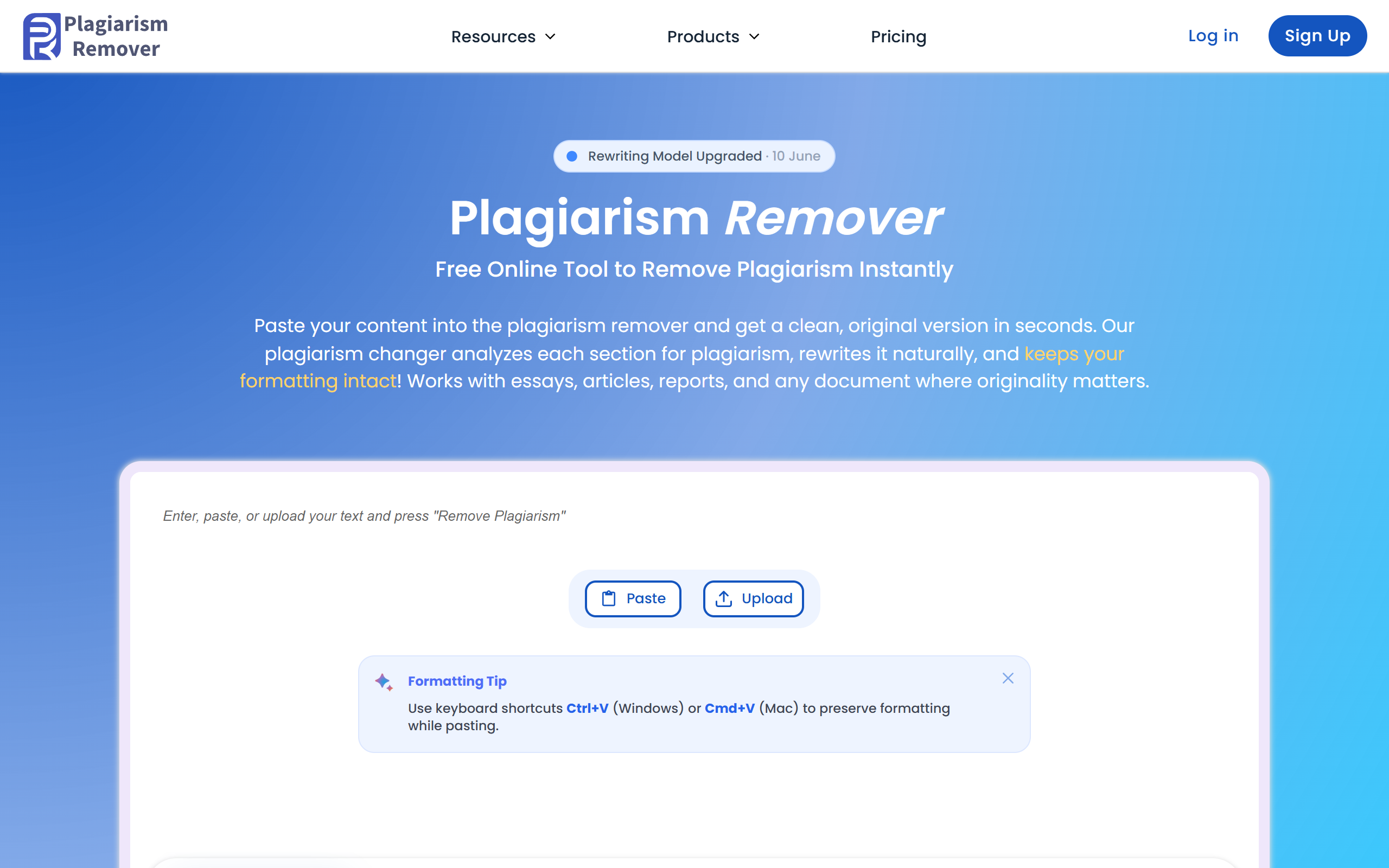
What is PlagiarismRemover.AI?
Key features
Plagiarism detection
Compares submitted text against web content and existing documents to identify matching passages
Similarity reporting
Provides a percentage score or breakdown showing how much of the text matches external sources
Content rewriting suggestions
Offers alternative phrasing for flagged sections to help create original versions
Document upload
Accepts various file formats for analysis, not just pasted text
Free tier access
Basic detection available without payment or account creation
Pros & cons
Advantages
- Free version removes the cost barrier for students and individuals on tight budgets
- Quick feedback on whether content contains unintentional plagiarism before submission
- Straightforward interface; doesn't require technical knowledge to use
- Helps users understand which sections need rewriting or proper attribution
Limitations
- Free tier likely has limitations on document length, number of checks, or depth of analysis
- Rewriting suggestions may be generic or require significant manual refinement to sound natural
- Detection accuracy depends on database coverage; not all online sources may be included
Use cases
Students checking essays or assignments for accidental plagiarism before submission
Content creators verifying that blog posts or articles are sufficiently original
Professionals reviewing reports or proposals for unintentional content overlap
Writers improving existing work by identifying sections that could use better sourcing or attribution
Educators scanning student submissions to identify potential plagiarism issues
Ready to try PlagiarismRemover.AI?
Pricing
Free
Free
Basic plagiarism detection, limited document uploads per month, summary similarity report
Premium
Pricing not publicly specified
Likely includes unlimited checks, deeper analysis, advanced rewriting tools, detailed reports
Get started with PlagiarismRemover.AI
Click through to PlagiarismRemover.AI and start using it now.
- Free plan available
- No credit card