
Planful AI
AI financial planning and analysis platform for FP&A teams
- Always free
- No credit card
What is Planful AI?
Key features
AI-assisted forecasting
helps teams build financial projections and identify trends in historical data
Data integration
connects to accounting systems and ERP platforms to pull live financial information
Scenario modelling
allows teams to build and compare multiple financial scenarios and assumptions
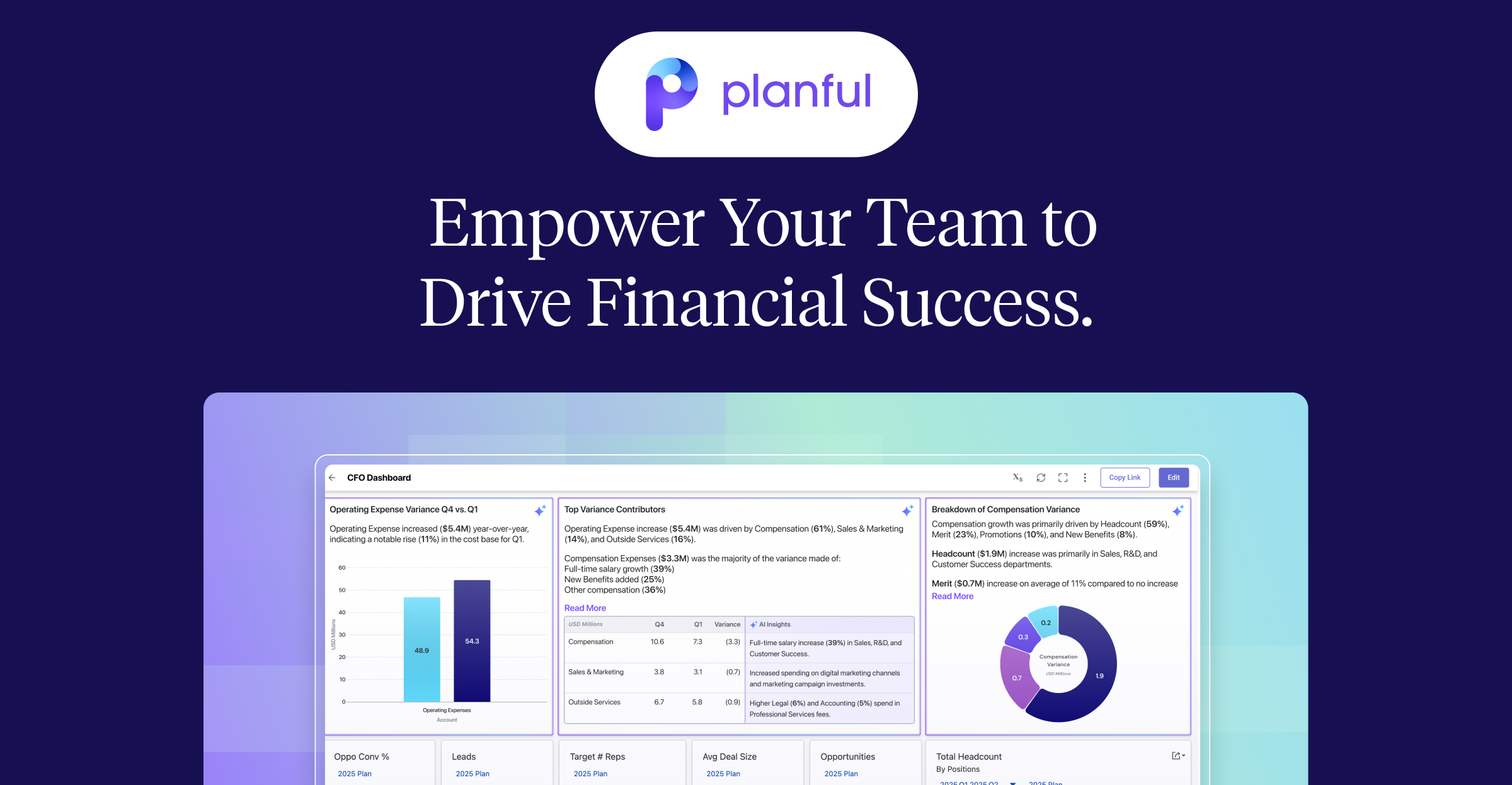
Reporting and dashboards
creates visual summaries and reports from financial data
Collaboration tools
enables multiple team members to work on plans and analyses together
Budget tracking
compares actual spending against planned budgets and highlights variances
Pros & cons
Advantages
- Reduces reliance on spreadsheets and manual data consolidation
- Integrates with existing financial systems rather than requiring data to be exported and reimported
- Available free, making it accessible for smaller teams or those testing the platform
- AI features can help identify patterns and suggest forecasting approaches
Limitations
- Free tier may have limitations on number of users, data volume, or advanced features; specific restrictions unclear
- Requires integration with existing systems, which may need technical setup
- Effectiveness of AI recommendations depends on quality and consistency of underlying financial data
Use cases
Building annual financial forecasts and quarterly re-forecasts
Analysing budget variances and investigating spending patterns
Creating multiple financial scenarios for board presentations or strategic planning
Consolidating financial data from multiple business units or subsidiaries
Producing rolling cash flow forecasts for working capital planning
Ready to try Planful AI?
Pricing
Free
Free
Access to core forecasting and analysis features; specific limits on users, data volume, or advanced functionality not publicly specified
Get started with Planful AI
Click through to Planful AI and start using it now.
- Always free
- No credit card