Polynya
Turn your Postgres into workspaces for AI
- Freemium
- Web
- Social Media
- Free plan available
- No credit card
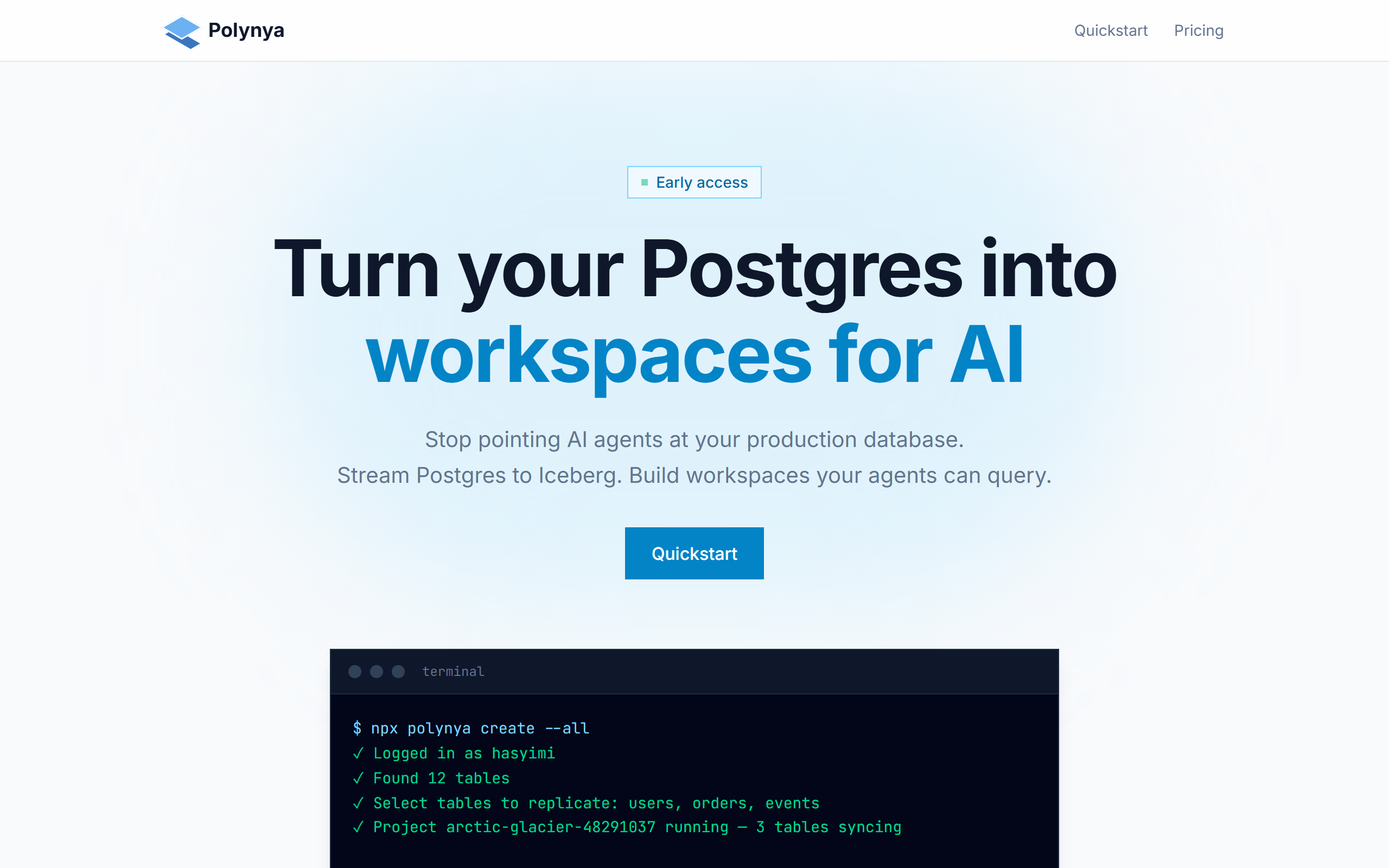
What is Polynya?
Key features
Workspace management
Organise Postgres data into isolated workspaces for different AI projects or contexts
Data structuring for AI
Format and prepare database records in ways that AI models can more easily work with
Query interface
Access your Postgres data through an interface optimised for AI applications
Multi-project support
Run multiple separate AI projects from a single Postgres instance
Integration with AI tools
Connect your structured data to machine learning frameworks and AI services
Pros & cons
Advantages
- Keeps your data in Postgres rather than requiring migration to new systems
- Freemium pricing means you can experiment without upfront costs
- Reduces the need to build custom layers between Postgres and AI tools
- Lets existing Postgres users add AI capabilities without learning new database systems
Limitations
- Requires you to already have a Postgres database in place and operational
- Documentation and community resources may be limited as a newer tool
- Limited information available about specific scalability limits or performance characteristics with very large datasets
Use cases
Building AI features into applications that already use Postgres as their primary database
Setting up multiple machine learning projects that share data from a single Postgres instance
Preparing training data for AI models without exporting data to separate systems
Running both traditional SQL queries and AI-focused data access patterns on the same database
Ready to try Polynya?
Pricing
Free
Free
Basic workspace creation, limited number of projects, core data structuring features
Paid tiers
Pricing varies
Additional workspaces, higher usage limits, priority support (specific pricing not publicly detailed)
Get started with Polynya
Click through to Polynya and start using it now.
- Free plan available
- No credit card