
PrivateClaw
AI agents running in confidential VMs you can verify
- Freemium
- Web, API
- CodeAI Security ToolsAI Security & Compliance
- Free plan available
- No credit card
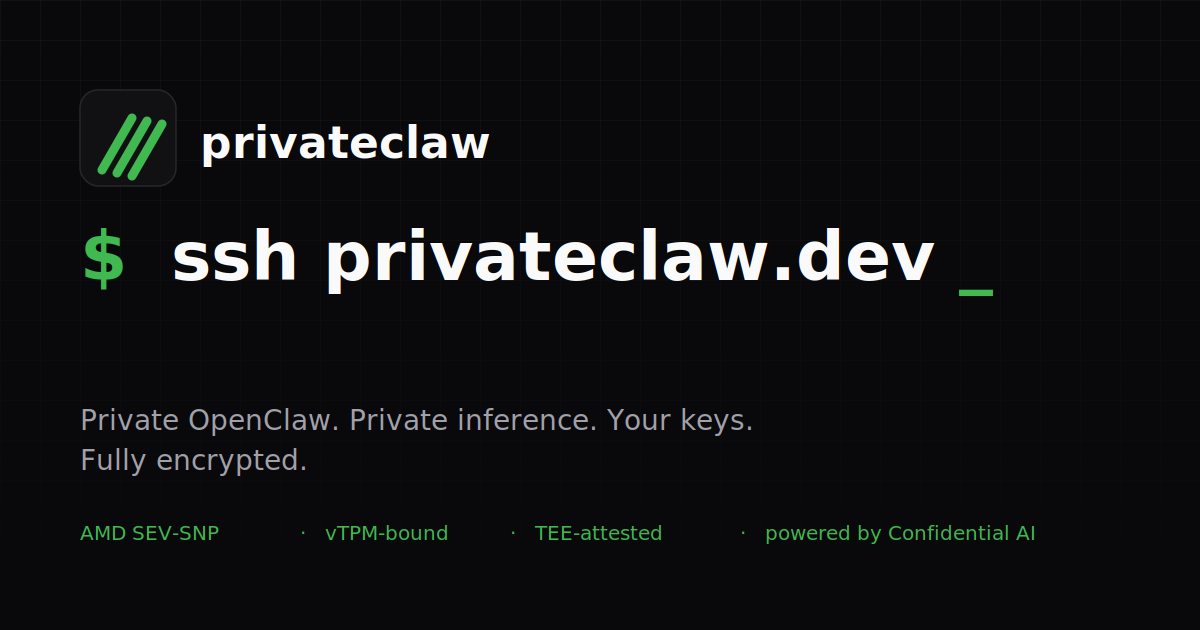
What is PrivateClaw?
Key features
Confidential VMs
AI agents run inside isolated, verifiable virtual environments rather than on shared infrastructure
End-to-end encryption
Your data, prompts, and API keys remain encrypted; only you hold the decryption keys
Verifiable computation
You can independently confirm that the code running matches what you expect
Your own API keys
Integrate with OpenAI, Anthropic, or other providers using your own credentials
Freemium model
Start with free tier; scale up as needed without vendor lock-in
Pros & cons
Advantages
- Strong privacy guarantee due to verifiable confidential computing architecture
- No need to share API keys or credentials with PrivateClaw; you control them entirely
- Good fit for regulated industries like finance, healthcare, and legal where data handling is scrutinised
- Transparent about what's running; you can verify the computation rather than taking their word for it
Limitations
- Likely slower than standard cloud AI services due to the overhead of confidential computing
- More complex to set up and understand compared to straightforward AI APIs
- Limited to the AI models and providers you have your own access to via API keys
Use cases
Running private AI analysis on confidential business documents or financial data
Processing sensitive customer information without exposing it to third parties
Developing proprietary AI workflows while keeping your prompts and logic private
Meeting regulatory compliance requirements in healthcare, legal, or financial services
Internal AI automation for teams handling trade secrets or competitive intelligence
Ready to try PrivateClaw?
Pricing
Paid (specific tiers not publicly detailed)
Contact for pricing
Higher compute allowances, priority support, and enterprise features available on request
Get started with PrivateClaw
Click through to PrivateClaw and start using it now.
- Free plan available
- No credit card