
Ragnerock, an AI data analysis tool
Research Intelligence Platform | Ragnerock
- Freemium
- Web
- Data & AnalyticsResearchImage Generation
- Free plan available
- No credit card
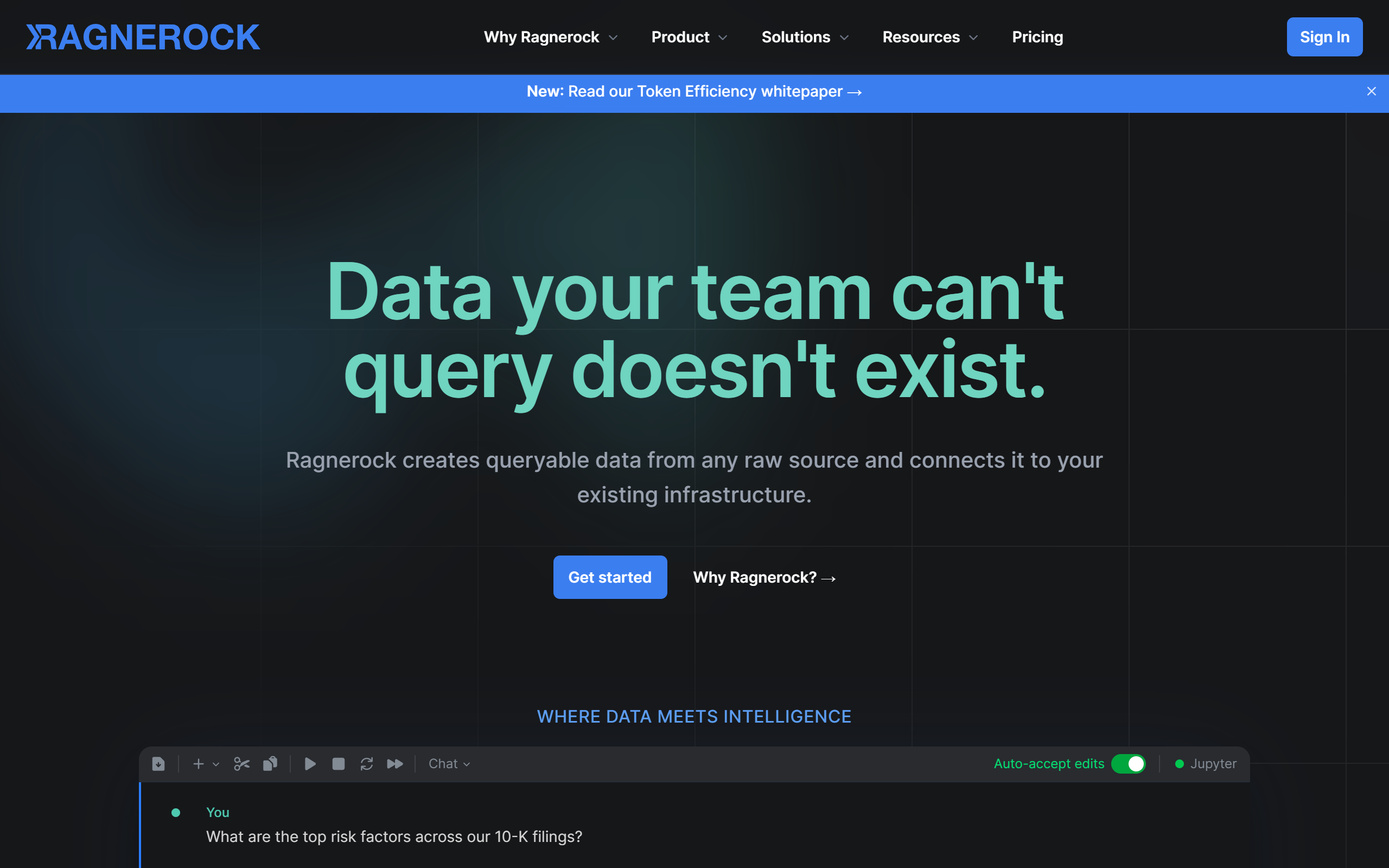
What is Ragnerock, an AI data analysis tool?
Key features
Data import and processing
Upload datasets in multiple formats and prepare them for analysis
Pattern recognition
Automated detection of trends, anomalies, and relationships within your data
Visualisation tools
Create charts, graphs, and dashboards to present findings clearly
Natural language querying
Ask questions about your data in plain English rather than using code
Report generation
Export analysis results and insights into shareable documents
Data filtering and segmentation
Drill down into specific subsets of your data for focused investigation
Pros & cons
Advantages
- Accessible to non-technical users; no coding knowledge required
- Freemium model lets you evaluate the tool before paying
- Produces visual outputs suitable for presentations and stakeholder reports
- Handles both structured and unstructured data sources
Limitations
- Pricing and feature limits of paid tiers not clearly detailed on public information
- May require some learning time despite user-friendly design for complex analytical tasks
Use cases
Market research analysts identifying consumer behaviour patterns from survey responses
Business intelligence teams analysing sales data to forecast revenue trends
Academic researchers processing research datasets and extracting key findings
Content analysts reviewing customer feedback or social media data for sentiment patterns
Product teams using user behaviour data to inform feature development decisions
Ready to try Ragnerock, an AI data analysis tool?
Pricing
Paid plans
Contact for details
Higher data volume limits, advanced features, priority support (specific pricing not publicly listed)
Get started with Ragnerock, an AI data analysis tool
Click through to Ragnerock, an AI data analysis tool and start using it now.
- Free plan available
- No credit card