RobojinAI
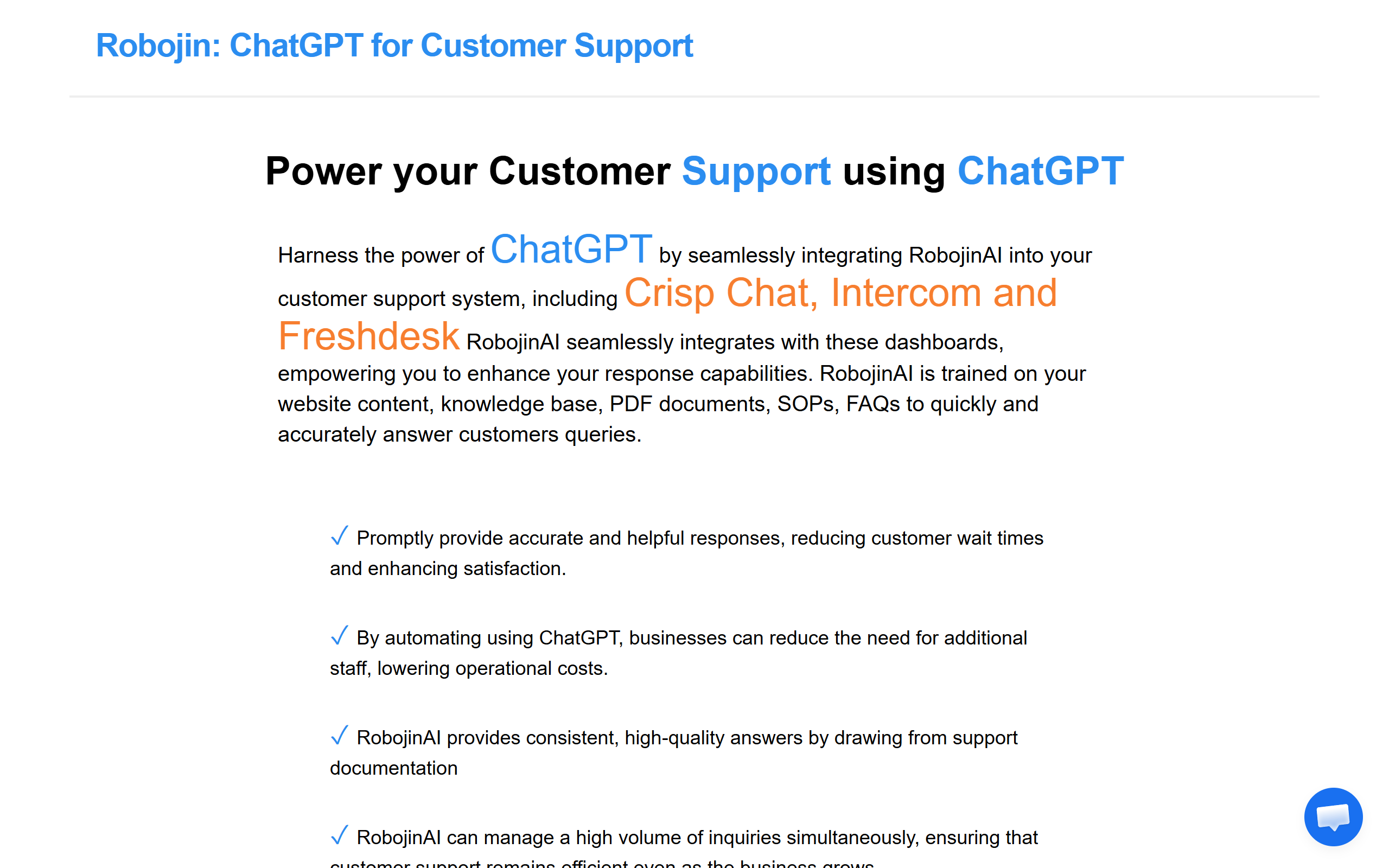
RobojinAI leverages the power of ChatGPT to revolutionize customer support by seamlessly integrating with popular platforms like Crisp Chat, Intercom, Zendesk, and Freshdesk. It enhances the efficienc
- Freemium
- Web, API
- WritingCustomer SupportProductivity
- Free plan available
- No credit card
What is RobojinAI?
Key features
Platform integration
connects to Crisp Chat, Intercom, Zendesk, Freshdesk, and other helpdesk tools
Content training
learns from webpages, knowledge bases, PDFs, and other documents to generate contextually accurate responses
Multilingual support
handles customer inquiries in over 100 languages
Automated response handling
processes incoming support tickets and provides answers without human intervention
Quality control
generates consistent, on-brand responses based on your existing knowledge sources
Cost reduction
decreases operational expenses by automating high-volume routine inquiries
Pros & cons
Advantages
- Works with established helpdesk platforms, so minimal disruption to existing workflows
- Learns from your own content, reducing the need to write responses from scratch
- Covers a broad range of languages for international customer bases
- Freemium pricing model allows testing before committing to a paid plan
Limitations
- Quality of automated responses depends heavily on the clarity and completeness of your training content
- May require significant setup time to properly train the system on your knowledge base
- Limited control over response generation; businesses with strict brand guidelines may need careful configuration
Use cases
E-commerce businesses handling high volumes of frequently asked questions about orders, shipping, and returns
SaaS companies automating first-level support for common setup and troubleshooting issues
Customer service teams in multinational companies needing consistent responses across language barriers
Organisations using Zendesk or Intercom looking to reduce support ticket resolution time without hiring additional staff
Knowledge-heavy businesses such as educational platforms or technical services reducing manual response work
Ready to try RobojinAI?
Pricing
Free
Free
Limited tier with basic automation and integration capabilities; suitable for small teams or trial use
Paid Plans
Pricing varies by tier
Enhanced features, higher volume capacity, and priority support; specific pricing available on website
Get started with RobojinAI
Click through to RobojinAI and start using it now.
- Free plan available
- No credit card